From eloquent lamentation to effective governance in Nigeria’s electoral reform journey
The recurring habit of describing Nigeria as “too complex” to govern is not an act of honesty; it is a political economy of self-exoneration that turns underperformance into inevitability.
When the then outgoing chairman of the Independent National Electoral Commission (INEC), Professor Yakubu Mahmoud stated that his successor must “quickly settle down to the task of conducting elections and electoral activities in Africa’s most demographically and logistically complex environment,” the remark sounded like a thoughtful reflection from a weary reformer. Yet beneath its factual plausibility lies a deeper pattern in Nigeria’s governance culture: the transformation of difficulty into destiny, and the use of language as a shield against accountability.
That statement could have come from almost any sector. From power to education, from health to security, Nigerian officials have perfected the art of verbalizing enormity, reciting the scale of the nation’s challenges as though doing so absolves them of responsibility. It is not the geography or demography that paralyzes Nigeria’s institutions, but the normalisation of difficulty as an acceptable explanation for failure.
The moral question is simple: What does leadership mean in a country where acknowledging obstacles has become a substitute for overcoming them? Aristotle spoke of akrasia; knowing the right thing but lacking the will to do it. Nigerian public institutions have developed a bureaucratic form of this weakness. They recognise what must be done, strengthen systems, digitise operations, enforce accountability, but take refuge in describing why it is hard to do so.
This self-pitying posture erodes the moral core of public service. It recasts leadership not as the courage to act, but as the eloquence of lamentation. In our governance ecosystem, a public official who vividly narrates Nigeria’s problems is deemed thoughtful, while the one who quietly solves them goes unnoticed. The result is an ethic of eloquence, not effectiveness. The tragedy is that moral clarity has become performative; leaders now measure virtue by their capacity to mourn dysfunction, rather than by their determination to fix it. In doing so, they convert empathy into inertia, and reflection into an alibi for inaction.
Such rhetoric serves as insulation. In a democracy where performance legitimacy is weak, public officials depend on discursive legitimacy, the ability to sound burdened and battle-worn. By describing Nigeria as inherently difficult, they lower expectations and shield themselves from scrutiny. It is a subtle but powerful form of narrative control: citizens are invited to empathize with their leaders’ struggles rather than evaluate their results. The more convincingly an official dramatizes Nigeria’s scale, the less accountable he becomes for his institution’s failures.
This is the politics of pre-emptive excuses. When the power grid collapses, we are told the terrain is vast; when insecurity persists, the borders are porous; when elections fail, the environment is “logistically complex.” The performance is always the same: difficulty replaces responsibility, and empathy replaces efficiency. Over time, the public internalizes this rhetoric, accepting dysfunction as destiny and mistaking resilience for progress.
But other countries confront comparable or greater scales without indulging in fatalism. India, with over 960 million eligible voters, runs elections across deserts, jungles, and megacities. South Africa’s Independent Electoral Commission manages a society scarred by inequality and mistrust, yet its officials speak the language of management, not mythology. Nigeria’s uniqueness lies not in its demography, but in its political economy of excuses, a system where eloquence about challenge has become a shield against consequence.
From an economic standpoint, this culture of verbalizing enormity is sustained by incentives. The more an institution emphasizes difficulty, the more justification it has for budget increases, technical assistance, and donor sympathy. Bureaucracies thus learn that describing problems yields greater rewards than solving them. Over time, this produces an economy of lamentation, a self-reinforcing system where inefficiency is not punished but subsidized through fresh allocations and development grants.
It is a moral hazard in governance. Every cycle of lamentation becomes a prelude to another round of capacity building, consultancy, or reform funding, with no structural change in outcomes. The incentive structure privileges narrative over results. Reform becomes an industry, not a conviction; and institutional inertia masquerades as prudence.
Donor partners, too, often buy into this storyline, accepting Nigeria’s “unique complexity” as a reason for endless intervention rather than a challenge for genuine reform. International actors inadvertently validate underperformance by rewarding the same problems year after year. Thus, the economy of excuses reproduces itself, with intellectual legitimacy provided by those who should demand better, and comfort guaranteed for those who never intend to change.
Yes, Nigeria is vast, diverse, and administratively uneven. But so are the United States, Brazil, and Indonesia, countries that manage scale through competence, not confession. Our challenge is not geography but governance. We must stop mistaking rhetorical realism for reformist courage. The constant invocation of Nigeria’s size and diversity has become a moral sedative, dulling the urgency of innovation. Complexity should inspire creativity, not paralysis.
INEC, for example, would achieve far more by treating election management as a design and logistics problem rather than a metaphysical ordeal. What is required is not lamentation but learning — the systematic use of data, technology, and human-centered design to anticipate and solve problems before they metastasize. Leadership, in this sense, is a discipline of adaptation. The responsibility of leadership is not to describe the mountain but to climb it, and to build a path that others can follow. True reformers convert difficulty into design; pretenders convert it into drama.
Conclusion
Professor Mahmood Yakubu’s tenure will be remembered as a study in both ambition and constraint. He sought to institutionalize credibility in an environment allergic to it, introducing innovations that made elections more transparent, even if not always more trusted. His courage to test new ideas, from technology deployment to voter education reforms, reflected a belief that democracy matures through iteration, not perfection. History will judge him not by the absence of controversy, but by the persistence of effort in the face of political and institutional inertia. His successor inherits both the progress and the paradox: an electoral commission that is more capable than before, yet still encumbered by the politics it must regulate. To build upon Yakubu’s legacy is to embrace his seeming courage while correcting his caution, to finish what he began, rather than unlearn it for convenience.
The tragedy of Nigeria’s public institutions is not that they face complex problems, but that they have learned to romanticize them. The political economy of excuses has become the most sophisticated industry in Abuja. Every failure comes with a quote; every quote becomes a reason not to change. In this cycle, eloquence substitutes for excellence, and a nation drowning in diagnosis forgets how to deliver. The bureaucratic elite have mastered the art of describing dysfunction as destiny, turning leadership into theatre and governance into commentary.
To build a credible democracy, we must replace the poetry of problems with the prose of solutions. Nigeria does not need leaders who dramatize its size or diversity; it needs reformers who quietly deliver results despite them. The real test of governance is not how convincingly one laments difficulty, but how effectively one dismantles it.
As Professor Mahmoud Yakubu exits the stage, his successor at INEC must resist the seduction of rhetorical lamentation. He must not echo the language of enormity or hide behind inherited complexity. Instead, he must reimagine the Commission as a systems institution, data-driven, problem-solving, and transparently accountable. His measure will not be how well he explains Nigeria’s challenges, but how courageously he simplifies and solves them. Until then, the “complex environment” will remain less a reality than a refuge, a convenient alibi for those who speak beautifully about the impossible, while achieving very little of the necessary. A nation cannot think itself into progress; it must organize itself into competence.

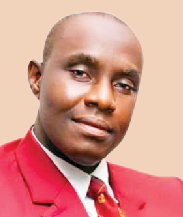
John Onyeukwu, is a lawyer and public policy analyst with interdisciplinary expertise in law, governance, and institutional reform. He holds an LL.B (Hons) from Obafemi Awolowo University, an LL.M from the University of Lagos, and dual master’s degrees in Public Policy from the University of York and Central European University. He also earned a Mini-MBA. John has managed development projects on governance, public finance, civic engagement, and service delivery. He can be reached on john@apexlegal.com.ng