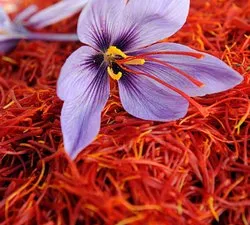
Farmers in Nigeria’s Plateau and Kaduna highlands have begun cultivating saffron, the world’s most expensive spice, in an experiment that could redefine the country’s agricultural trajectory. With the global saffron market valued at over $1.4 billion, the early-stage initiative underscores growing interest in premium crops as Nigeria seeks to expand beyond oil-dependent revenues.
Saffron, derived from the dried stigmas of the Crocus sativus flower, commands prices of up to $5,000 per kilogramme on international markets. Its value lies not only in its rarity and labour-intensive harvesting process but also in its applications across food, pharmaceuticals, cosmetics, and nutraceuticals. For Nigeria, a country long dependent on oil revenues and traditional commodity exports, saffron presents an opportunity for diversification, if the right structures are put in place.
Yet, early indicators indicate that without strategic coordination, the promise of saffron could remain unrealised. According to 6Wresearch, Nigeria’s saffron market is projected to experience a tapering growth trajectory between 2025 and 2029, declining from an initial growth rate of -8.55 percent to -12.76 percent. This outlook shows that while global demand is rising, Nigeria’s domestic ecosystem for saffron remains underdeveloped.
Industry analysts argue that Nigeria’s saffron opportunity extends far beyond cultivation. The real economic gains, they contend, lie in building an integrated value chain encompassing production, processing, quality assurance, branding, and export logistics.
“Saffron is not just another crop—it is an ecosystem. Countries that succeed in this market do so by controlling quality, establishing certification systems, and building strong export brands. Nigeria has yet to develop these capabilities,” ,” says Abubakar Gani, an agribusiness analyst.
This perspective reflects a shift in agricultural economics, where value addition increasingly determines competitiveness. In the saffron market, raw production alone captures only a fraction of the potential revenue. Premium pricing is typically reserved for products that meet stringent quality standards and carry recognized geographical or brand identities.
Morocco’s blueprint for success
Nigeria’s emerging saffron ambitions inevitably invite comparison with Morocco, Africa’s leading producer of the spice. Prior to 2010, Morocco’s saffron industry was fragmented and largely informal, confined to smallholder farmers in the Atlas Mountains. However, the launch of the Green Morocco Plan marked a turning point.
Under this policy framework, saffron was designated a priority export crop. The government invested in irrigation systems, farmer training, and cooperative structures, while also establishing processing and packaging facilities. Crucially, Morocco secured Protected Geographical Indication (PGI) status for Taliouine saffron, enabling it to command premium prices in global markets.
The results were striking. Within five years, production increased by 50 per cent, and export revenues rose significantly. Today, Morocco produces about seven tonnes of saffron annually, generating between $24 million and $35 million, with over 90 per cent destined for export markets.
For Nigeria, Morocco’s experience offers both inspiration and a cautionary tale. “What Morocco did right was aligning saffron with its national agricultural strategy. Nigeria must adopt a similar approach if it wants to compete,” ,” notes Agbaji Chinedu of the All Farmers Association of Nigeria.
Despite its current reliance on imports, Nigeria possesses significant agroecological advantages for saffron cultivation. Highland regions in Plateau, Kaduna, Taraba, and Cross River States offer the altitude, temperature range, and well-drained soils required for the crop.
“We are testing imported Spanish corms in Plateau State, and the results are encouraging. But scaling remains a challenge due to limited technical support and lack of infrastructure,” says Samuel Deshi, chief executive of Ritdung Integrated Farms.
According to estimates from agricultural researchers, one hectare of saffron can yield between 3.5 and 4 kilogrammes of dried spice per season. At prevailing international prices, this translates to potential revenues of up to N20 million per hectare. Moreover, saffron is a perennial crop, regenerating from its corms for up to six years, making it a more sustainable investment compared to annual staples.
Globally, saffron demand continues to expand, driven by its culinary versatility and health benefits. The market is projected to reach $2 billion by 2030, growing at a compound annual growth rate of 6.4 percent. Iran dominates the sector, accounting for about 90 per cent of global supply, followed by India and Morocco.
Nigeria’s absence from this landscape highlights both a gap and an opportunity. “Our agricultural exports have historically focused on volume. Cocoa, sesame, cashew. Saffron offers a high-value alternative that could significantly boost rural incomes,” says a researcher at the National Horticultural Research Institute.
Key export destinations include Europe, the Middle East, and North America, where demand for natural flavouring and coloring agents is rising. Re-export hubs such as Spain and the United Arab Emirates play a central role in global trade, indicating that even partial integration into the supply chain could yield substantial foreign exchange earnings for Nigeria.
One of the most significant barriers to Nigeria’s saffron ambitions is the absence of a coordinated policy framework. Unlike cocoa or rice, saffron is not currently recognised as a strategic crop within national agricultural plans.
Stakeholders argue that integrating saffron into existing programs, such as the National Agribusiness Investment Plan and the Nigerian Export Promotion Council’s “One State, One Product” initiative, could provide a starting point. Northern highland states, in particular, are seen as potential hubs for saffron production.
Awareness remains another critical challenge. Many Nigerian farmers are unfamiliar with saffron cultivation, often perceiving it as a crop suited only to countries like Iran or India.
“There is a need for targeted training and research. Institutions like NIHORT and Ahmadu Bello University can develop localised cultivation techniques and conduct soil studies,” Gani explains.
Public–private partnerships could also play a key role in bridging the gap between research and commercialisation. By linking academic institutions with agribusiness firms, Nigeria can accelerate the development of a viable saffron industry.
Saffron’s labor-intensive nature is often cited as a drawback. Harvesting one kilogramme requires 150,000 flowers, while one hectare demands the equivalent of 54 workers contributing over 50 hours each.
However, in a country struggling with high rural unemployment, this characteristic could be an advantage. “Saffron farming can create significant seasonal employment, particularly for women and youth,” notes an agricultural economist.
Nigeria’s agricultural challenges including poor logistics, inadequate storage, and limited processing facilities, also affect the saffron sector. The absence of standardised drying systems and cold-chain infrastructure undermines quality and export competitiveness.
Industry experts note that integrating saffron into Special Agro-Industrial Processing Zones (SAPZs) could address these issues. These zones, supported by development finance institutions, offer shared infrastructure for processing and export, reducing costs for individual farmers.
Sustainability and climate resilience
Beyond its economic potential, saffron aligns with Nigeria’s climate adaptation goals. The crop requires relatively low water input and thrives in semi-arid conditions, making it suitable for regions affected by desertification.
“Climate-smart agriculture is about selecting crops that match environmental realities. Saffron fits well within this framework,” says environmental economist Hauwa Abdullahi.
Additionally, its applications in natural cosmetics and health products position it within the growing global market for sustainable and organic goods.
Regional trade opportunities
Nigeria’s potential role as a saffron hub extends beyond its borders. Under the ECOWAS Trade Liberalization Scheme, Nigerian exports can access 14 West African markets duty-free.
By developing a robust saffron industry, Nigeria could supply both raw and processed products to neighboring countries such as Ghana, Senegal, and Côte d’Ivoire. This regional integration mirrors Morocco’s position in North Africa, where it serves as a key supplier of saffron and related products.
For investors, the saffron value chain presents multiple entry points. Opportunities include:
- Establishing corm nurseries for seedling multiplication
- Developing processing and packaging facilities
- Investing in export logistics and air cargo systems
- Funding research and development initiatives
Analysts also contend that financial institutions can support the sector through credit facilities and insurance products, while international development agencies may provide technical assistance for pilot projects.
The future of Nigeria’s saffron industry hinges on deliberate government intervention and institutional support. Experts caution that without cohesive policies, targeted investments, and sustained research efforts, the sector could remain underdeveloped.
Stakeholders are advocating the creation of a Saffron Development Council to coordinate standardisation, farmer training, and export promotion across the emerging sector. Analysts say such an institution would help consolidate fragmented initiatives into a structured industry. Interest in saffron is also gaining traction nationwide, with discussions intensifying from Abuja to Jos as the crop shifts from a niche import to a potential contributor to agricultural growth. The central challenge now lies in building the systems required to compete in a quality-driven global market.