CURRENT CENTRAL GOVERNMENT of Nigeria did not begin with any great promise. If anything, it was prefaced with campaign promises that were only later kept in the breach. The campaign manifesto that was supposed to act as a policy guide was jettisoned earlier on, upon taking over power. It was not altogether surprising that, during the political campaign period, music, dances and sometimes unintelligible verbal expressions took the place of elaborate engagement on what to do if or when elected. In place of policies to mitigate the economic hardships and drive down the cost of goods and services, the new president announced the removal of fuel subsidies on the very first day of assuming office. These were followed by the cascading of events and chain reactions that have kept Nigeria’s economy on a tailspin since the new regime commenced. It did not take long to become clear that a long season of muddling through lay ahead.
Prominent political appointees such as ministers, heads of parastatals and agencies have amplified the failed expectations as well as lack of coherence in a team with an array of diversity, each so well convinced that it has been doing its best. It turns out, however, that what has been done was akin to what was in the folk tale of the six blind men of Indostan who went to feel the body of an elephant but came away with different perceptions and descriptions of the same massive animal.
In that tale, the six men held on to what the parts of the animal they touched felt like, each different from the other. One who held the trunk described it as feeling like a snake, while the one that held the tail said it felt like a rope. One described the tusk as a sharp spear. Another thought the ear was like a fan or a winnowing basket. The one that touched the side described the feeling of a sturdy wall, while the one who touched the leg said it felt like a pillar or a tree trunk. The story serves as a reminder that a person’s limited, subjective experience can lead them to claim absolute truth, especially while ignoring other equally valid perspectives. While the tale of the six blind men could count for a moral lesson, its import in positions of power and influence could have far-reaching implications in magnitude and gravity, especially when applied to current economic and security situations. It finds expression in the handling of industry issues, polity, security — particularly on genocide allegation — as well as peace building.
Official reports tend to expose internal contradictions in the workings of the current government. Taking the scale of insecurity, it becomes evident that operators within are not in agreement with one another, as institutional reports are often disputed by the political side of government, especially when such reports do not sound complimentary or salutary. Prince Adeyemi Adeniran, statistician-general of the federation, was invited for questioning sometime in December 2024, by the Department of State Services (DSS) over a controversial Crime Experience and Security Perception Survey report on ransom payments, after which he was released. The DSS was allegedly scrutinising the methodology and data used in the report, which claimed that ransom payments had reached alarming levels, sparking national and international reactions. The report purportedly disclosed that Nigerians paid an estimated total of N2.23 trillion as ransom to kidnappers in the periods between May 2023 and April 2024. It was obvious that the government was not comfortable with the report which showed that 65 percent of households affected by an estimated 51.89 million crime and kidnapping incidents within the period resorted to paying ransoms to secure the release of victims. On average, each household reportedly paid N2.67 million per incident.
While the government is blowing a lot of hot air about reforms, it remains to be seen what are the real underpinnings of such reforms and how they impact the populace in the short and long term. In addition to the closing down of operations by some multinationals in Nigeria, the stories of foreign direct investment (FDI) still remain hanging in the air nearly three years into the administration. This is despite the many diplomatic shuttles embarked upon by the president to over 30 countries to attract FDI into Nigeria and headline-grabbing investment pledges worth $50.8 billion from foreign entities, from high-level trips since May 2023. Rather than grow, FDI into Nigeria reportedly sank nearly 50 percent, according to central bank data. The Central Bank of Nigeria (CBN) reported that FDI into Nigeria fell by 19 percent to $250 million in the first quarter of 2025, compared to $310 million in the previous quarter, a decline that was detailed in the CBN’s Balance of Payments report, which also showed a significant reversal in portfolio investments. Ordinarily, rather than pursuing favourable media headlines, the government is expected to focus on removing or reducing the factors contributing to the reduced FDI, which include investor uncertainty, exchange rate volatility, and unclear policy direction.
The narratives about the frugality of Bola Ahmed Tinubu’s government have not passed the litmus test of veracity. While the government announces grandiose money-gulping projects, the same government goes about borrowing hugely. For instance, the putative Lagos-Calabar coastal highway is raising some dust in terms of transparency and possibility of completion, in addition to questions around its approval and the sum of money allocated to it. Nigeria’s rising external debt was approximately $46.98 billion as of June 2025, according to the Debt Management Office (DMO), and represents a rise from the $45.98 billion recorded in March 2025. Although specific data for October 2025 is yet to be available, the total public debt was significantly higher, reaching ₦152.4 trillion ($99.66 billion) by June 2025. The drop in Nigeria’s public debt-to-GDP ratio to 39.4 percent in Q1 2025, followed the successful rebasing of the country’s GDP. The rebasing of GDP has significantly masked the inflationary trends in Nigeria in absolute and relative terms. Nigeria’s year-on-year inflation rate was 18.02 percent in September 2025, according to the Central Bank of Nigeria. And according to the Fiscal Monitor Report released by the International Monetary Fund (IMF), Nigeria’s general government gross debt, (debt-to-GDP) is projected to decline steadily over the next two years, from 39.3 percent in 2024 to 36.4 percent in 2025, and further to 35 percent in 2026, provided there is a sustained fiscal discipline and economic stability.
Poverty in Nigeria is another ill that the government of today is trying hard to push back upon through media narratives rather than effective targeted interventions. According to 2022/2023 data, 63 percent of Nigerians, representing 133 million people, are multidimensionally poor, while 56.2 percent are poor by the national monetary poverty line, estimated at over 129 million people. The multidimensional rural poverty affects 72 percent of the rural population, while 42 percent of the urban population are affected, with 63 percent of the overall population being multidimensionally poor. The regional disparity is such that poverty is significantly higher in the North, with 86 million people affected, than the 47 million people affected in the South.
The nexus between poverty and insecurity is easily established as the growing insecurity is a prominent factor exacerbating the poverty situation. The policy of restricted access to cash in 2023 worsened the poverty situation of the poorest, having negative effects on their livelihoods. A depreciating naira and high inflation have increased the cost of living for the poor. According to the World Bank, the poverty rate among Nigeria’s rural population has reached an alarming 75.5 percent, highlighting deepening inequality and widespread economic hardship across the country, especially among rural dwellers. The World Bank’s April 2025 Poverty and Equity Brief for Nigeria showed that rural dwellers are overwhelmingly bearing the brunt of economic stagnation, inflation, and structural challenges that have characterised the country’s growth trajectory in recent years. The data, derived from Nigeria’s most recent nationally representative surveys, show that while 41.3 percent of the urban population lives below the poverty line, the figure for rural Nigeria is almost double. Overall, the report noted that 30.9 percent of Nigerians lived below the international extreme poverty line of $2.15 per day in 2018/2019, before the outbreak of COVID-19.
Although the Nigerian government is trying hard to justify its reform policies that are hurting badly, the IMF has revealed that the country is not among Africa’s fastest-growing economies.
The IMF has excluded Nigeria from its latest list of Africa’s fastest-growing economies, naming Benin Republic, Côte d’Ivoire, Ethiopia, Rwanda, and Uganda among the continent’s top performers, ranking the five nations among the world’s fastest-expanding economies, driven by sustained policy reforms, fiscal prudence, and strategic investments in infrastructure and manufacturing. This was recently announced by Abebe Selassie, the director of the IMF’s African Department, in Washington, D.C., during the launch of sub-Saharan Africa’s Regional Economic Outlook.
The slow pace of Nigeria’s judicial process is a major problem discouraging foreign investors and hindering the country’s much-needed economic growth, according to Oluronke Adeyemi, SAN, president of Kwara Chamber of Commerce, in “The Nigerian Lawyer,” a legal publication.
Nigeria’s conditional cash transfer (CCT) programmes, operated by the federal government, face significant problems. These include limited reach, with a large number of intended beneficiaries not receiving funds, and low benefit values that are often insufficient to address poverty due to high inflation. Other issues include corruption, opacity or lack of transparency, insufficient monitoring, and poor information dissemination, leading to distrust and failure to meet programme’s stated goals.
The programme has altogether been a failure as poverty deepens and trust erodes. While the national government harps on it as a major achievement, the World Bank recently acknowledged the limited reach of Nigeria’s $800 million conditional cash transfer programme, which is a cause for concern.
Worst of all policies currently under consideration and implementation is the taxation policy of Tinubu’s government. The Institute of Development Studies (IDS) observed that the impact of taxation on investment and economic development in Nigeria is negative.
According to IDS, the economic implication of the result is that a one percent increase in CIT (company income tax) will result in a decrease in the level of investment in Nigeria. Investors have warned that amending the Finance Act 2023 could undermine confidence and negatively impact Nigeria’s investment climate. Instead of continuing to gamble with policies that are out of touch with realities, the Nigerian government needs to recalibrate and objectively reassess the impacts of those policies already unleashed on the country and backtrack where necessary.
Therein lies great strength; and the people’s lives will be spared from further depreciation through injurious policies that are hailed on paper but toxic in impact.

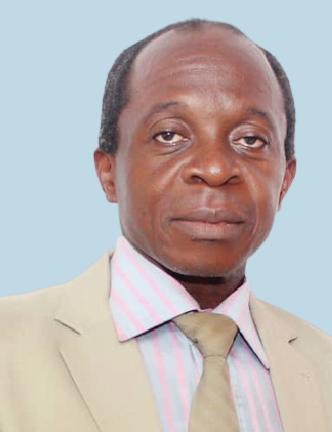
Dr. Olukayode Oyeleye, Business a.m.’s Editorial Advisor, who graduated in veterinary medicine from the University of Ibadan, Nigeria, before establishing himself in science and public policy journalism and communication, also has a postgraduate diploma in public administration, and is a former special adviser to two former Nigerian ministers of agriculture. He specialises in development and policy issues in the areas of food, trade and competition, security, governance, environment and innovation, politics and emerging economies.