INTERGOVERNMENTAL organisations have repeatedly failed to prove that they can act in preventive capacities in matters affecting the internal running of countries’ affairs. If preventive efforts have proven abysmally unsuccessful, it is easy to infer that reactive corrective measures will simply be colossal failures. The quick and incorrect retort of the head of the African Union Commission, Mahmoud Ali Youssouf, rejecting claims that Christians are being killed in genocide in northern Nigeria was a blatant act of denial, high profile obfuscation and conflation of facts. It further erodes any remnant of trust people still have in these highly politicised organisations. Youssouf’s simplistic characterisation and suspicious “clarification” of the crisis, presenting it as “what’s going on in the northern part of Nigeria has nothing to do with the kind of atrocities we see in Sudan or in some part of eastern DRC,” is misleading if not mischievous.
Why it was difficult to first admit that the Christians in northern Nigeria are under siege is still hard to understand. The level of tolerance that has ensured peaceful coexistence between ethnic groups practicing Christianity, Islam and traditional religions has historical context. Although this tolerance in the past meant forgetting the past and moving on after flare-ups of violence among or between groups, it appears the dynamic has changed, especially with the type of onslaught that is now becoming the new normal. In this case, it is evident that attacks are aimed at eliminating and replacing a group of people by another group of people. This is consistent with the Article II of the Convention on the Prevention and Punishment of the Crime of Genocide which defines genocide as any of five “acts committed with intent to destroy, in whole or in part, a national, ethnic, racial or religious group.”
The intent is amplified by words and actions of the assailants. Not only have they invaded the political space, the use of organs of government to perpetrate some atrocities is becoming evident. Without dwelling much into the detailed etymology of the word “genocide,” it is worth examining its coinage by Polish lawyer Raphäel Lemkin in 1944, from the Greek prefix genos, meaning race or tribe, and the Latin suffix cide, meaning killing, a term developed partly in response to the Nazi policies of systematic murder of Jewish people during the Holocaust, but also in response to previous instances in history of targeted actions aimed at the destruction of particular groups of people. Lemkin later led the campaign to have genocide recognised and codified as an international crime.
Leaving the treatment of the genocide in Nigeria in the hands of sympathisers or the naïve will simply complicate the crisis. Although the shouts of sovereignty that first greeted the exposure and disclosure of genocide in northern Nigeria were partly to exclude the country from international searchlight, these did not invalidate the position of the International Court of Justice (ICJ) that, whether or not States have ratified the Genocide Convention, they are all bound as a matter of law by the principle that genocide is a crime prohibited under international law. The ICJ has also stated that the prohibition of genocide is an unconditional norm of international law (or jus cogens) and consequently, no derogation from it is allowed.
Although those who sought to intellectualise their denial of Nigeria’s genocide case against Christians would like to frame their argument within the context of an armed conflict, ignoring the international dimensions and the context of genocide in a peaceful situation just because it is insidious misses the point altogether. They tend to oversimplify the problem and thus provide an escape route, soft landing and safe haven for offenders, thereby preventing appropriate punishment for them. In the circumstance involving the killing members of a group; causing serious bodily or mental harm to members of the group; deliberately inflicting on the group conditions of life calculated to bring about its physical destruction in whole or in part; imposing measures intended to prevent births within the group; forcibly transferring children of the group to another group, there is hardly any better description that matches the actions other than genocide.
Three things that make the intent easy to establish in the case of Nigeria are the vitriolic, caustic and inciting preaching of some Islamic preachers that explicitly encourage violence against non-Muslims. Another is the defiance of the armed Fulani invaders, the subtlety of approach through free and open grazing without consideration for limits, as many of them enter crop farms unapologetically. As they got bolder, their activities moved beyond cattle grazing to kidnapping and ransom taking. The third reason to establish intent is the official complicity by those in power and in government, shown in the form of superior instructions to release apprehended culprits unconditionally, an earlier instruction by President Muhammadu Buhari for civilians to surrender their arms while those who routinely carry out terrorist activities were not disarmed. More damning is the realisation that military protections for vulnerable communities have been withdrawn in some instances shortly before terrorists attacked. These are easily pointers to some form of conspiracy. Therefore, the “intent” dimension to genocide in Nigeria is easily discernible, making the crime of genocide in Nigeria so unique.
More importantly, the victims of genocide in Nigeria are deliberately targeted – not randomly – especially in cases of attacks on schools, particular in states such as Benue and Plateau, Southern Kaduna or Borno. Since, in many ways war and terrorism are very similar, both involving acts of extreme violence, both are motivated by political, ideological or strategic ends, and both are used to weaken, subjugate or eliminate the victims. They trample upon human rights of others and so can easily be categorised as engaging in terrorism or acts of war as human life is deliberately targeted, or when “collateral damage” is done in the course of mass bombing campaigns, which either directly or indirectly lead to sickness, disease, suffering, destruction of homes, and death. In Nigeria, what has become a popular asymmetric war has adversely affected food security as many rural farmers have fled the farms. It has led to health systems breakdown. Education suffers. Internally Displaced People’s camps have increased in number and in human populations.
An act of terrorism normally has an end goal which is “bigger”, and more strategic than the immediate effect of the act. For example, a bomb attack on civilians is meant to change public opinion in order to put pressure on the government. This was one of the insidious strategies employed by the terrorists during the regime of President GoodlucK Jonathan. In Kaduna State then, under the regime of Governor Patrick Yakowa, bomb blasts were common occurrences. Interestingly, these stopped immediately after his death. It should therefore be agreed that an act of terrorism is a peacetime equivalent of war crime. In war, truth is the first casualty. In Nigeria’s genocide story, truth has evidently been slaughtered and butchered by the deniers, especially as the terrorist acts have often been arbitrary or random in the nature and styles of their activities.
Media coverage on genocide in Nigeria has revealed a lot of gaps, weaknesses and politicisation. In many cases, the media has shown shallow understanding of issues, betrayed complicity, disseminated poor narratives and applied confused definitions. The inordinate and inappropriate use of semantics while people are dying has a particularly devastating effect. The failure to call out the government and hold government functionaries accountable are particularly disturbing. The loose usage of terms such as insurgents, bandits or gunmen instead of terrorists or kidnappers tended to deodorise the stench of their unholy activities. We can all agree that those actively embarking on these acts of violence or are promoting one religion – Islam – in the process of attacking others are terrorists. Whether the moderate Muslims agree with those marauders at the extremes or not, and whether the victims also include Muslims should not be a defence or an explanation to rationalise their actions. Rather, the pains, suffering and disruption of normal social and economic activities should really concern well-meaning people.
Where more than 10,000 people have been killed and hundreds kidnapped has gone beyond what can be explained away by any stretch of imagination. Humanity demands safety of lives more than political expediency. More than merely playing with words, the fact that people are being killed for their land, their villages and religion is enough a reason to rise up to their defence, not to rationalise the killing with any grammatical expression.

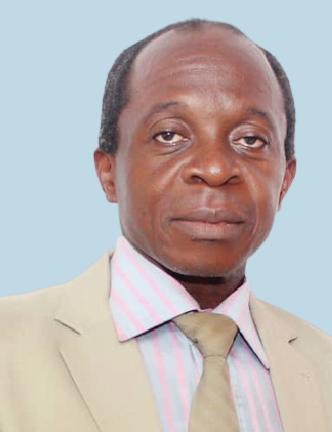
Dr. Olukayode Oyeleye, Business a.m.’s Editorial Advisor, who graduated in veterinary medicine from the University of Ibadan, Nigeria, before establishing himself in science and public policy journalism and communication, also has a postgraduate diploma in public administration, and is a former special adviser to two former Nigerian ministers of agriculture. He specialises in development and policy issues in the areas of food, trade and competition, security, governance, environment and innovation, politics and emerging economies.