
WEST AFRICA IS TORN between three distinct interests, all pulling in different directions. Hitherto, the ordinary West Africans have been holding the short end of the rope and pulling in one direction while the political leaders, in league with foreign powers, particularly the French, have been pulling together in the opposite direction. Of note is the francophone bloc of West African states that has long been France’s cash cow.
Until a series of coups that began to upset some francophone countries in recent years, the balance of power has been in favour of France. Although military leaders that have taken over Guinea Conakry have not yet publicly announced far-reaching policy shifts from the traditional allegiance to France, those in charge of Mali, Burkina Faso and Niger have made significant progress in decoupling from France. They have gone as far as ending military pact with France as they have formed a confederation known as Alliance des États du Sahel (AES). Under this arrangement, the three countries now operate like one borderless territory in military and economy as their leaders share common interests. Until now, they have been part of the West African Economic and Monetary Union (WAEMU), a CFA region and a Custom Union, essentially a smaller economic cooperation under the supervision of France.
Those political economic structures are already rupturing and are about to end as the AES now contemplates its own currency to replace the CFA. Since 2000 when the original idea of ECO as a West African regional currency was mooted, the progress has been slow. In 2019, however, a clandestine effort to smuggle the ECO in through the backdoor by Emmanuel Macron’s collusion with Côte d’Ivoire’s Alassane Ouattara was frustrated by other countries, whereupon the French version of the ECO, meant to replace CFA, was discarded. With the formation of AES, the prospects of ECO and CFA are dimming by the day. Lately, Mali, Burkina Faso and Niger have indicated their readiness to introduce a new single currency to replace the CFA Franc. Whereas France created the CFA in 1945 for its former African colonies to primarily continue its economic influence over Africa, even after independence, under this new arrangement, the proposed AES currency would eventually replace the franc used in West and Central Africa.
Presidents Assimi Goïta, Captain Ibrahim Traoré and General Abdourahamane Tiani of Mali; Burkina Faso and Niger respectively have confirmed that plans for a single currency are under consideration. In Central Africa, the scenarios appear slightly different, with two countries, recently ruled by the military, had acted differently in the context of relations with their former colonialist. Gabon’s military leader, by contrast, has taken a different path, choosing rather to transmute quickly to civilian rule, fueling suspicion of an in-house arrangement with the Bongos family and France. Thus, the country may still remain under the strong influence of France since Brice Oligui Nguema, who led a military coup in 2023, won the April 2025 elections, with no noticeable departure from the regime of the ousted Bongo. Although Chad has changed to civilian regime after Mahamat Idriss Déby Itno — the military leader — did an election in which he was declared president in May 2024, he has declared that Chad would be terminating a key defence cooperation agreement with France.
At the beginning of this year, that decision took effect as the French army handed over its last base in Chad in January 2025, officially ending its military cooperation and French military presence. The last French troops had left, following Chad’s November 2024 announcement to terminate defence pacts and seek new partners. This marked a shift in Sahel security dynamics, with a new era of asserting Chadian sovereignty. The last of approximately 1,000 French soldiers departed from the N’Djamena military base by the January 31, 2025 deadline. The move signifies a major shift in France’s military footprint in the Sahel and Chad’s efforts to control its own security destiny, moving away from its former colonial power. After expelling the French military, Chadian president said autonomous security is ‘absolute priority.’
Within West and Central Africa, it is therefore rather puzzling how the regional economic blocs, particularly the ECOWAS and the continental African Union (AU) and their entrenched leaders treat those leaders who recently emerged through coup d’état, irrespective of what reforms they are carrying out. The harsh, hostile and rather unfriendly treatment meted out to those military leaders probably strengthened their resolve to go their separate ways, leading to the shrinking of ECOWAS in the first instance. Moreover, it has also led to the realisation that those threats by ECOWAS and the AU were largely ineffectual and passed off as mere bluffing. More concerning and self-defeating was the reality that those entrenched leaders have done practically nothing to liberate their countries from the domination by foreign countries of the West, notably France as those leaders are openly regarded as “Western allies.” This was prevalent among the francophones. Rather than applauding their audacity, they are treated as pariahs by those entrenched leaders, many of whom have been in power for decades and are still clinging to power without any clear succession plans in place. The military interventions have therefore been regarded as a form of liberation, welcomed by the people of those countries even though the leaders pivot toward other countries, particularly Russia.
Patrice Guillaume Athanase Talon, the eighth president of Benin (formerly known as Dahomey) since 2016, was almost toppled about a month ago, but for the military interventions of Nigeria alongside France. Talon was elected President of Benin in 2016 and re-elected for a second term in 2021. The vested interest of France played out in the narratives that emerged in relation to the foiled coup as France reportedly called Nigeria’s president to assist in sending military men and fighter jets to bomb the coup plotters’ hideout, thus weakening them and thwarting their mission. It was not so in the case of Guinea Bissau. The November 26, 2025 military intervention led to the ouster of President Umaro Sissoco Embaló who narrowly missed an overthrow in the February 2024 attempted but aborted coup with the French president’s help. His subsequent creation of an anti-putsch force or Household Force to stop future coup plots appears to have failed the test of its existence during this November 2025 coup.
“The inability of political actors to stem the deterioration of the political climate ultimately prompted the intervention of the armed forces,” said General Horta N’Tam, who was the army chief of staff until the coup and a close ally of deposed President Embaló. He was said to have mobilised soldiers to topple President Embaló in a swift power grab that had followed a disputed election where president Embalo — seeking re-election — and his main opposition challenger, Fernando Dias, were said to have both claimed victory ahead of the release of the official results of the presidential and legislative elections, thus forcing the military to take over. Another top military officer, General Denis N’Canha, head of the Presidential military office and one of the coup leaders, was quoted as saying that the coup was carried out after a plan to destabilise Guinea Bissau by terrorists had been uncovered.
General N’Tam, after his inauguration as the head of the military government by the military high command, reportedly wants to oversee a one-year transition period, according to a declaration announced on state television. Although Guinea Bissau is endowed with oil, possessing significant offshore potential and actively seeking foreign investment for exploration, it is not currently an oil-producing country. However, it reportedly remains one of the mainstays of the French economy because of the close working relationship between President Macron and President Embaló. The headway made by the French President in his August 2024 visit to Africa may have encouraged him to embark on another visit to Mauritius before attending the G20 Summit in South Africa and Gabon after the summit in November 2025, aimed at further strengthening French influence and defining partnerships amid competition from the US, Russia and China. The French President’s visit to Africa was also extended to Angola. While in Gabon, Macron said Africa can no longer be a continent of simple resource extraction. He said France supports ‘win-win partnerships’ for Africa, respectful of everyone’s interests.
In spite of France’s frantic diplomatic shuttles, its influence in West Africa may be irreversibly weakening as ECOWAS influence dwindles. While the Authority of Heads of States and Government of ECOWAS has unequivocally condemned the forceful removal of President Embaló from office, saying that ‘’it poses a grave risk to democratic norms and regional peace,” the military leaders appear ready to take the bold initiative to join the AES, to avoid a counter-coup that may be sponsored by the European Union (EU), with France’s support. The new military leader might want to leave the ECOWAS, thereby putting an end to the presence of foreign forces in Guinea Bissau’s territory as contained in his December 18, 2025 announcement on his intention to leave ECOWAS, CPLP, and to end the presence of ECOWAS as well as foreign forces in his country.
Within Africa, Burkina Faso, Niger Republic and Mali – members of Alliance for Sahel States – and Senegal, Chad as well as Madagascar have cancelled key colonial deals with France – a bad omen for France. In Madagascar, in particular, there are significant popular anti-colonial sentiment, protests against French influence and economic deals. There are also ongoing negotiations for returning key colonial artifacts and territories like the Scattered Islands. Madagascar may well take far-reaching measures against France in the future.
ECOWAS leaders may discover late, to their chagrin and further ‘’dismay,” that rather than abating, more coups will take place and more countries will fall under military leadership, even though it is classified as an unconstitutional change of government and the EU had said that ‘’coup leaders would never be recognised.’’ But, now, it seems like ECOWAS is now seeking cooperation with the AES to combat the growing wave of coups and terrorism, despite their recent withdrawal from ECOWAS. In this latest move, ECOWAS leaders are reportedly pushing for a united front, even appealing directly for intelligence sharing, acknowledging that borderless security threats require integrated solutions, though it was acknowledged that political differences and AES’s pivot towards Russia create challenges for true reunification. ECOWAS appears to have abandoned its initial strong and hostile reactions, especially under Nigeria’s leadership, and is now adopting a more pragmatic approach, seeking dialogue and cooperation with the AES nations. It has been acknowledged that, as a security imperative, the severe jihadist terrorist insurgencies and porous borders in the Sahel have highlighted that security issues transcend bloc divisions, forcing ECOWAS to seek collaboration.
Although the AES countries, having formed their own bloc, remain committed to their withdrawal from ECOWAS, they have shown that they are open to dialogue, particularly on security matters. In a significant development, ECOWAS has openly appealed to the AES countries for intelligence sharing and regional cooperation, acknowledging that insecurity in the Sahel and coastal West Africa can no longer be handled in isolation. This call highlights a hard truth that security has no borders. Without cooperation, extremist groups will continue to exploit divisions, weaken states, and destabilise the entire region.
After a week of hostile standoff with Burkina Faso, Nigeria succumbed to diplomacy instead of confrontation by sending a delegation to apologise to Burkina authorities last week while pleading for the release of the Nigerian Air Force plane and eleven military personnel in flight that reportedly strayed unauthorised into Burkina airspace, forced to land and was detained for over a week. The suspicion raised by Burkina Faso would not have been necessary had there been no differences in regional blocs occasioned by AES pullout from ECOWAS and the discomfort Burkina Faso has against countries that maintain close alignment and alliance with France, which — incidentally — Nigeria is.
The latest move of rapprochement and apologies to Burkina Faso by Nigeria signals a growing realisation that regional unity and intelligence sharing are no longer optional — they are necessary for survival. Setting aside political differences, the safety of millions of West Africans is at stake. But individual political leaders of each country can either ensure or jeopardise such safety, depending on if cooperation overrides division or vice versa. Whether this can open the door for dialogue and collective action or more political rifts will depend on whether the leaders are working in the interest of the people they lead or in the interest of an external force, like — in this case — France.

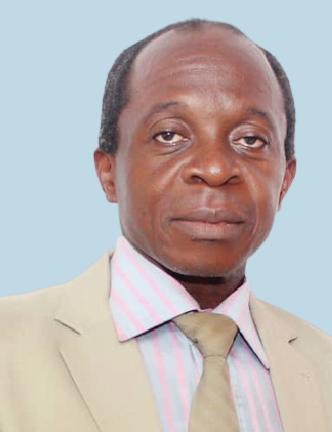
Dr. Olukayode Oyeleye, Business a.m.’s Editorial Advisor, who graduated in veterinary medicine from the University of Ibadan, Nigeria, before establishing himself in science and public policy journalism and communication, also has a postgraduate diploma in public administration, and is a former special adviser to two former Nigerian ministers of agriculture. He specialises in development and policy issues in the areas of food, trade and competition, security, governance, environment and innovation, politics and emerging economies.







Adequate housing: A human right and economic necessity