While the entire world remains on edge following the United States of America-Israel military strike on Iran last weekend, one of the upshots of the incident has been a remarkable surge in the prices of crude oil. As the conflict is yet unfolding and spreading across the entire Middle East, crude oil production, logistics and distribution are getting encumbered or crippled.
As a ripple effect of the crisis, prices of oil have spiked, busting expectations and projections by stakeholders and analysts. For Nigeria which has built its 2026 budget of N58.18 trillion on oil price assumption of $64.85 per barrel, the surge to over $80 per barrel (at a point) looks, in all respects, like another windfall in terms of the resultant huge foreign exchange (FX) revenue inflow.
This windfall, a repeat of a few in the past, usually presents Nigeria with an admixture of challenges and opportunities. In the 1973 Middle East crisis, also known as the Yom Kippur War, oil prices quadrupled, from about $3 per barrel to about $12 per barrel. In October that year, Egypt and Syria launched an attack on Israel, prompting the US to support Israel with military aid. Consequently, the Organisation of Arab Petroleum Exporting Countries (OAPEC) imposed an oil embargo on countries supporting Israel, including the US and Netherlands.
The resultant oil windfall from this crisis, for Nigeria, came in the nick of time: few years after the ravages of Nigeria Civil War (in 1970), when the country was in dire need of resources to (re-) develop the nation. The surge in Nigeria’s oil revenue subsequently led to very ambitious development projects — many white elephants that eventually got abandoned. The oil windfall created a ‘petro-dollar’ economy — leading to the “Dutch Disease” of virtually a mono-product economy.
About 1990-1991, another crisis erupted in the Middle East (known as the Gulf War) that also had a very significant impact on crude oil prices. This time, Iraq’s invasion of Kuwait led to a United Nation’s embargo on Iraq oil export, causing a spike in prices. Crude oil prices rose from about $15 per barrel in June 1990 to a peak of around $40 per barrel by October 1990.
The Gulf War, like the crisis in 1973, had significant effects on Nigeria’s economy; the country benefited from higher oil prices, earning more revenue from its oil exports. Indeed, Nigeria earned an estimated $20 billion in additional oil revenue between 1990 and 1991. While some of the windfall was used to repay external debts, a significant portion was lost to corruption and mismanagement, limiting the desired impact on long-term development.
Instead of transparent savings and investment, the money went into off-budget accounts (or “dedicated accounts”) controlled by the (then) military Presidency of General Ibrahim Babangida. A 1994 probe panel headed by renowned economist, Dr. Pius Okigbo, found “little to show” for the windfall: no infrastructure, no debt reduction, and no reserves. Funds were spent on opaque projects, inflated contracts, and unbudgeted expenses.
Having gone through these hard lessons (of stolen or wasted wealth), Nigeria badly needed a framework to manage the “boom-bust” cycles caused by crude oil prices in its fiscal profile. Thus, in 2004, in a post-Gulf-War attempt to not “lose” oil boom cash anymore, the President Olusegun Obasanjo administration created Nigeria’s Excess Crude Account (ECA).
Under this initiative, all oil revenues above a budget benchmark price are saved (for instance, a budget assumes $20 per barrel, but actually sells at $50 — the extra $30 goes into the ECA). Again, this is intended to shield Nigeria from oil price swings, fund capital projects, pay debts, and build reserves. Records show that by 2007, the ECA had hit $20 billion; but, again, under the pressure of political leaders (at the sub-national levels), much of the pooled fund was shared, and ended up being misappropriated or embezzled.
Although from the ECA, Nigeria Sovereign Investment Authority (NSIA) was created in 2011 to manage the Sovereign Wealth Fund (SWF), with an initial $1 billion in seed capital, none of the initiatives has made much significant impact. For instance, while the Stabilisation Fund component of the SWF was meant to protect the country’s budget by providing a stable, last-resort source of finance during periods of fiscal deficit, the federal government rather remains on a borrowing spree (from foreign and local markets) to fund its budget deficits year in, year out.
Latest reports (2024/25) show that the ECA has less than half a million US dollars in it. The SWF has ‘grown’ from the initial $1 billion to about $2.3 billion (in assets under management as of mid-2024), essentially from retained earnings plus returns. In spite of all these, Nigeria has remained interminably exposed to the vagaries and vicissitudes of global oil politics — with the attendant price swings, instability and economic fragility.
As is usual, the rising crude prices at the moment translate to soaring prices of refined products (e.g. premium motor spirit, PMS) normally being imported. This means that whatever Nigeria makes from high oil prices is more than spent on the importation of PMS and others. Thanks, in part, to the take-off of the Dangote Refineries which now supplies substantial part of the local PMS demands, among others.
However, because the Dangote Refinery operates in the ‘global environment’, it has, in the wake of the uncertainties sparked by the Middle East crisis, raised the pump price of its PMS. Its competitors have toed the same line; and all these will certainly push up transportation costs, prices of foodstuffs, house rents, etc. Invariably, all these will drive up the rate of inflation sooner than later. This remains an ineluctable headwind.
On the other hand, however, the oil windfall is fortuitous, coming at a time the federal government is carrying huge external and local debts; at a time the government is owing a lot to local contractors, with arrears of salaries and allowances to public and civil servants. Recent demonstrations, strikes and picketing of some ministries, departments and agencies (MDAs) by these groups vividly attest to this ugly fiscal state.
It needs to be noted also that the subsisting windfall is coming at a time that it is highly susceptible to embezzlement, mismanagement, and or theft by the officialdom. The windfall being an ‘unexpected’ income is a ready inflow to be deployed to politicking and campaigns towards the ‘dreaded’ 2027 general elections. For a federal government that has wittingly or otherwise been unable to fund the capital budgets of most of its MDAs in 2024 and 2025, the current windfall is handy money for all manner of ‘expenses.’
Like the other oil windfalls in the past, the current one might become only a fiscal elixir for Nigeria — still ending up inhibiting, rather than enhancing economic diversification. Oil windfalls usually ‘consolidate’ Nigeria as a rentier economy, to the neglect of local production, manufacturing and labour. This is almost certain to happen again!
- business a.m. commits to publishing a diversity of views, opinions and comments. It, therefore, welcomes your reaction to this and any of our articles via email: comment@businessamlive.com

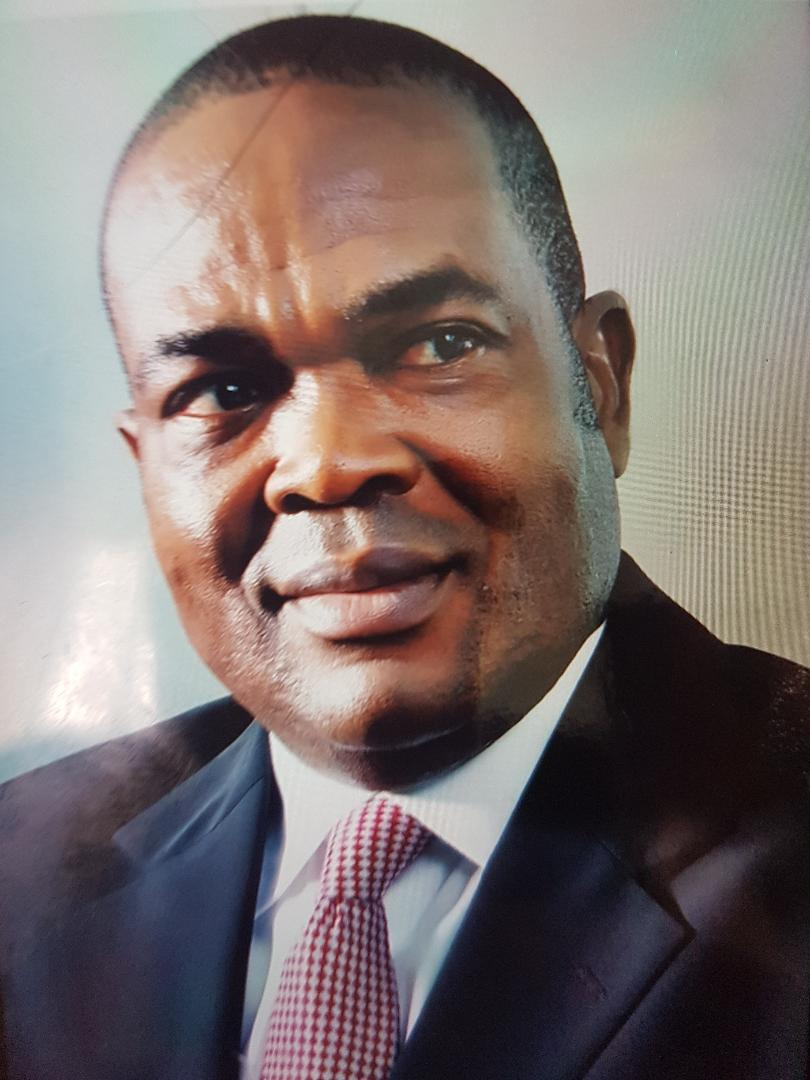
Marcel Okeke, a practising economist and consultant in Business Strategy & Sustainability based in Lagos, is a former Chief Economist at Zenith Bank Plc. He can be reached at: obioraokeke2000@yahoo.com; +2348033075697
(text only)