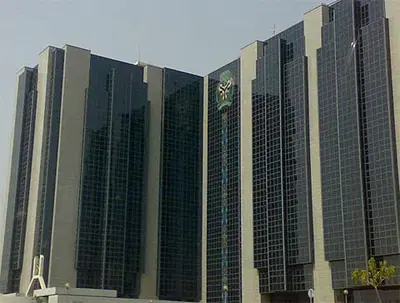
The Central Bank of Nigeria (CBN) has tightened regulatory oversight of large loan defaulters by directing banks to restrict access to key financial services for borrowers with non-performing loans, in a move aimed at strengthening credit discipline and protecting the stability of the country’s banking system.
The apex bank, in a directive issued to all deposit money banks, said borrowers whose loan facilities are classified as non-performing and recorded in the Credit Risk Management System (CRMS) or any licensed private credit bureau will no longer be eligible to access additional credit facilities within the banking system.
The instruction was conveyed in a letter dated March 12, 2026 and signed by Olubukola Akinwunmi, director of banking supervision at the CBN.
Under the new rule, large-ticket obligors with outstanding non-performing exposures will face strict limitations not only on fresh borrowing but also on a range of other banking services typically used in corporate financing and trade transactions.
“Effective immediately, all financial institutions shall restrict further credit access. Any large-ticket obligor with a nonperforming facility recorded in the CRMS and/or any licensed private credit bureau shall not be granted additional credit facilities,” the regulator said in the circular.
The CBN clarified that the restrictions cover loans and other forms of direct credit. In addition, affected borrowers will be denied access to contingent banking facilities such as bankers’ confirmations, letters of credit, performance bonds and advance payment guarantees.
These instruments are widely used by large companies to support trade transactions, procurement contracts and cross-border commercial activities.
According to the CBN, the move targets borrowers whose exposures meet the definition of “large-ticket obligors” under Clause 3.2(d) of the Prudential Guidelines for Deposit Money Banks.
Such borrowers typically maintain significant credit exposures across multiple banks, with outstanding obligations that may exceed the regulatory Single Obligor Limit or materially affect a bank’s capital adequacy ratio.
Regulators believe the failure of such borrowers to meet repayment obligations could pose systemic risks to the financial system if left unchecked.
“The determination of these exposures will rely on information captured in the CRMS as well as reports from licensed private credit bureaus,” the CBN noted.
Beyond restricting new credit, the regulator has directed banks to strengthen risk mitigation by securing additional collateral from affected borrowers to cover their existing loan exposures.
The measure effectively compels lenders to reassess the quality of their loan portfolios while ensuring that large borrowers with deteriorating credit profiles cannot expand their liabilities within the banking system.
Industry analysts say the directive signals a renewed regulatory focus on loan quality following a recent rise in bad loans across Nigeria’s banking sector.
Data from the CBN’s latest macroeconomic outlook indicates that the industry’s non-performing loan (NPL) ratio rose to about 7 per cent in 2025, exceeding the prudential benchmark of 5 per cent set by regulators.
The increase followed the withdrawal of regulatory forbearance measures that had allowed banks to restructure loans affected by the economic disruptions of the pandemic period without classifying them as non-performing.
Once the relief window expired, many previously restructured facilities were reclassified as bad loans, leading to a sharp upward adjustment in the sector’s NPL ratio.
The apex bank noted that the latest directive reinforces earlier regulatory interventions designed to curb credit abuse and strengthen accountability among large borrowers.
In June 2024, the CBN had issued a similar instruction prohibiting loan defaulters from accessing additional credit facilities within the banking system.
By limiting the ability of defaulting borrowers to secure new financing, regulators hope to compel greater repayment discipline while discouraging the accumulation of unsustainable debt by large corporate entities.
The CBN said it will closely monitor compliance with the directive to ensure uniform implementation across the banking industry.
It warned that any breach of the directive would attract regulatory sanctions in accordance with the provisions of the Banks and Other Financial Institutions Act 2020.