Across the continent, governments are pushing hard on industrialisation and logistics reform. Those two pillars, productive capacity and the efficient movement of goods, formed the foundation of Parts 1 and 2 of this series. But as we continue to engage with practitioners, policymakers and small business owners, one truth keeps resurfacing: Africa’s economic transformation will stall unless we fix MSME financing.
Industrial parks can rise. Roads and ports can improve. But without capital flowing to the base of the economy, the entire system remains fragile.
MSMEs: The backbone without capital
MSMEs make up 90 percent of all businesses, employ more than 60 percent of Africa’s workforce and contribute up to half of GDP in some countries. They are the farmers, processors, traders, manufacturers, logistics operators and digital service providers who will determine whether the AfCFTA becomes a lived reality or another continental aspiration. Yet they remain chronically underfinanced.
The IFC estimates Africa’s MSME financing gap at more than 330 billion dollars. In many countries, fewer than one in five MSMEs can access formal credit. In some markets, it is closer to one in ten.
This is not because MSMEs lack ideas or demand. It is because the system was not built with them in mind.
A system built for sovereigns, not supply chains
Commercial banks remain cautious, and understandably so. Interest rates regularly sit between 18 and 25 percent, collateral requirements often exceed 150 percent of loan value and repayment schedules rarely match production cycles.
One Nairobi banker put it plainly:
“We are not designed to take risks on thin margin enterprises with unpredictable cashflows.”
The result is a financing architecture that works well for governments and large corporates, but not for the small producers who keep supply chains alive.
Liquidity, not long term loans, is the real need
Across Kenya, Nigeria, Ghana and beyond, MSMEs consistently describe the same needs. These are the day‑to‑day realities that determine whether a business survives or stalls.
- Working capital to fulfil orders. This is the oxygen that keeps production moving, yet it is the hardest to secure.
- Cashflow to buy inputs. Without it, even the most basic operations grind to a halt.
- Liquidity to survive 60 to 120 day payment delays. Delayed payments are one of the biggest silent killers of African MSMEs.
- Affordable credit to meet standards and certification. Compliance is expensive, but essential for accessing better markets.
- Predictable financing to scale production. Growth requires certainty, not guesswork.
These are not long term infrastructure needs. They are short term liquidity needs, and the system is not set up to meet them.
A lived experience: “I had orders, not capital”
Consider Mary Wanjiku, an agro processor in Nakuru who produces dried fruit snacks for local supermarkets. Demand for her products is strong. She recently secured a contract to supply three additional outlets.
But fulfilling the order required upfront cash for raw mangoes, packaging and seasonal labour.
“I had orders, not capital,” she told us. “The supermarket would pay after 45 days, but my suppliers wanted cash on delivery.”
Her bank asked for land title as collateral. She did not have one. The unsecured loan she was offered came at 22 percent interest, with a repayment schedule that did not match her production cycle.
Mary turned down two of the three contracts. Her story is not an exception. It is the norm.
A cross border reality: “I move goods, not paperwork”
In West Africa, the story takes on another dimension. Alhaja Shekinat, a cross border trader moving shea butter and textiles between Nigeria, Benin, Togo and Ghana, has been in business for fourteen years. She knows every border post, every customs officer and every market day from Ibadan to Tema. What she does not have is access to finance.
“I move goods, not paperwork,” she said. “Banks want documents I do not have. Audited accounts, board resolutions, tax certificates from three countries. I have customers. I have orders. I do not have those papers.”
Her business is profitable. Her demand is steady. But she operates in a space where formal documentation is difficult to maintain across borders, currencies and jurisdictions.
Her entire business runs on trust, reputation and relationships. These are the very things the formal financial system does not recognise.
She is exactly the kind of entrepreneur the AfCFTA is supposed to empower. Yet she remains outside the financial system looking in.
A conversation with UNDP: The governance gap
In a recent conversation with Dr Jide Okeke, programme director at UNDP Africa, another dimension of the problem came into sharp focus. UNDP and other development agencies have supported thousands of MSMEs over the decades through training, equipment, grants and market linkages. Yet many of these same businesses still struggle to access finance.
The reason, Dr Okeke noted, is not always the banks; it is often weak corporate governance within the MSMEs themselves.
Many small businesses lack the basic structures that lenders look for.
- Proper financial records
Without them, lenders cannot assess risk.
- Clear ownership and decision making structures. Ambiguity makes banks nervous.
- Documented processes.
This is what shows consistency and reliability.
- Separation between personal and business finances.
A common issue that undermines credibility.
- Basic compliance systems.
Even simple gaps can derail a loan application.
“Commercial banks across Africa view most MSMEs as too risky,” he said. “Not because they lack potential, but because their governance structures do not inspire confidence.”
This governance gap is one of the most persistent and least discussed barriers to MSME financing.
New models that work are emerging
Despite the challenges, promising models are taking shape across the continent. These are not theoretical ideas. They are already working in pockets across Africa.
- Anchor led financing
Large corporates such as supermarkets, manufacturers and exporters become the basis for MSME creditworthiness. If the anchor is reliable, the supplier becomes bankable. This model has transformed SME financing in India and is gaining traction in East and West Africa.
- Digital credit scoring
Mobile money, POS systems, ecommerce platforms and logistics apps generate transaction data that can replace collateral. This is especially powerful for informal and cross border traders who have strong cash flows but weak paperwork.
- Blended finance
Public capital absorbs the first loss. Development partners provide guarantees. Private capital scales the model. This approach reduces risk for lenders and expands access for MSMEs.
The AfCFTA opportunity and the risk
The AfCFTA could increase intra African trade by 52 percent once fully implemented. But this growth will depend on the very businesses that currently struggle to access finance.
- Small manufacturers
- Agro processors
- Cross border traders
- Logistics operators
- Digital service providers
- Women and youth led enterprises
Without financing, the AfCFTA risks becoming a theoretical market rather than a functioning one.
Fixing corporate governance: A practical pathway forward
If weak corporate governance is a major barrier, then strengthening it must be part of the solution. And it must be done in a way that is practical, affordable and scalable.
- MSME governance clinics. Short, sector specific programmes that help MSMEs establish the basics. This is where many businesses need the most support.
- Shared CFO and accounting services. Affordable, pooled financial management services for MSMEs that cannot hire full time professionals. This gives small firms access to the kind of expertise only large companies enjoy.
- Standardised MSME bankability kits. A simple, continent wide template containing the documents lenders need. This reduces friction for both MSMEs and banks.
- Incentives for banks to lend to governance ready MSMEs
Banks benefit from lower risk and better documentation. MSMEs benefit from cheaper credit, faster approvals and a pathway to scale.
This is how governance becomes a bridge rather than a barrier.
The road ahead
If industrialisation is the skeleton and logistics the circulatory system, then MSME financing is the bloodstream. It is the capital that keeps everything alive.
Without it:
- Factories cannot scale
- Supply chains cannot deepen
- Exports cannot grow
- The AfCFTA cannot deliver
- Transformation cannot take root
Africa’s economic future will be built by millions of small producers, from Mary in Nakuru to Alhaja Shekinat on the Nigeria to Ghana corridor, but only if they receive the capital, governance support and financial pathways they need to grow.
_____________________________________________
Next week, this series concludes with the final piece of the puzzle: PAYMENTS, the infrastructure that determines whether money moves as efficiently as goods, data and opportunity.
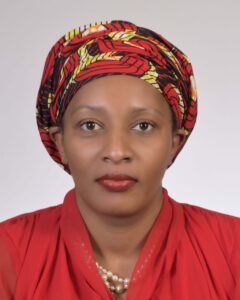
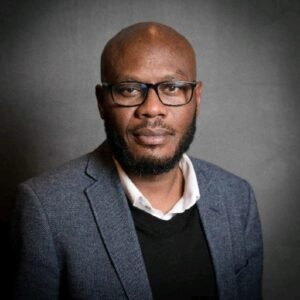
Phanice Mogaka is a public affairs advisor and pan‑African development advocate known for her work in diplomacy, strategic communications, and shaping narratives that advance Africa’s political and economic agency. Dr. Wale Osofisan is a governance strategist, international development expert, and policy analyst recognised for his thought leadership on Africa’s political economy, trade systems and development futures.
- business a.m. commits to publishing a diversity of views, opinions and comments. It, therefore, welcomes your reaction to this and any of our articles via email: comment@businessamlive.com