
Life is deep, but it is often lived superficially. The human mind has a way of avoiding the depths and focusing on the surfaces of everyday existence. Perhaps it is easier that way and less mentally laborious. After all, the daily preoccupation with the end can make life miserable. But whether we choose the superficiality or not, the depths are still there, staring us in the face. At the end of every life, no matter how gorgeous and celebrated, death is inevitable. As the German philosopher, Martin Heidegger, put it, we are all beings unto death. Death makes a mockery of life and questions the purpose of life. But why do we exist? Have you stopped to consider this question?
This has been a troubling question for many. Some rely on religious beliefs to claim that we exist to satisfy the whims and caprices of God. Some believe we exist because we are here to make amends for some previous mistakes as we evolve unto God, the unifying force – the oneness of existence. If we fail the test of life, this perspective claims, we are downgraded to lower beings. But the question remains – even if we become higher or lower beings, what do we exist for? If we exist for God, why then does God exist? What is the purpose of God? What if there is no God in the end? Will the absence of God redefine our being and behaviour, especially our moral and spiritual behaviour?
Unfortunately for us, life is a mystery beyond our imagination. We pursue it faithfully because we have been indoctrinated to believe there is something beyond. Different religions and cultures have different interpretations of life. They have their books or cosmologies. Everyone claims to be inspired by God, one way or another. But if they were all from God, why do they sing from different hymn books and cosmological gazes? Either God is confused, or he/she deliberately confuses human beings. At the end, we become people tethered to some imaginary beliefs. We act because of God and become the cave people of Plato’s allegory.
Notwithstanding, some people believe that God is in us and we exist in God. But if that is the case, why are we short of our memories? Why can’t our past be presented to us if we ever lived? Why is our present so elusive? Why is our future shielded from us? These incapacitations make us powerless in a world beyond our imaginations. We become directionless architects of our imaginary world. We pretend to work for progress and development as if we fully have control of what development means. That’s the myth embedded in development studies and economics.
In a way, development is a quest for a stable state of comfort, convenience, and contentment. We want an easy and comfortable life. That’s why we invest in infrastructure and machinery. We want to fly. We love our cars. We love our mobile phones. We are connected. That’s comfort and convenience. We measure the quality of life by these. That way, we improvise ways to cope with the ongoing anxieties and perplexities of existence. But many, both the rich and poor, suffer from lack of contentment – i.e., happiness. Sadness seems to be more permanent than happiness. Even if we don’t want to accept it, our joys are simultaneously and persistently punctured by the very existence of death. Death brings an end to joys both for the dead and those left to mourn.
Despite this gloomy picture, does it mean we should do nothing and wait for death? The truth is, no matter what we do, we can’t escape the cold hands of death. So, it is better to do something than nothing. The things we do can at least comfort those who will mourn us. That’s where legacy comes in. What do we live for? What do we stand for? How do we want to be remembered?
Although we don’t live physically for long, our legacies can extend our existence. The great men and women of history we talk about today exist through their legacies. Unfortunately, many are forgotten at death. But does remembrance mean anything to the dead? Why bother about what happens after here? This thinking of limitation is exactly at the heart of short-termism. While some cultures can think about generations unborn and act to safeguard their future, others are about the present and the here and now. Who is better off in the end?
Many African cultures are short-term in orientation. That’s why it is difficult to plan for a long period. No one cares. That’s why our old politicians still grab and run, and you wonder why they would be thinking of legacies or why they should even hang onto power when life is slipping from their grips. No one can cheat nature. There is only one end, and no one can avoid it.
The appreciation of our finality should be humbling and help us be the best we can while we have life in us. Despite its promises and glamours, the reality of death makes a mockery of life. Notwithstanding, the recognition of the emptiness of life masquerading as the fullness of existence should keep us perpetually reflective and make us, like the psalmist, cry out from our depths for peace and tranquillity. Perhaps in that quietude and silence, we can find God as our refuge and stronghold.
KENNETH AMAESHI, PhD
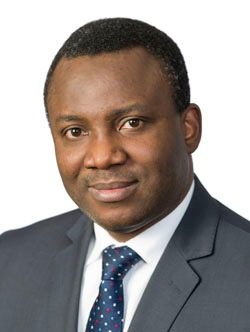
Kenneth Amaeshi, a public philosopher, is a professor of sustainable finance at the European University Institute, Florence, Italy, a professor of sustainable business and public policy at the University of Edinburgh, United Kingdom, and the first occupier of the First Bank Samuel Asabia Professorial Chair in Business Ethics, University of Lagos, Nigeria.
- business a.m. commits to publishing a diversity of views, opinions and comments. It, therefore, welcomes your reaction to this and any of our articles via email: comment@businessamlive.com








Dear Trevor: Africa is calling (1)