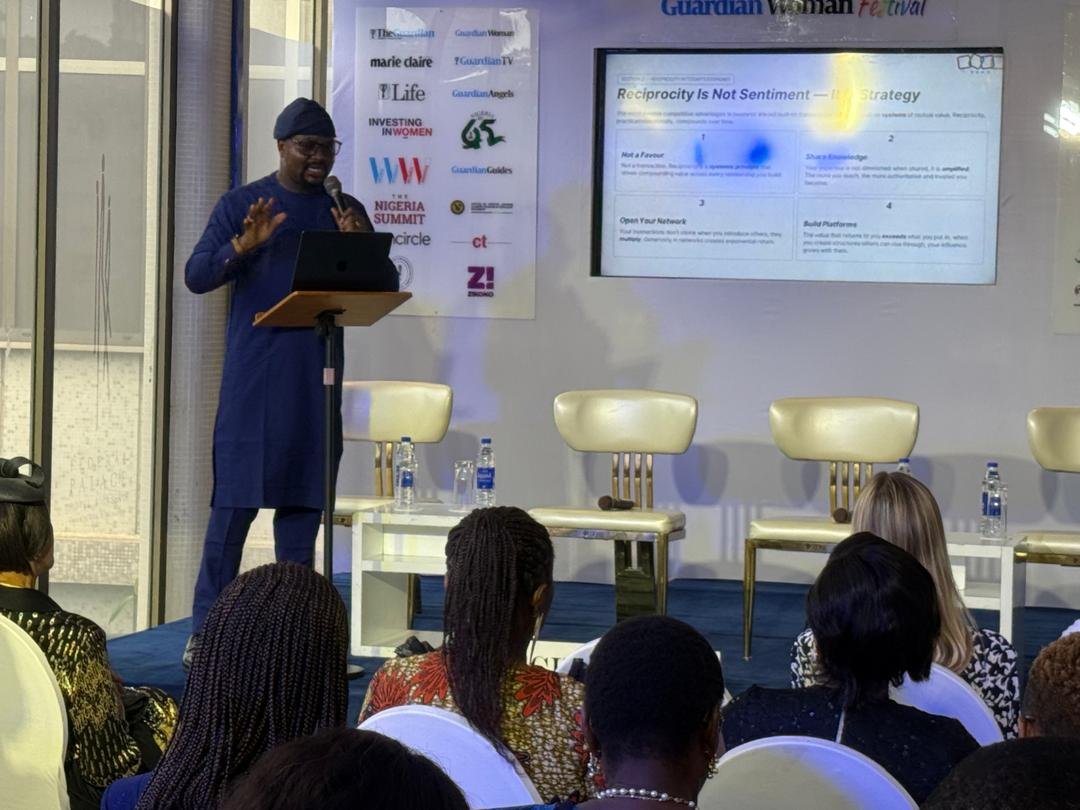
Zoho Nigeria has intensified its push for inclusive digital transformation through a strategic partnership with Guardian Newspapers at the recently concluded Guardian Woman Festival, a month-long initiative spotlighting the economic and social contributions of women while advancing conversations around digital empowerment.
Held at the Federal Palace Hotel in Victoria Island, the festival convened business leaders, policymakers, and entrepreneurs under the theme “Reciprocity,” emphasising value exchange, collaboration, and innovation as critical levers for scaling women-led enterprises in Nigeria’s evolving digital economy.
The discourse centered on the widening digital adoption gap among female entrepreneurs, a structural constraint that industry stakeholders argue is increasingly undermining competitiveness. Delivering a keynote titled “Give Value, Gain Growth: Women Driving Reciprocal Innovation in the Digital Economy,” Kehinde Ogundare,Zoho Nigeria’s country head, described the issue as less about access to capital or talent and more about technology utilization.
Nigeria, he noted, boasts the highest concentration of women-owned businesses in Africa, yet fewer than 30 percent leverage digital tools for operations or growth. This disconnect, according to Ogundare, represents a missed opportunity for both productivity gains and market expansion.
“The difference is not talent. Not capital. Not ambition. It is digital adoption,” he said, positioning technology as a multiplier rather than a disruptor of women’s established business strengths. He emphasised that competencies such as relationship management and community engagement; areas where many female entrepreneurs excel, can be significantly amplified through digital platforms, enabling broader reach and operational scalability.
Further reinforcing this narrative, Zubaida Aliyu, sales manager at Zoho Nigeria, contributed to a panel discussion on “Women in the Business of Digital Innovation,” where she reframed digital inclusion as a core business strategy rather than a peripheral corporate social responsibility initiative.
Aliyu argued that digital tools inherently democratize access by neutralizing traditional barriers such as geography and infrastructure limitations. In doing so, they create a level playing field that allows smaller, women-led enterprises to compete more effectively with larger firms.
Her critique of organisations that underinvest in inclusive digital strategies was particularly pointed: companies that fail to integrate women into their digital ecosystems are, in her words, “leaving money on the table.”
Through its engagement at the festival, Zoho Nigeria signaled a long-term commitment to lowering barriers to enterprise technology adoption. The company’s strategy centers on delivering affordable, scalable, enterprise-grade solutions tailored to small and medium-sized businesses, a segment where women are heavily represented.