
How valuation builds our prosperity (Unlocking Nigeria’s wealth), as of late April 2026, silicon metal prices are trading around 8,470 CNY/T (approximately $1,170–$1,200 USD/T) in China. This marked a slight decline, according to Trading Economics, which claimed silicon traded higher in the first quarter of 2026. The broader global market, particularly high-purity silicon for aluminum alloys and electronics, is robust, with the market growing due to demand for solar power, electric vehicles, electronic semi-conductors, metal buildings construction and artificial human beings (robots). High-purity silicon is critical for solar photovoltaics, consumer goods and healthcare: It is also used in silicones for sealants, lubricants, and medical devices.
But silicon abounds in Nigeria locked inside sands (silica), yet we do not have the capacity to unlock it! Silicon is a hard, brittle, blue-grey crystalline metalloid element commonly found in sand and rock. As the second most abundant element in Earth’s crust after oxygen, it is a crucial semiconductor used in electronics (computer chips, solar cells) and in the manufacturing of silicone, a sealant in the construction industry. Silicon is the second most common element on Earth, making up almost 28 percent of the crust. To unlock silicon from sand (silica) we must evolve technology and methodology to decompose silicon from our abundant silica!
ALSO : AGHAN warns of flight disruption as N9bn airline debt lingers
Unlocking Nigeria’s wealth involves a strategic shift from a consumption-driven economy to a production-based one, largely achieved by accurately valuing, monetising and formalising national assets. Through valuation and proper real estate documentation (titling), “dead capital” — hidden assets like land and abandoned public projects — can be converted into active economic value to attract global capital and boost Nigeria’s gross domestic product (GDP).
Unlocking national assets through valuation
Valuation is the database, analytical process of determining the current worth of an asset, company, or investment. It combines financial analysis — such as forecasting cash flows, reviewing balance sheets and assessing market conditions — to estimate a fair price for buying, selling, or investing and for decision-making about when to buy, sell, rehabilitate and retain or dispose of assets for profits. Valuation is the process of determining the monetary worth of an asset using the appropriate approach based on the basis (purpose) of valuation.
The following methods can be used to unlock the wealth of Nigeria through valuation:
Monetising public assets: Valuation concepts state that income on a property (rent) is directly related to the worth (capital value) of the property. The federal government can aim to create jobs and boost economic growth by unlocking the value of trillions of Naira in government-owned assets. This involves identifying the assets, tagging and keeping them in the electronic register, valuing their worths and deciding whether to let or sell these properties. It also involves reforming the Ministry of Finance Incorporated (MOFI) into an active asset manager.
Transforming “Dead Capital”: A significant portion of Nigeria’s wealth is locked up in untitled land and informal businesses. According to Andrew Nevins, chief economist, PwC Nigeria, over $300 billion dollars are locked down as dead capital in Nigeria. Implementing comprehensive land titling and registration allows for these assets to be used as collateral, thereby unlocking financing for investment and development.
Capital market participation: Valuation facilitates the listing of businesses on the capital market, as demonstrated by the success of firms like MTN Nigeria, Airtel, First Bank, Dangote Cement etc. A larger, more efficient capital market can better reflect the true economic potential of the nation.
Industrialisation and value addition: Transitioning from exporting raw materials to adding value to them – specifically in mining and agriculture — is essential for industrial renaissance.
Valuation as tool for land use maximisation: Locations like water front attract premium values because of the aeration and scenic view.
Strategic pathways to wealth generation
Active asset management: By optimizing resources (e.g., in the mining sector), the government can enhance the economic value of assets, creating jobs, and increasing the foreign exchange liquidity required to stabilize the Naira.
Infrastructure investment: Proper valuation (investments appraisal) supports public-private partnerships (PPPs) in upgrading critical infrastructure such as energy, transportation, and digital networks, which are crucial for industrial growth.
Sectoral focus: With regular valuation and re-valuation, high-potential sectors can be unlocked. These sectors include the blue economy (maritime), the digital economy, and the solid mineral sector, which could add up to ₦30–45 trillion to the economy according to the Nigerian Economic Summit Group (NESG).
Proposed reforms for economic growth
Land Use Act reform: Valuation revealed that land with formal title commands values higher than untitled land. Modernising land administration to make titles easily transferable will improve the overall worth of assets in Nigeria.
Tax system simplification: Land-based taxation like tenement rate, neighbourhood improvement tax and ground rent should be valuation based. Proper valuation of land and buildings will close loopholes and strengthen tax collection through digitalisation.
Local content enforcement: Valuation can determine the level of value-addition of our manufacturing process through costing. It can ensure that economic activities generate benefits locally rather than exclusively for foreign entities.
- business a.m. commits to publishing a diversity of views, opinions and comments. It, therefore, welcomes your reaction to this and any of our articles via email: comment@businessamlive.com

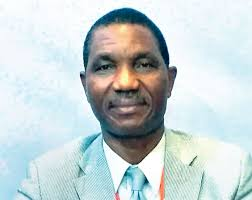
Olufemi Adedamola Oyedele, MPhil. in Construction Management, managing director/CEO, Fame Oyster & Co. Nigeria, is an expert in real estate investment, a registered estate surveyor and valuer, and an experienced construction project manager. He can be reached on +2348137564200 (text only) or femoyede@gmail.com







This government must not raid investors’ money