April arrives for me not as a calendar event but as a reckoning. Two men I loved were born this month. Neither is still here. Both, in the ways that count most, have never left.
Last weekend, during my Thanksgiving celebration, I paused to mark what would have been the 100th birthday of my father, Solomon Babafemi Awe. He spent his career at the Nigeria Ports Authority, rising to Deputy Director of Personnel. His colleagues called him something unrequested and unstaged: “the Black President.” Not for a title. For a bearing. When he retired, he returned every government vehicle, every asset, every item the state had ever placed in his care. Quietly. Without announcement. In an environment that tolerates entitlement, he chose stewardship.
Today marks what would have been the 72nd birthday of my late mentor, Dr. Myles Munroe. A man who trained leaders across more than 120 countries and who, in 2014, took his leave — and has not stopped speaking since. Dr. Munroe used to observe that the wealthiest place on earth is the cemetery: filled with unwritten books, unlaunched enterprises, undeveloped leaders, and unspoken truths. He refused to contribute to that wealth. So did my father.
Two April legends. Two lives fully spent. One question they have left me with, and that I now put to you.
“True leadership is not self-declared. It is revealed through consistent evidence until others come to trust what you carry.”
- Influence that outlasts presence
Behavioural science has been precise on this point for decades. The most durable change in human behaviour does not come from instruction. It comes from sustained exposure to a credible model. Social learning research established long ago that people absorb the patterns of those they observe repeatedly over time — not those who speak loudest in the room.
My father did not lecture me about integrity. He demonstrated it, year after year, in decisions that cost him something. When mirror neuron research tells us that we internalise the rhythms of those who lead us, it is simply confirming what my childhood already taught me: character is contagious. The question is whether what you are spreading is worth catching.
- Ubuntu as a systems-level discipline
The Nguni principle, “umuntu ngumuntu ngabantu” — a person is a person through other persons — is not sentiment. It is a systems-level description of how human development compounds. We do not flourish in isolation. We flourish inside ecosystems of deliberate mutual investment.
My father’s decision to return every government asset was Ubuntu in its most rigorous expression: a refusal to privatise what had been held in trust, and a determination to leave the system stronger than he entered it. That single act — unwitnessed, unrewarded, unreported — became the most precise leadership lesson of my life. Every leader is, right now, creating a case study. The question is not whether your story will be told. The question is what your people are already narrating.
III. Psychological safety as the architecture of legacy
The most rigorous team-performance research of the past two decades converges on an uncomfortable finding for results-driven executives: the single greatest predictor of sustained high performance is not strategy, talent density, or capital. It is psychological safety — the degree to which people believe they can speak, fail, question, and grow without penalty.
The leaders who leave the deepest imprints are those who created conditions in which others became more fully themselves. Dr. Munroe did not build dependents. He built leaders who built leaders. His was not a ministry of answers but of permission — permission for people to discover, and then trust, what they already carried. Ask yourself honestly: are the people around you expanding or contracting? That answer will outlast your tenure.
- The compounding return on human investment
Positive psychology describes what economists would recognise as compound interest: consistent, well-directed deposits into human potential generate returns that multiply beyond any individual’s ability to track or control. A courageous conversation. A promotion given before it was obvious. An acknowledgement extended without strategic calculation. These are not soft gestures. They are high-yield investments in a currency that does not depreciate.
My father developed hundreds of professionals across a career spanning over three decades. Dr. Munroe trained thousands of leaders who trained thousands more. Neither man could have calculated the reach of those investments in real time. That, precisely, is the point. Legacy compounds in the dark, long before it becomes visible in the light.
April belongs to legends. But legend, I have come to understand, is not a category reserved for the exceptional.
It is a commitment available to the intentional. You do not require a stadium. You require consistency. You do not require an audience of thousands. You require the resolve to show up, day after day, as someone whose conduct can be trusted and whose investments in people outlast the season of your visibility.
So, here is the question I leave with every leader reading these pages this week — not as rhetoric, but as a serious professional inquiry:
When the room falls quiet and your name comes up — what will people say you deposited? Not your title. Not your results. What dent did you leave in a life?
- business a.m. commits to publishing a diversity of views, opinions and comments. It, therefore, welcomes your reaction to this and any of our articles via email: comment@businessamlive.com

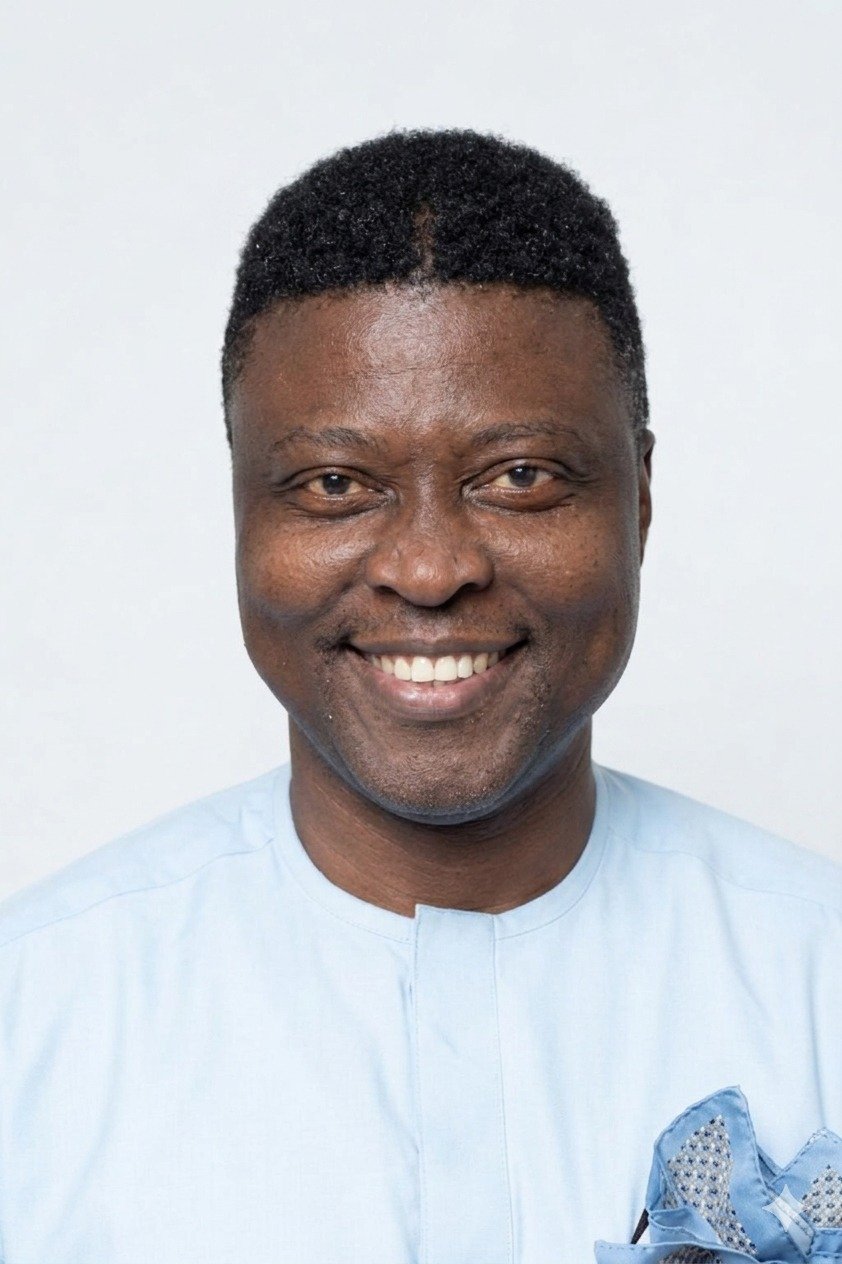
Dr. Joshua Awesome is a Coaching Psychologist/Executive and Business Performance Coach who has supported over 100,000 professionals across Africa and the globe. He can be reached via: joshua@africainmind.org