Global oil markets rallied on Thursday, with benchmark crude prices rising amid escalating geopolitical tensions involving the United States and Iran, raising fresh concerns over sustained supply disruptions in the Middle East.
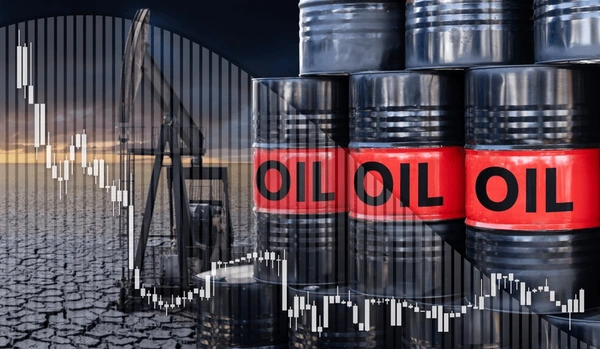
Brent crude futures climbed as much as 7 percent during trading, extending a multi-session rally driven by reports that the US is weighing potential military action against Iran. The June Brent contract rose $6.81, or 5.8 percent, to $124.84 per barrel as of early trading, marking its ninth consecutive daily gain before expiry. Meanwhile, the more actively traded July contract stood at $113.78, up 3 percent.
U.S. West Texas Intermediate (WTI) crude also advanced, gaining $2.76, or 2.6 percent, to $109.64 per barrel, continuing an upward trend seen in eight of the past nine sessions. Both benchmarks are now on course for a fourth straight month of gains, with Brent prices more than doubling since the start of the year.
Investor sentiment has been rattled by reports that Donald Trump is set to review plans for targeted military strikes on Iran, aimed at forcing a return to stalled nuclear negotiations. The development follows months of escalating hostilities that began with coordinated U.S.-Israeli airstrikes in late February.
In retaliation, Iran has effectively shut down shipping through the Strait of Hormuz, while the U.S. has imposed a blockade on Iranian ports despite a fragile ceasefire.
The resulting disruption has significantly constrained oil exports from the region, intensifying supply-side pressures in an already tight market.
Analysts warn that the standoff shows little sign of resolution. “Prospects for any near-term reopening of the Strait of Hormuz remain dim,” said Tony Sycamore, a market analyst at IG.
The focus on geopolitical risk has also eclipsed longer-term structural developments, including the weakening cohesion of OPEC+ following the United Arab Emirates’ planned exit from the group effective May 1.
While OPEC+ is expected to approve a modest production increase of around 188,000 barrels per day at its upcoming meeting, market observers believe this will do little to offset the scale of current disruptions.
With supply constraints persisting, attention is increasingly turning to demand-side adjustments. Analysts at ING estimate that high prices could erode global oil demand by approximately 1.6 million barrels per day as consumers and industries scale back usage.
However, this reduction is unlikely to fully bridge the supply gap. “It’s clearly not enough to rebalance the market under current conditions,” ING noted.