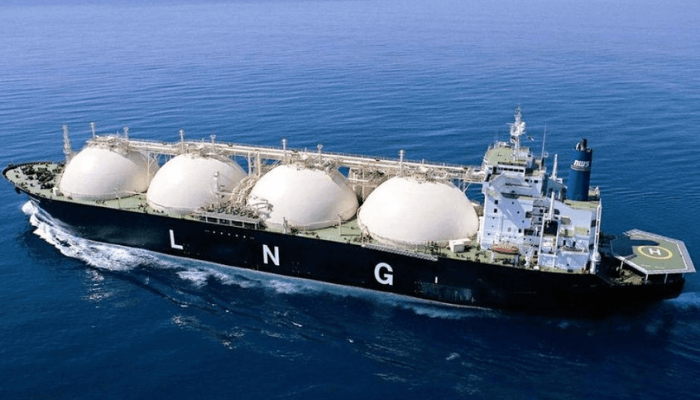
Escalating geopolitical tensions in the Middle East are set to significantly disrupt global liquefied natural gas (LNG) markets, with analysts warning that supply could shrink by as much as 15 percent while planned capacity growth faces delays stretching into the latter part of the decade.
According to the latest Gas Market Report from the International Energy Agency (IEA), damage to critical LNG infrastructure in Qatar and the effective closure of the Strait of Hormuz could result in a cumulative loss of approximately 120 billion cubic metres (bcm) of LNG supply between 2026 and 2030.
The disruption marks one of the most severe shocks to global gas markets in recent years, with the agency warning that while new liquefaction projects, particularly in North America, will eventually help offset the losses, the near-term impact will be prolonged tightness in supply.
“While new liquefaction projects in other regions are expected to offset these losses over time, the impact will prolong tight markets through 2026 and 2027,” the IEA noted, adding that the anticipated wave of LNG expansion is now likely to be delayed by at least two years.
Qatar, one of the world’s largest LNG exporters, has emerged as a focal point of the crisis after QatarEnergy declared force majeure on supply contracts earlier this year, following military strikes that shut down production facilities in Ras Laffan and Mesaieed.
The halt in output, combined with restricted shipping access through the Strait of Hormuz, triggered a sharp contraction in regional exports. Analysts estimated that LNG shipments from the Middle East fell by as much as 70 percent during the peak of the disruption in March.
This has had immediate consequences for global supply balances. The IEA reported that worldwide LNG production fell by 8 percent year-on-year in March, while deliveries declined by 10 percent during the first 20 days of April.
Despite the severity of the disruption, growth in LNG supply from North America has provided a partial buffer. The IEA noted that global LNG trade expanded by 9.5 percent year-on-year between October and March, supported by new liquefaction capacity, including projects such as the Plaquemines LNG plant.
North American LNG output rose 35 percent over the same period, with the United States ramping up exports following policy measures aimed at increasing shipments to both free trade and non-free trade agreement partners.
Even so, the agency cautioned that the Middle East crisis has effectively reversed broader growth trends, pushing global LNG production from “double-digit growth to contraction” in recent months.
Interestingly, the impact on prices has been less severe than during previous global energy shocks. According to Wood Mackenzie, wholesale power prices across Europe’s major markets averaged just over €90 per megawatt-hour in March 2026, well below the peaks seen during the Russia-Ukraine war energy crisis, when prices soared to around €280/MWh.
Analysts attribute this relative stability to structural changes in energy systems, particularly increased reliance on renewable energy and battery storage, which have reduced dependence on gas-fired power generation.
“The Ukraine war illustrated for Europe the benefits of diversifying away from volatile fossil fuels. Battery storage and renewables are setting prices with increasing frequency, reducing the influence of gas,” said Peter Osbaldstone, research director for Europe power at Wood Mackenzie.
On the demand side, shifts in consumption patterns have also helped moderate market pressures. The IEA highlighted a significant decline in LNG imports across Asia, driven largely by reduced demand from China.
Regional LNG imports fell by 6 percent in March, with China cutting its purchases by 30 percent year-on-year, bringing imports to their lowest level since May 2018. Several Asian economies are also actively pursuing policies to reduce reliance on natural gas, a trend the IEA says will play a critical role in rebalancing the market.
While spot prices in Asia and Europe have eased slightly following a ceasefire in the region, they remain above pre-conflict levels, reflecting continued uncertainty over supply stability.
Looking ahead, analysts warn that the global LNG market is entering a period of sustained tightness. With key supply routes disrupted, infrastructure damaged, and expansion timelines pushed back, the balance between supply and demand is likely to remain fragile.