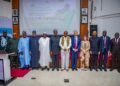
The LEGO Foundation and Co-Impact have announced a new five-year partnership valued at $30 million aimed at strengthening public systems in Nigeria and Kenya to improve learning and wellbeing outcomes for 2.5 million children affected by conflict and humanitarian crises.
The initiative comes amid growing concern over the rising number of vulnerable children globally, with more than one in six children worldwide currently affected by conflict, displacement, or crisis situations that continue to disrupt access to education, healthcare, nutrition, and social protection systems.
The partners said the programme is designed to move beyond short-term humanitarian interventions by supporting long-term, locally driven solutions that can be embedded into national public systems to deliver sustainable impact.
Speaking on the partnership, Tarek Alami, head of international programmes at the LEGO Foundation said education in fragile and conflict-affected environments must go beyond classroom instruction to address the conditions shaping children’s wellbeing and ability to learn.
“Education is about more than what happens in the classroom. Children’s ability to learn and thrive is shaped by their health, wellbeing, and the environments around them. When education is designed to meet the realities of trauma and displacement and when teachers, schools, and families are supported in that process, classrooms and communities can become places of stability, healing, and possibility,” Alami said.
Across many conflict-affected communities, children returning to school after displacement or crisis often struggle with trauma, insecurity, and inadequate learning conditions. Education systems in such areas are frequently overstretched, underfunded, and poorly equipped to respond to the psychosocial and developmental needs of vulnerable children.
The organisations noted that fragmented donor funding and short-term interventions have historically limited the sustainability and scalability of support programmes across many developing countries.
To address these gaps, the new partnership will leverage Co-Impact’s decade-long experience in systems strengthening and local leadership development by providing multi-year, flexible funding and strategic support to local and refugee-led organisations operating in affected communities.
The funding structure is expected to enable these organisations to collaborate more effectively with governments and communities to shape policies, strengthen accountability mechanisms, train teachers, support families, and unlock sustainable financing models capable of improving long-term educational outcomes.
Awo Ablo, president, Co-Impact described the initiative as both a responsibility and a strategic opportunity to redesign how public systems support children affected by conflict and crisis.
“Making systems work for children affected by conflict and crisis is a responsibility and opportunity,” Ablo said.
“We want to make this opportunity a reality by bringing what we have learnt over the past decade to this issue. We know that when we back local leaders with strategic support and long-term flexible funding, they can work with governments to scale their solutions through public systems.”
He added that the partnership with LEGO Foundation is focused on supporting local leaders who understand the realities facing vulnerable children and the broader systems influencing their development.
“In partnership with the LEGO Foundation, we are applying that approach and investing in local leaders who are widening the aperture of what it means to support children’s education and wellbeing. They understand the systems that shape children’s lives, and they know that a child’s ability to thrive is shaped both inside the classroom and far beyond it,” Ablo stated.
Nigeria and Kenya were selected for the programme due to the scale of educational disruption in both countries and the policy commitments demonstrated by their governments toward improving education access in crisis-affected regions.
In Nigeria, an estimated 17.8 million children remain out of school, representing the largest education crisis in Africa. Nearly half of these children are located in conflict-affected communities where insecurity, poverty, displacement, and weak infrastructure continue to undermine access to formal education.
The partners acknowledged ongoing government initiatives such as the Safe Schools Initiative and the National Policy on Safety, Security and Violence-Free Schools as important foundations for broader collaboration and systems reform.
In Kenya, more than 250,000 refugee children remain outside the national education system, while climate-related shocks have reportedly forced an additional two million children out of school. Kenya’s Shirika Plan, which seeks to integrate refugees into national systems, was cited as evidence of strong government commitment to inclusive education reform.
The LEGO Foundation and Co-Impact said the partnership is aligned with national priorities in both countries and is intended to support government-owned reforms at national and sub-national levels rather than temporary relief interventions.
The organisations also stressed that improving learning outcomes in fragile settings requires a broader systems approach that integrates education with healthcare, nutrition, water access, sanitation, and community support structures.
According to the partners, the initiative is designed as a collaborative platform capable of attracting additional funders interested in supporting long-term, system-wide change across Africa’s most vulnerable communities.
They noted that aligning investments across education, health, nutrition, and WASH sectors would help reinforce the conditions required for children to learn, recover, and thrive while strengthening the resilience of public systems tasked with serving them.