By Oluwadarasimi Omiyale
Lagos’ hospitality market is increasingly being reshaped not by tourism, but by the relentless rhythm of corporate mobility.
Across the commercial districts of Victoria Island, Ikoyi, Ikeja and Lekki, hotels are witnessing a sustained rise in occupancy levels as executive travel, conferences, consulting projects and multinational business activities continue to fuel demand in Nigeria’s economic capital.
According to a report by Smith Travel Research (STR data), the global gold standard for hotel benchmarking and hospitality market intelligence, Lagos hotel occupancy rates reached 66.7 percent as of October 2025, driven largely by weekday corporate bookings linked to financial services, oil and gas, telecommunications, consulting and government-related travel.
Operators say demand patterns have become increasingly structured around corporate calendars, with midweek occupancy significantly outperforming weekends due to meetings, conferences, training sessions and executive business trips. The trend is also pushing room rates steadily higher.
Meanwhile, data from Estate Intel’s Lagos Real Estate Development Pipeline Report 2025/2026, showed that average daily room rates for premium business hotels in Lagos have risen to around N205,534, equivalent to around $351, reflecting sustained demand, constrained supply growth and rising operating costs within the hospitality sector.
For many operators, the strongest occupancy levels now occur between Monday and Thursday, while weekends remain comparatively softer outside major events, weddings and entertainment-driven gatherings.
Industry analysts say Lagos’ hospitality sector is now functioning more like a business infrastructure ecosystem than a conventional tourism market. That mobility is heavily concentrated around Lagos’ major commercial and transport corridors.
Recent figures from the Federal Airports Authority of Nigeria (FAAN), show that the Murtala Muhammed International Airport (MMIA) corridor in Ikeja remains one of the city’s most strategic hospitality clusters, benefiting from a constant flow of domestic and international travellers.
The airport is seen to handle over seven million passengers annually, including more than three million international travellers. This has made airport proximity one of the strongest determinants of hotel demand in Lagos.
Hotels within close range of the airport continue to benefit from airline crew layovers, delayed flights, overnight transit traffic, early departures and short-duration corporate stopovers.
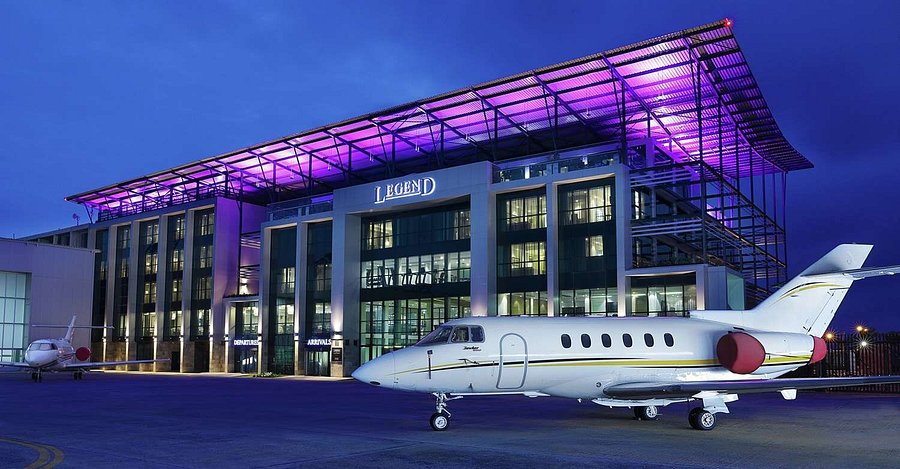
Properties such as Legend Hotel Lagos Airport, Lagos Marriott Hotel Ikeja, Radisson Blu Hotel Ikeja and Sheraton Lagos Hotel have emerged as key beneficiaries of the airport-driven business travel ecosystem.
Beyond Ikeja, Victoria Island and Ikoyi continue to dominate the premium hospitality market, driven largely by the concentration of multinational headquarters, embassies, financial institutions and high-value corporate activity.
Hotels including Eko Hotel & Suites, Lagos Continental Hotel and Radisson Blu Anchorage Hotel remain among the city’s leading premium operators, with room rates typically ranging between $150 and $350 depending on conference activity, occupancy cycles and seasonal corporate demand.
Conference activity has become particularly important to sustaining occupancy and pricing levels.
Industry operators say business events, executive retreats, product launches, investment summits and sector-specific conferences are increasingly supporting stable hotel performance across the city. For premium operators, meetings and conferences now represent a major revenue driver beyond accommodation alone.
The strong demand environment is unfolding at a time when new hotel supply growth is becoming increasingly constrained.
Lagos currently has an estimated 10,728 hotel rooms across different categories, while about 3,709 additional rooms remain in the development pipeline.
However, more than one-third of those proposed projects are currently on hold as developers struggle with rising construction costs, exchange-rate volatility and tightening financing conditions. This is as the depreciation of the naira has significantly increased the cost of imported building materials, hotel fittings, elevators, cooling systems and technical infrastructure required for premium hospitality developments. At the same time, higher interest rates and cautious bank lending conditions have made long-term project financing more difficult to secure.
Analysts say the slowdown in new supply is indirectly strengthening existing operators by limiting excess room capacity in key commercial districts. That imbalance between supply and demand is helping sustain occupancy levels and support room pricing despite increasing competition from alternative accommodation models.
Short-let apartments and serviced residences are becoming increasingly prominent across Lekki, Ikoyi and Victoria Island, particularly in mixed-use residential districts where flexible accommodation demand is growing. These alternatives are attracting more price-sensitive travellers, project consultants and long-stay guests looking for lower accommodation costs and residential-style convenience.
Yet traditional hotels continue to dominate the premium corporate segment due largely to stronger security frameworks, conference infrastructure, service consistency and operational standards demanded by multinational firms and institutional clients.
For many international companies, established hotels still offer stronger compliance assurance and travel management efficiency than fragmented short-let offerings.
Corporate travel management firms are also playing a bigger role in shaping Lagos’ hospitality demand patterns. Travel platforms handling bookings for multinational companies, consulting firms and government agencies are increasingly influencing occupancy flows across the city’s premium hotels.
Industry operators say the institutionalisation of corporate travel is making hotel demand more predictable and less dependent on seasonal fluctuations.
The implications stretch beyond hospitality alone. Analysts note that rising hotel occupancy levels often serve as an indicator of business confidence, commercial activity and executive mobility within major urban economies.
For Lagos, the sustained rise in hotel performance indicates that despite macroeconomic headwinds, corporate activity across key sectors of the economy remains relatively resilient.
The development further reinforces Lagos’ standing as Nigeria’s undisputed commercial capital and one of the most important business destinations in sub-Saharan Africa.
Still, the operating environment remains challenging. Hotel operators continue to face mounting costs linked to inflation, unstable electricity supply, diesel prices, exchange-rate volatility and imported operational inputs.
Energy remains one of the sector’s largest cost burdens as many hotels rely heavily on diesel-powered backup systems to guarantee uninterrupted electricity supply for guests and conference facilities.
Moreso, labour expenses, food procurement, maintenance contracts and imported hospitality technology systems have become significantly more expensive in the current economic climate.
As a result, operators have increasingly adjusted room rates upward to preserve margins and maintain service quality.
Yet, demand in the corporate segment has remained relatively resilient despite the rising costs.
Business travellers, particularly multinational executives and institutional clients, continue to prioritise convenience, security, location and service reliability over price sensitivity.
This resilience is helping position Lagos as one of Africa’s stronger-performing business hospitality markets despite broader economic volatility.
Industry analysts believe the outlook for the city’s hotel sector remains positive over the medium term, particularly if corporate mobility, aviation traffic and conference activity continue to expand.
Much of that optimism rests on Lagos’ growing role as a regional business gateway connecting financial markets, multinational operations, energy investments and diplomatic activity across West Africa.
With occupancy holding firmly above 66 percent and premium room rates climbing beyond N200,000 per night, Lagos’ hotel market is no longer being defined primarily by tourism cycles.
Instead, it is being powered by the movement of business, capital and corporate decision-making; the defining characteristics of a city consolidating its place as West Africa’s commercial nerve centre.