BUA Cement Plc generated N278.45 billion in operating cash in the first half of 2026, giving the cement maker significant financial headroom to continue its capacity expansion programme as improved foreign exchange conditions sharply reduced its finance-cost burden.
The company’s strong cash conversion came as BUA Cement continued to invest heavily in production assets, with capital expenditure exceeding N60.67 billion during the period.
Property, plant and equipment rose to N1.22 trillion from N1.18 trillion at the end of 2025, while construction work-in-progress climbed to N183.86 billion.
The figures highlight the scale of the company’s ongoing expansion programme as BUA Cement moves to increase installed production capacity from 17 million metric tonnes per annum to 20 million metric tonnes.
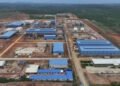
The expansion includes the construction of a new greenfield cement plant in Ososo, Edo State.
The investment comes as the company seeks to strengthen its production base and capture future demand in Nigeria’s construction and infrastructure markets.
Despite substantial dividend payments and capital spending, BUA Cement’s operating activities generated enough cash to provide continued support for its expansion plans.
The company also benefited significantly from a more stable foreign exchange environment during the period.
BUA Cement recorded a net foreign exchange gain of N16.57 billion in the first half of 2026, compared with a gain of just N782.8 million in the corresponding period of 2025 and a full-year foreign exchange loss of N9.70 billion in 2025.
The reversal significantly reduced the company’s financing burden.
Net finance costs fell to N3.41 billion in the first half of 2026 from N31.37 billion in the same period of 2025, despite the company continuing to carry substantial borrowings.
Finance income also rose sharply to N18.73 billion, supported by higher interest income from cash balances.
The improvement in finance costs gives BUA Cement greater flexibility to direct cash toward production expansion and other strategic investments.
Yusuf Binji, managing director and chief executive officer of BUA Cement, said the company remained focused on capturing new growth opportunities while maintaining cost discipline.
“We have delivered a strong quarter despite the constraints encountered,” Binji said.
He said the company’s growth initiatives and cost optimisation programmes were gaining traction, adding that ongoing process improvements were expected to deliver higher productivity and better cost management in the coming quarters.
“I am very encouraged by our outlook and performance over the next quarters,” he added.
The rise in construction work-in-progress to N183.86 billion provides an indication of the capital intensity of BUA Cement’s current expansion cycle.
The company’s increase in production assets is aimed at supporting future volumes and strengthening its ability to serve growing demand across Nigeria and other markets.
For the cement industry, capacity expansion remains a key competitive factor as producers seek to benefit from infrastructure development, housing demand and large-scale construction activity.
BUA Cement’s planned increase to 20 million tonnes per annum would further strengthen its position among Nigeria’s major cement producers.
The challenge, however, will be converting the additional capacity into profitable volume growth while managing energy costs, logistics, input prices and the risks associated with future currency volatility.
For now, the company’s first-half performance shows a business generating substantial cash from operations, investing heavily in productive assets and benefiting from a sharp reversal in foreign exchange-related financial pressure.
The combination gives BUA Cement a stronger financial platform to pursue its next phase of expansion.