For decades, Nigeria’s electricity sector operated under a heavily centralised model. Major decisions on regulation, licensing, market design, and system expansion were concentrated at the federal level. States carried the economic burden of poor electricity supply, yet had limited authority to independently shape solutions.
That structure has now changed.
The Electricity Act 2023 may prove to be one of the most economically consequential reforms in recent Nigerian history. It creates a pathway for states to play a far more direct role in generation, transmission, distribution, and regulation within their territories. While much of the public discussion has focused on tariffs, the deeper story is competition. For the first time, states have the room to compete for investment through power policy — a shift that could redefine Nigeria’s economic geography.
Why this reform matters: Beyond the “one-size-fits-all” model
Nigeria is too economically diverse for a centralised electricity strategy. The power needs of Lagos (dense commercial demand) differ sharply from those of Ogun (industrial manufacturing), Benue (agro-processing), or Northern states (high-irradiance solar potential).
The Electricity Act allows states to design solutions aligned with their own comparative advantages. In a country where electricity often determines whether a business grows or fails, this authority translates directly into jobs and higher revenues.
Electricity as a state growth strategy
Forward-looking governors should no longer view electricity as merely a utility issue; it is a growth strategy. States that solve power constraints faster than their neighbours will attract the lion’s share of:
- Manufacturing plants and warehousing hubs
- Agro-processing facilities and technology campuses.
- Real estate development and SME expansion.
The Result: Higher PAYE collections, increased land values, and stronger Internally Generated Revenue (IGR).
The economic upside
Consider a state that enables 200 MW of reliable new supply. That capacity could support multiple industrial estates, thousands of SMEs, and several commercial clusters. For many states, this reform is a more durable revenue strategy than increasing taxes on struggling businesses.
Lagos state as a case study.
Lagos State commands one of Africa’s largest economies, with a 2025 nominal GDP estimate of roughly N54.77 trillion in 2024 and projected to grow to N66.47 trillion in 2025 according to the Lagos Economic Development Update (LEDU 2025). However, its productivity is bounded by its energy footprint; the state receives approximately 9,649 GWh (9.6 TWh) of grid electricity annually through (IE Energy Lagos Limited) formerly Ikeja Electric and (Excel Distribution Company Limited) formerly Eko DisCo.
A 10 percent supply expansion would deliver an additional 965 GWh annually — equivalent to 110 MW of continuous Baseload power. To reliably generate and distribute this energy, Lagos requires 150–200 MW of new embedded generation capacity alongside robust transmission and distribution upgrades. Based on international infrastructure benchmarks, this network overhaul demands a capital investment of roughly $300 million (N420 billion).
While the upfront cost is substantial, the economic returns are transformative. Global energy-growth studies by institutions like the World Bank demonstrate that a 10 percent increase in electricity availability strongly correlates with a long-term GDP expansion of 5–10 percent. Applied to Lagos, this infrastructure upgrade could unlock N3.32 – N6.647 trillion in cumulative economic value or (800% – 1,580%) gain on the investment.
This multi-trillion Naira GDP expansion is driven by a cascade of commercial benefits: driving industrial manufacturing, scaling small and medium-sized enterprises (SMEs), and reducing the heavy financial burden of private diesel generation. Furthermore, lower operating costs attract sustained foreign direct investment, boost state internally generated revenue (IGR), and catalyse large-scale job creation across emerging tech and logistics hubs.
Ultimately, optimising the power sector proves that electricity infrastructure is not a public utility drain, but a high-yield strategic investment that multiplies its input value to accelerate macroeconomic development.
The new competitive landscape: Who will move first?
Several states possess immediate strategic advantages:
Lagos: Large demand base and customers with a high willingness to pay for reliability.
Ogun: Industrial proximity to Lagos and established manufacturing corridors.
Kaduna & Kano: Large commercial populations and massive solar potential.
Rivers & Delta: Gas-linked advantages capable of supporting heavy industrial strategies.
The tier-two winners: Success will not be reserved for the biggest economies. States with smaller GDPs but faster execution and better organisation may outperform larger rivals.
Five actions for serious states
Passing a state electricity law is only the first step. To attract capital, governors must prioritise these five execution-focused actions:
- Build credible regulatory institutions: Capital avoids uncertainty. States need professional regulators with transparent licensing and predictable enforcement.
- Map high-value demand clusters: Electricity projects perform best where demand is concentrated — identify industrial estates, hospitals, and agro-belts early.
- De-risk early bottlenecks: Solve the issues developers dislike most: Land acquisition delays, community disputes, and right-of-way access.
- Offer smart incentives: Speed and certainty often matter more than cash incentives. Focus on fast-track approvals and transparent tariff review formulas.
Avoid the “patronage risk”: Power markets are complex. Placing politically connected but technically weak appointees in strategic positions can destroy viable projects. Leadership quality will be measurable in megawatts.
A new power map of Nigeria
For private capital, Nigeria is no longer a single market; it is becoming multiple state-level opportunity zones.
Investors are now asking:
Which states are reforming fastest?
Where is the industrial demand strongest?
Which regulators are credible and independent?
The future of Nigerian electricity may no longer be decided only in Abuja. It will be shaped in governor’s offices and industrial corridors. The Electricity Act does not guarantee success, but it gives ambitious states the authority to pursue it. States that solve power first will industrialise first.
Next Week: Part 4 — From Remittances to Megawatts: How Nigeria Can Finance Power Growth Without Waiting for Foreign Lenders.
business a.m. commits to publishing a diversity of views, opinions and comments. It, therefore, welcomes your reaction to this and any of our articles via email: comment@businessamlive.com
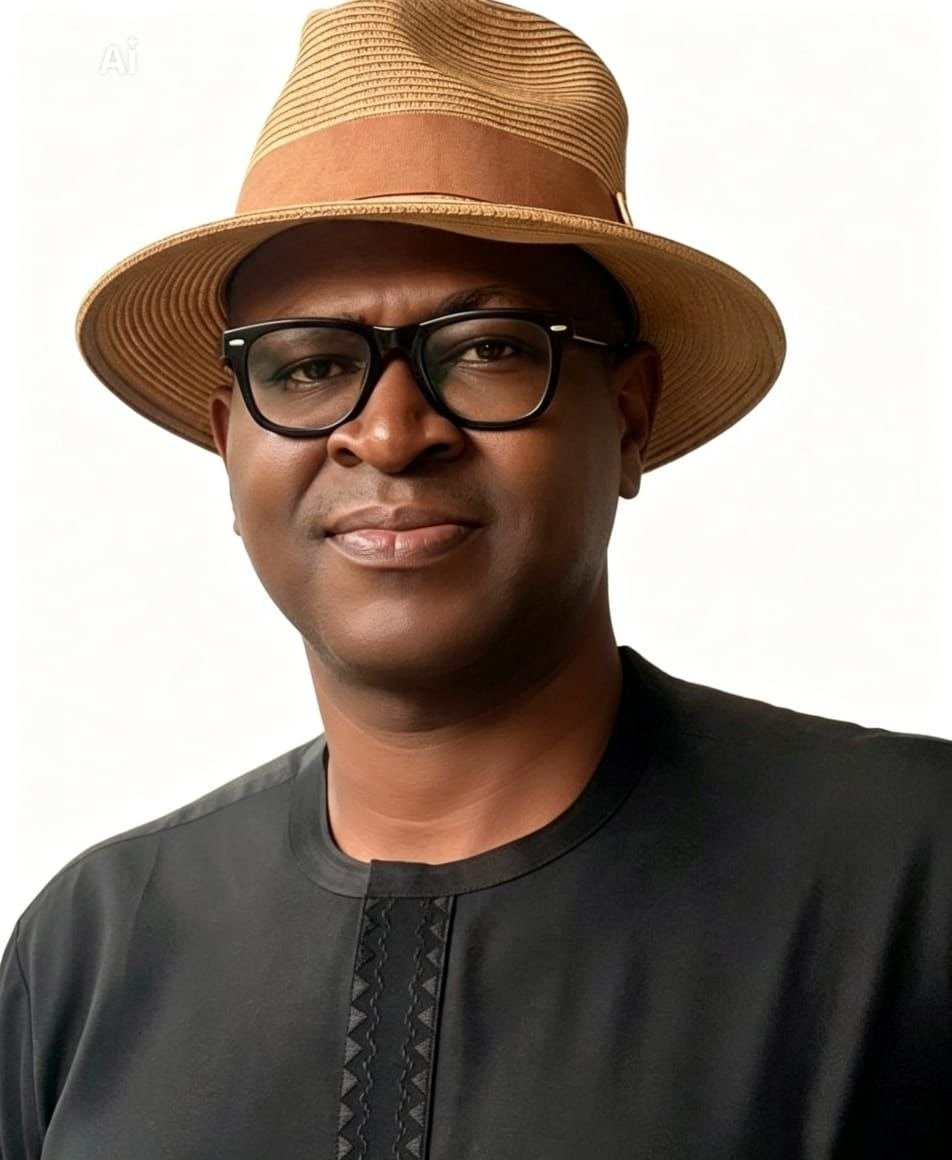
Masah Emmanuel Ikus is a Power and Energy Infrastructure Strategist and the Principal Consulting Partner at EMI Resources Limited. A University of Lagos-trained Electrical Engineer with an EMBA from Lagos Business School, he possesses over 27 years of experience managing complex infrastructure projects across the ICT, Oil & Gas, and Power sectors, specialising in the design of decentralised power systems and solar integration. He currently advises investors, project sponsors, and public institutions on leveraging Nigeria’s energy deficit into bankable commercial opportunities. He can be contacted via masahikus@gmail.com