It is a daily ritual of frustration for millions: the endless honking, heat-soaked crawl across the Third Mainland Bridge or through the labyrinth of Ojuelegba. Lagos’s traffic is more than an inconvenience; it is a multi-billion naira drag on productivity, a public health hazard due to pollution, and a symbol of urban planning under extreme pressure. As the city’s population gallops towards 30 million, traditional solutions, more roads, more bridges, are reaching physical and financial limits. Enter a new hope: the cold, calculating intelligence of Artificial Intelligence, which promises to optimise the flow of the metropolis not by building anew, but by thinking smarter about what already exists.
The concept of the “smart city” is often associated with futuristic visions from Dubai or Singapore. In Lagos, it is taking a characteristically pragmatic, problem-solving form. AI’s primary weapon against traffic is adaptive, intelligent traffic management. Instead of traffic lights operating on fixed, outdated timers, AI systems use networks of cameras and sensors to analyze real-time flow. They can dynamically adjust green-light durations, prioritise emergency vehicles by creating “green waves,” and respond to unexpected blockages like accidents or protests within seconds.
Pilot projects are already underway. The Lagos State Government, in partnership with tech firms, has tested AI-powered cameras at major intersections like Ikeja Under-Bridge. These systems don’t just punish offenders with automated number plate recognition; they feed congestion data into a central “traffic brain.” The proposed end goal is a city-wide Integrated Traffic Management System where AI coordinates signals across entire corridors, from Apapa to Victoria Island.
Beyond traffic lights, AI is revolutionising public transportation planning. By analysing anonymised data from millions of mobile phones, AI can map the true movement patterns of Lagosians, where they live, work, and socialise. This data can be used to redesign bus routes for the Lagos Bus Reform Initiative, ensuring buses go where people actually need them, not just along historic, inefficient paths. It can predict demand spikes during the rainy season or holidays, allowing for proactive deployment of buses.
For the harassed commuter, AI-powered navigation apps like Google Maps and Waze already offer real-time routing. The next step is deeper integration: imagine your app not just telling you the fastest route, but also informing the city’s traffic system of your planned route, allowing the system to smooth aggregate flow.
The potential extends to infrastructure maintenance. AI can analyse data from vibration sensors on bridges or road-surface images from patrol cars to predict pothole formation or structural weaknesses, enabling repairs before catastrophic failure causes gridlock.
The obstacles to this AI-driven utopia, however, are Lagos-sized. The first is infrastructure: a reliable network of cameras, sensors, and fiber-optic cables requires massive investment and protection from vandalism and theft. Stable power and internet connectivity are non-negotiable prerequisites.
The second is data integration and governance. Traffic data resides in silos with FRSC, police, different transport unions, and private telcos. Creating a unified, secure data-sharing framework with strong privacy protections is a complex legal and technical task.
The third, and perhaps most difficult, is human behaviour. The legendary improvisation of the Lagos driver, the “one-way” maneuvers, the disregard for lanes, presents a chaotic input that can confound even the smartest algorithm. Any AI system must be paired with consistent law enforcement and driver education.
“AI is not a magic button we press to end ‘go-slow,'” says Lagos State commissioner for transportation, Oluwaseun Osiyemi. “It is a tool that, for the first time, gives us a comprehensive, real-time understanding of the organism that is Lagos traffic. With that understanding, we can make surgical interventions instead of blind guesses.”
The promise of AI for Lagos is not a city without traffic, but a city where traffic flows with a rhythm guided by data. It is the promise of reclaimed hours for families and businesses, of cleaner air, and of a megacity that finally masters the complex dance of its own movement.
- business a.m. commits to publishing a diversity of views, opinions and comments. It, therefore, welcomes your reaction to this and any of our articles via email: comment@businessamlive.com

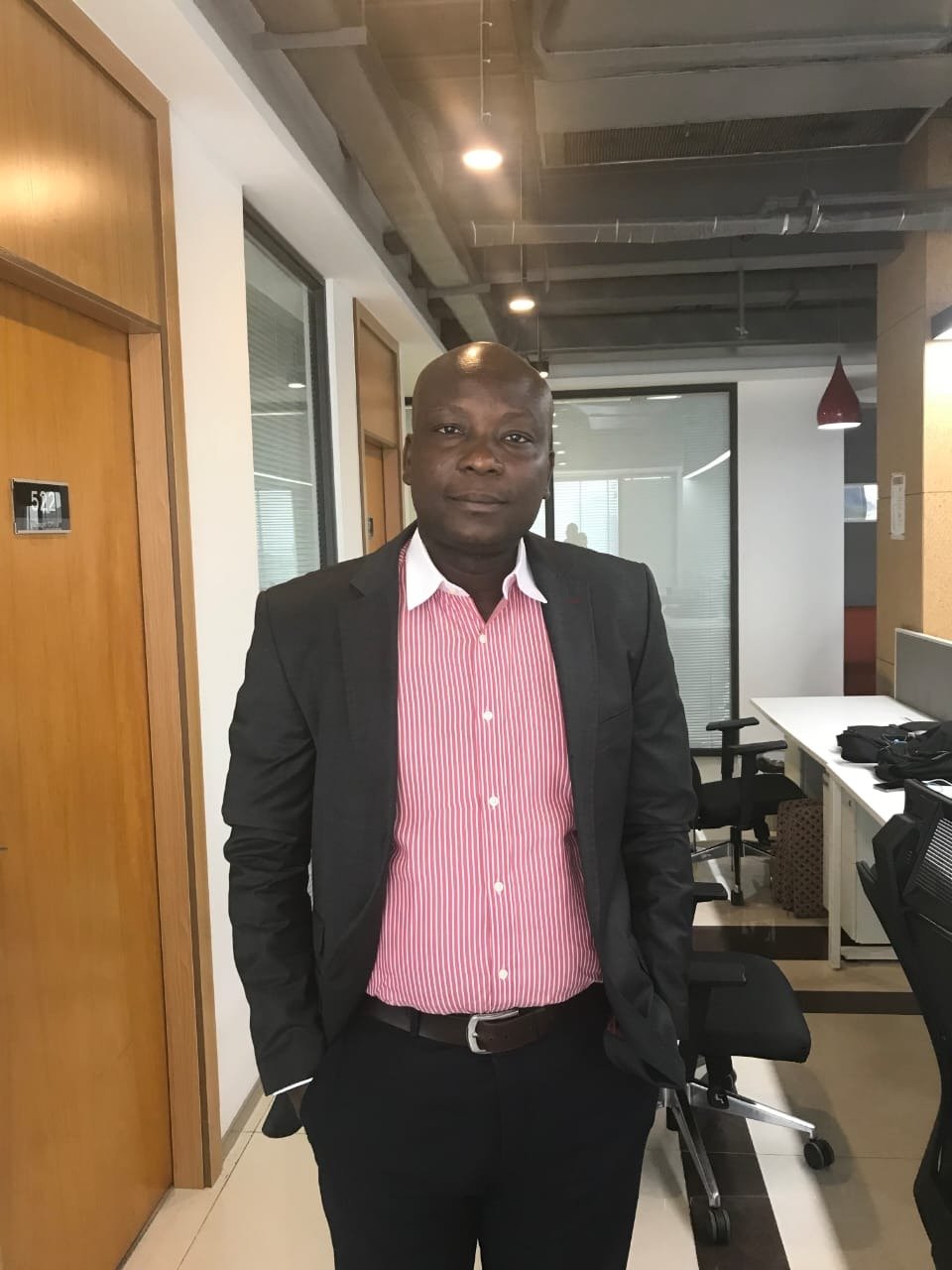
Olusoji Adeyemo is a professional with over 17 years of experience. Currently serving as an Azure Application Innovation & AI Specialist at Microsoft UK, he has held key positions at Wipro, Huawei Technologies, Oracle, and Dell, showcasing his expertise in cloud infrastructure, Application modernization, and Business continuity solutions. He holds a Master’s degree in Computer Science with distinction from the University of Hertfordshire and Caleb University. He is currently running his PhD research in Explainable AI and ML. He is also certified in various cloud and project management technologies, including Microsoft Azure Expert, Google Expert, AWS and Scrum. He can be reached at mastersoji@gmail.com and on Linkedin: https://www.linkedin.com/in/olusoji-adeyemo/