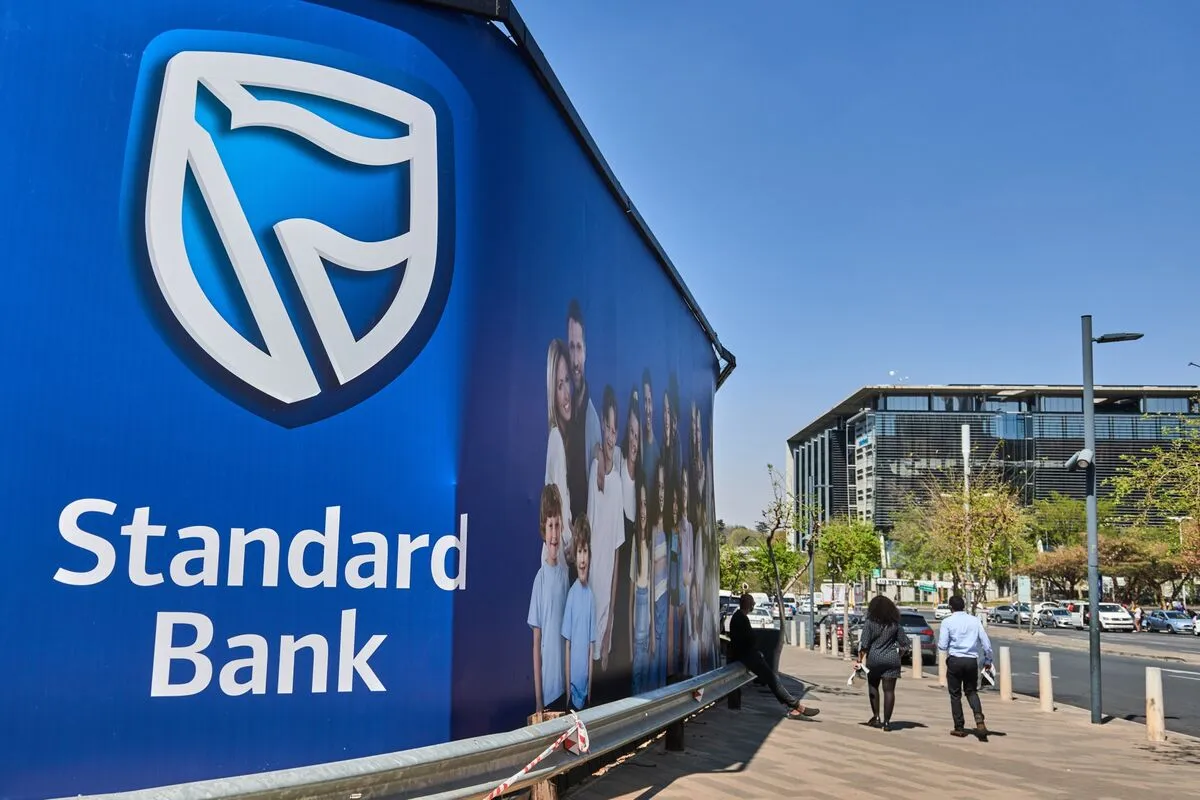
Africa’s largest lender, Standard Bank, has won approval by China to clear yuan payments across 19 African countries, in what financial analysts describe as major trade reshaping.
The move will provide African businesses trading with China direct access into China’s onshore financial system for the first time, as well as enable them gain faster and cheaper access to the world’s second-largest economy, with a GDP size of more than $20.85 trillion.
China’s central bank, the People’s Bank of China (PBoC) authorised Standard Bank to process yuan payments across 19 countries, marking outstanding step in Beijing’s effective effots to deepen trade and economic ties with the African continent, which is regarded as the world’s last frontier
Economic experts see the move as Beijing’s soft power efforts to deepen and expand the use of its currency, the yuan, as a global currency like the US dollar.
In addition, African businesses are expected to benefit from faster settlements, lower transaction costs and reduced dependence on the US dollar.
With assets in excess of $972.90 billion, Standard Bank is Africa’s largest commercial lender.
The latest PBoC approval highlights Standard Bank’s broad geographic operational status, as well as marking a significant expansion of Sino-African trade and financial cooperation.
Though PBoC did not list the 19 countries, Standard Bank has geographic footprints in countries including: South Africa, Nigeria, Ghana, Kenya, Angola, Mozambique, Zambia, Zimbabwe, Uganda, Tanzania, Malawi, Namibia, Botswana, Lesotho, Eswatini, Madagascar, Mauritius, DRC (Democratic Republic of the Congo), and Ethiopia where it maintains representative office.
The move could also lure some African countries to strongly consider keeping their external reserves in yuan, further deepening China trade and investment ties with Africa, as well as promoting the yuan’s wider international use.
Richard de Roos, head of operations corporate and investment banking at Standard Bank, said the approval would strengthen commercial ties between Africa and China.
“This new service will provide our clients with transparent, efficient and cost-effective payment solutions between China and Africa, supporting trade and investment between the world’s most dynamic economies,” de Roos said.
By settling eligible transactions directly in yuan, businesses could reduce foreign-exchange conversion costs, shorten settlement times and limit exposure to fluctuations in the US dollar, an important consideration for companies operating in markets where access to hard currency remains constrained, the Standard Bank head of operations added.
Additionally, African financial institutions will effectively get primary access into China’s domestic payment and liquidity system, which allows eligible cross-border transactions to be effected in yuan instead of the US dollar routing.
In May this year, China removed tariffs on imports from 53 African countries with which it maintains diplomatic relations, a step expected to further boost trade and strengthen China’s commercial ties with the continent.
Meanwhile, the PBoC approved Standard Bank and the Industrial and Commercial Bank of China (ICBC) to operate the Renminbi (RMB) Clearing Bank of Africa, which will give businesses and financial institutions in the continent straight access to China’s financial system. The authorisation also makes Standard Bank, the first African-headquartered financial institution to receive RMB clearing status, rendering it at the epicentre of a new payment system aimed at making trade between Africa and China more efficient, faster, and cheaper.
The new clearing arrangement will benefit African companies importing machinery, industrial equipment, electronics, vehicles and manufactured goods from China.
The yuan payment authorisation will further admit Standard Bank effectively into China’s Cross-Border Interbank Payment System (CIPS), which it joined last year November, becoming the first African lender to get onto the Asian global giant’s network.
Four months since getting on the system, the bank has processed about $500 million in RMB transactions on the platform, indicating growing demand for yuan-based settlements between Africa and China.
Overall, the new arrangement posts as a credible milestone for China’s Africa financial engagement. It is the first RMB clearing bank established on a continent-wide basis and the first jointly operated by two commercial banks, providing participating institutions with access to China’s capital markets, liquidity facilities and payment infrastructure.
By encouraging more African countries to settle trade in its currency instead of the US dollar, Beijing is effectively pushing up efforts to internationalise the yuan, some international financial experts posited.
To wit, Africa has become a key pillar of that strategy, especially as China has remained the continent’s largest bilateral trading partner since the 1990s. China’s trade with Africa gained its primary traction in the late 1990, accelerating sharply after China joined the World Trade Organisation (WTO) in 2001. The establishment of the Forum on China-Africa Cooperation in 2000 catapulted bilateral trade from $10 billion in 2000 to over $220 billion by 2014, rising sharply to a record $348 billion or 18 percent in 2025, according to data from Chinese customs.
Furthermore, the Standard Bank Africa Trade Barometer, said Asian countries are now the preferred trading partners for 35 percent of businesses surveyed, up from 24 percent in 2024.