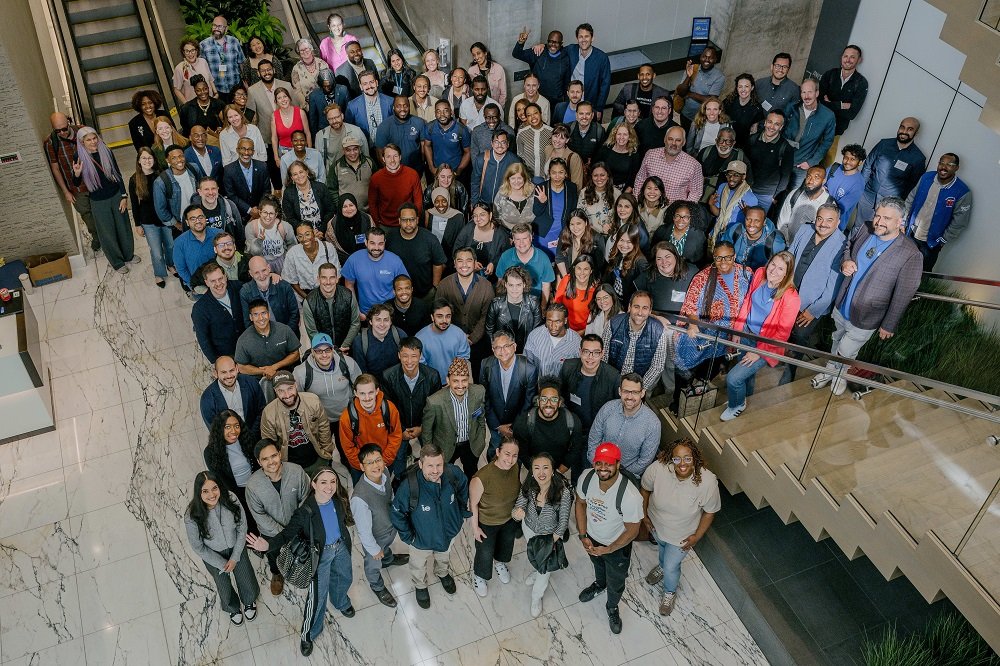
Amazon.com Inc., through Amazon Web Services (AWS), has selected nine African organisations for the fourth cohort of its AWS Social Entrepreneur Accelerator, making Africa the largest regional contributor to the global programme and reinforcing the continent’s emergence as a growing hub for purpose-driven innovation powered by cloud computing and artificial intelligence.
The selection places Africa ahead of other participating regions, with organisations drawn from Nigeria, Kenya, Ghana, South Africa, Cameroon and Tanzania joining a global cohort of 42 social enterprises from 16 countries.
Nigeria dominates Africa’s selection
Nigeria accounted for the highest number of successful applicants, with three organisations securing places in the accelerator.
The selected organisations including Sabi Scholar, Kayode Alabi Leadership and Wetech Inc., represent diverse approaches to solving structural challenges through technology.
Sabi Scholar is developing what its founder and chief executive officer, Divine Iloh, describes as an operating system for African higher education, enabling universities to launch online degree programmes within 30 days. The innovation seeks to improve access to tertiary education across a continent expected to host one of the world’s fastest-growing youth populations.
Kayode Alabi Leadership focuses on equipping underserved young people with leadership, entrepreneurship and technology skills designed to improve employability while strengthening community development.
Meanwhile, Wetech Inc. is addressing one of Africa’s largest technology workforce gaps by building pathways that connect women with digital skills training, mentorship opportunities and employment in the technology sector.
Collectively, the three organisations reflect growing investor interest in startups tackling Africa’s human capital challenges rather than simply replicating consumer technology business models.
Meanwhile, Kenya secured two places in the programme through KuzeKuze and STEM Centre Africa, further consolidating East Africa’s reputation as one of the continent’s leading innovation ecosystems.
KuzeKuze is developing digital “education passports” that create lifelong academic records for learners, making personalised education more measurable and portable.
The initiative aims to support continuous learning while enabling educational institutions to better monitor learner outcomes.
STEM Centre Africa, established in 2017 by brothers Denish and Dancun Akoum, focuses on practical science, technology, engineering and mathematics education.
The organisation has trained more than 18,000 students in coding, robotics and electronics, with approximately 90 per cent reportedly achieving proficiency in Python programming, Scratch and electronic systems. The centre plans to expand its reach to 100,000 learners by 2030.
Ghana’s BASICS International is addressing educational inequality by combining formal education with certified digital skills training for underserved children and young people.
South Africa’s FunHouse Digital has developed an unconventional financing model in which gaming lounges generate revenues used to fund free coding and digital literacy programmes within rural communities.
Cameroon’s EduCloud focuses on delivering practical cloud computing and artificial intelligence workshops designed to bridge the gap between academic education and industry requirements.
In Tanzania, Fiqra Academy is creating direct pathways from digital skills acquisition to employment through certification programmes linked to labour market opportunities.
Together, the selected organisations span multiple sectors but share a common objective of leveraging emerging technologies to solve persistent development challenges.
According to AWS, this year’s cohort reflects a development in how entrepreneurs are deploying advanced technologies.
Jyoti Ball, general manager for Sub-Saharan Africa at AWS, said Africa’s strong representation mirrors a new generation of entrepreneurs building innovative businesses despite operating in challenging environments.
“Africa’s representation in this cohort reflects what we’re seeing across the continent—a generation of founders who don’t wait for conditions to be perfect. They build anyway.
“Our role is to ensure they have access to the same world-class cloud and AI technology as any startup in Silicon Valley and the support to scale impact across border,” she said.
Unlike conventional accelerator programmes that primarily provide seed financing, the AWS Social Entrepreneur Accelerator combines technical infrastructure with strategic business support.
Delivered in partnership with Deloitte, participants receive cloud technology training, business planning support and ongoing technical advisory services aimed at helping organisations scale sustainably.
Since its launch in 2023, the programme has supported more than 100 social entrepreneurs across 34 countries, creating an international network of organisations focused on solving social and environmental challenges through technology.
Participants also gain access to AWS cloud services and Deloitte’s consulting expertise, resources that many early-stage African startups would otherwise find difficult to access independently.
Africa possesses one of the world’s youngest populations, creating significant opportunities for digital entrepreneurship if adequate support systems are established.
Programmes such as the AWS Social Entrepreneur Accelerator provide access not only to advanced technologies but also to international networks capable of accelerating business growth.
The selected organisations are expected to complete the programme equipped with enhanced cloud capabilities, artificial intelligence tools and strategic advisory support designed to help them scale their impact across national borders.