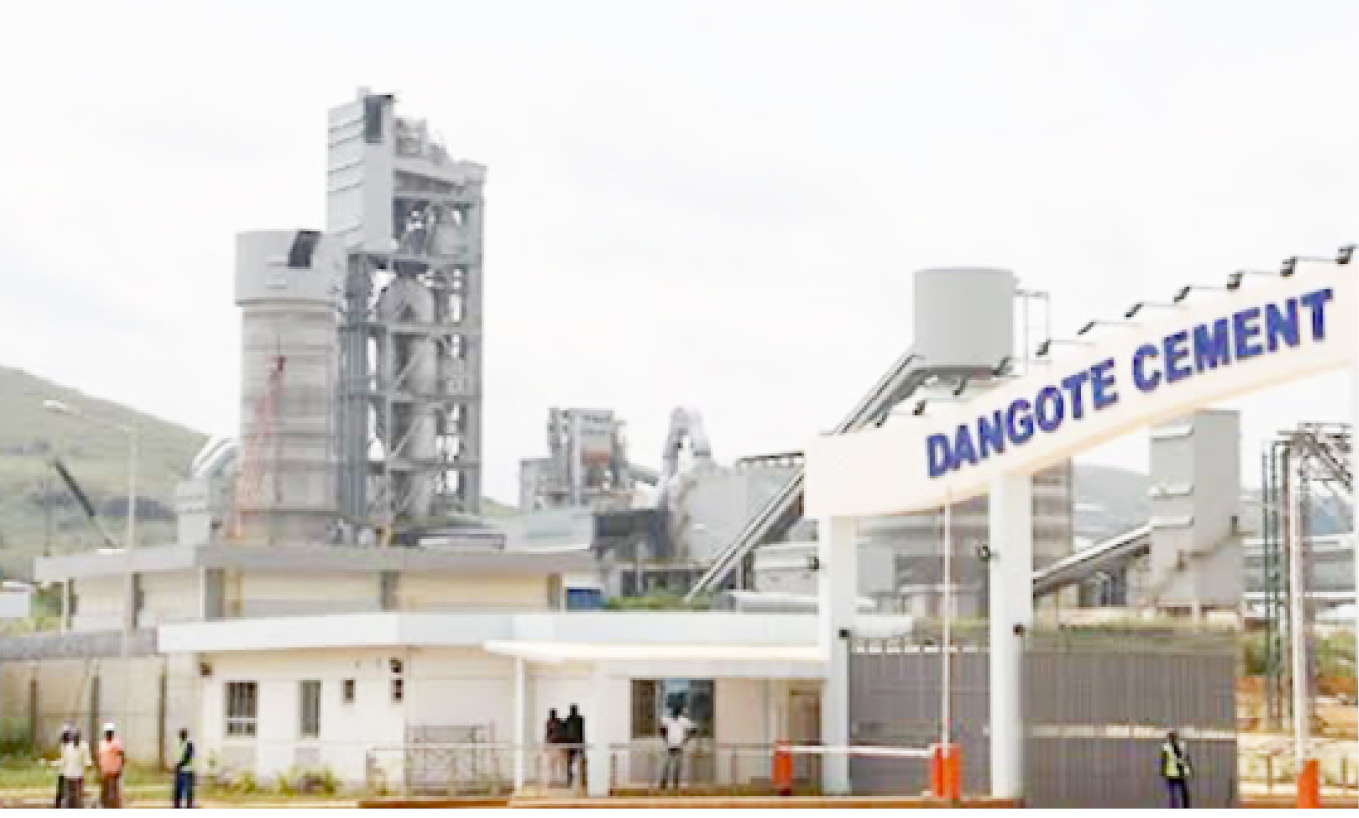
Dangote Cement Plc is extending its footprint beyond cement production into agricultural value-chain development, betting that investments in rural processing infrastructure can help tackle post-harvest losses, considered one of Nigeria’s most persistent food security challenges.
The company’s Ibese Plant has commissioned and handed over a multi-million-naira cassava processing facility to Kajola community in Ogun State, marking a development from conventional corporate social responsibility projects towards productive investments capable of generating long-term economic returns for host communities.
The newly inaugurated processing centre, equipped for the production of garri and fufu, is expected to improve cassava value addition, increase farmers’ earnings and create sustainable employment opportunities, particularly for women who dominate cassava processing across rural Nigeria.
Unlike traditional corporate social responsibility initiatives centred on schools, healthcare centres or water projects, the Kajola processing facility is designed as an income-generating asset capable of creating lasting economic value.
The project was delivered under the Community Development Agreement (CDA) signed between Dangote Cement and its host communities in 2022, showcasing how legally backed community partnerships are increasingly evolving into platforms for economic empowerment.
Speaking during the commissioning ceremony, Ayyagari Subbaraidu, the plant director of Dangote Cement, Ibese Plant, described the investment as a notable intervention aimed at improving cassava processing efficiency while reducing post-harvest losses that continue to undermine agricultural productivity.
“This project is aimed at improving cassava processing, reducing losses and creating sustainable employment for women and farmers in the community,” he said.
According to him, the facility is expected to stimulate local economic activities by supporting small-scale agribusinesses and expanding income opportunities across Kajola and neighbouring communities.
Nigeria remains the world’s largest producer of cassava, yet the country continues to lose substantial economic value because of inadequate processing capacity and limited rural infrastructure.
Fresh cassava roots deteriorate within days of harvest, making rapid processing essential for preserving quality and preventing losses..
The Kajola processing centre seeks to address the challenge of inadequate processing facilities through mechanised operations capable of significantly improving productivity.
The facility comprises dedicated garri and fufu production units supported by modern equipment, including a five-tonne-per-day cassava peeling machine, hydraulic presses, industrial frying systems, fermentation basins, solar-powered boreholes and sanitation infrastructure.
Such technology is expected to reduce manual labour, shorten production cycles and improve product quality, enabling processors to compete more effectively in commercial markets.
For the Ogun State Government, the project represents an important complement to ongoing agricultural transformation programmes.
Commissioning the facility, Bolu Owotomo, the commissioner for agriculture and food security, described the investment as a strategic contribution to agricultural value addition and rural empowerment.
According to him, the project aligns with Governor Dapo Abiodun’s vision of positioning agriculture as a major driver of economic diversification and inclusive growth.
Owotomo disclosed that over 166,000 farmers have already been registered under the Ogun State Farmers Information Management System (OGFIMS), including more than 90,000 cassava farmers who are expected to benefit from various government support programmes.
“This processing plant will strengthen the cassava value chain, improve product quality, create jobs and enhance food security while boosting farmers’ incomes,” the commissioner said.
Beyond improving processing efficiency, the facility is expected to stimulate economic activities throughout the local economy.
Mechanised processing creates opportunities for input suppliers, transport operators, equipment maintenance providers, traders and packaging businesses, generating multiplier effects that extend well beyond farming households.
Local government officials believe the investment could become an anchor for wider rural enterprise development.
Representing Sikiru Adisa, the chairman of Ewekoro Local Government, Vice Chairman Abisola Aliyu described the processing centre as a transformative project capable of easing the burden of traditional cassava processing while increasing productivity.
She noted that the project would stimulate local businesses, generate employment and support poverty reduction efforts at the grassroots.
Abosede Onifade welcomed the initiative, saying the facility would significantly ease production processes while enabling processors to increase both output and earnings.
The long-term success of such projects, however, depends largely on effective community ownership and maintenance.
Recognising this, Subbaraidu urged members of the Project Governance Committee to ensure transparency in managing the facility while maintaining operational standards necessary for long-term sustainability.
Kayode Kusoro, traditional ruler of Aga Olowo, echoed the appeal, urging residents to protect the processing centre against vandalism and theft.
The monarch praised Dangote Cement for fulfilling its obligations under the Community Development Agreement and expressed confidence that the facility would emerge as a major cassava processing hub capable of driving wealth creation across the area.