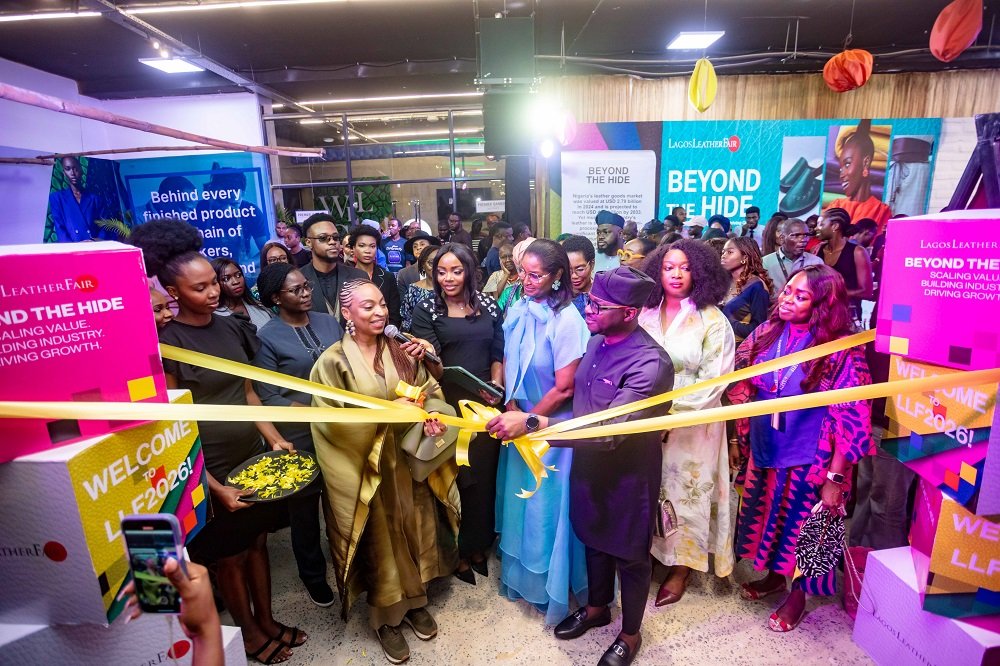
The ninth edition of the Lagos Leather Fair (LLF2026) officially opened with a high-level VIP ceremony that brought together government officials, financial institutions, development partners, policymakers and industry leaders to accelerate the growth of Africa’s leather industry through stronger value chains, innovation and significant investment.
The event underscored the growing recognition of Nigeria’s leather industry as a key contributor to industrialisation, manufacturing, job creation and export diversification.
Declaring the fair open, Jumoke Oduwole, the minister of industry, trade and investment, reaffirmed the federal government’s commitment to strengthening local value chains, promoting artisanal craftsmanship and creating an enabling environment for micro, small and medium-sized enterprises (MSMEs) to compete in regional and global markets.
She said the government’s industrial development agenda prioritises sectors capable of generating employment, increasing local production and supporting economic diversification.
Delivering the welcome address, Femi Olayemi, the founder of the Lagos Leather Fair, reflected on the platform’s journey since its inception and its vision of transforming Africa’s leather industry into a globally competitive ecosystem.
While acknowledging the progress achieved over the years, she stressed that significant work remains to unlock the sector’s full economic potential.
“While all we have achieved is commendable, we must also recognize our work is far from done. Buildings do not build industries. Machines alone do not create ecosystems. The right blueprint needs to be put in place,” she said.
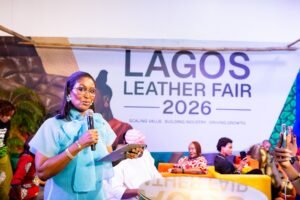
Olayemi reiterated the fair’s commitment to promoting African leather brands, nurturing local talent, strengthening manufacturing capacity and positioning the continent’s leather industry within global value chains. She also thanked partners, sponsors and stakeholders whose support has sustained the initiative over the years.
Development partners and financial institutions also highlighted the importance of stronger collaboration in unlocking investment across the leather value chain.
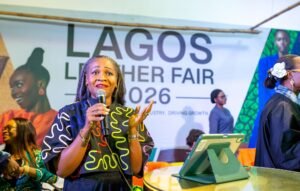
Elsie Attafuah, the resident representative of the United Nations Development Programme (UNDP), emphasised the link between industrialisation, regional trade and inclusive economic development, noting that the leather industry has significant potential to contribute to sustainable growth across Africa.
Similarly, Omoboye Odu, the head of SME and Partnerships at Ecobank, outlined financing opportunities and institutional support available to leather entrepreneurs, stressing the importance of improving access to capital for small businesses seeking to expand production and improve competitiveness.
One of the highlights of the opening ceremony was a mini runway presentation showcasing leather products created by selected designers, demonstrating the industry’s capacity to combine manufacturing excellence with fashion innovation.
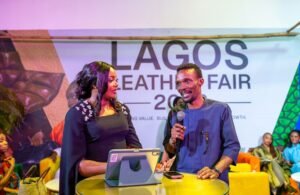
Following the official opening, guests participated in an exclusive guided tour of the exhibition, providing an early preview of products, technologies and innovations on display throughout the fair.
Lagos Leather Fair 2026 is organised in partnership with Ecobank Business and supported by the Bank of Industry, Kharis Engineering Services Limited, Leadway and the Development Bank of Nigeria, alongside several media and creative partners.
Since its launch in 2017, the Lagos Leather Fair has evolved into Nigeria’s leading platform dedicated exclusively to the leather industry, bringing together designers, manufacturers, suppliers, investors and policymakers to address structural challenges, strengthen industry linkages and improve the global competitiveness of Nigerian and African leather products.