Lagos Free Zone (LFZ) has reinforced its long-term investment in human capital development with the 10th edition of the Tolaram Science Challenge (TSC), underscoring the company’s strategy of developing future technical talent alongside its expanding industrial and logistics ecosystem in Nigeria.
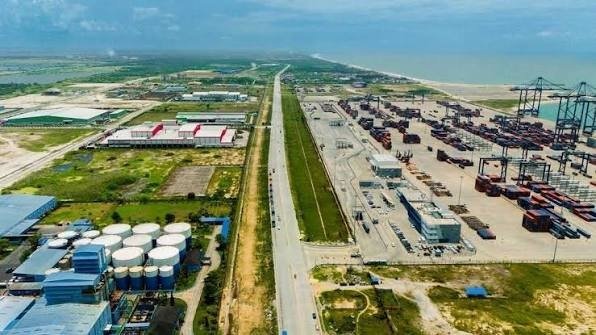
The decade-old science competition, one of LFZ’s flagship corporate sustainability initiatives, has evolved beyond a school contest into a talent development platform designed to strengthen science, technology, engineering and mathematics (STEM) education across the Ibeju-Lekki axis, where the Zone is spearheading one of Nigeria’s largest industrial clusters.
This year’s competition saw Iwerekun Community Senior High School emerge overall champion for the third consecutive year after defeating Magbon-Alade Senior Grammar School in the grand finale, reaffirming the growing academic standards fostered by the initiative.
The Tolaram Science Challenge, sponsored annually by Lagos Free Zone, brings together students from 16 secondary schools across Ibeju-Lekki to compete in Physics, Chemistry, Biology, Mathematics and General Knowledge while encouraging practical problem-solving and innovation.
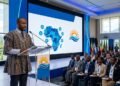
Speaking during the grand finale, Adesuwa Ladoja, chief executive officer of Lagos Free Zone, represented by Binay Saraf, director of Zone Development, said the programme reflects the company’s belief that economic transformation must be accompanied by investments in people.
“Over the past decade, we have seen this event grow in scale, participation and impact. Each year, more schools, more students and more teachers have joined us on this journey of discovery and learning.
“Today, the Tolaram Science Challenge has become a platform that encourages curiosity, innovation, critical thinking and healthy competition. More importantly, it has become a symbol of our commitment to investing in the future of our communities,” she said.
Ladoja said the company’s approach to community development extends beyond industrial infrastructure and employment creation.
“At Lagos Free Zone and Tolaram, we believe that developing communities goes beyond building infrastructure or creating jobs. It also means creating opportunities for young people to learn, grow and discover their potential,” she added.
As part of this year’s programme, 32 outstanding students received Unified Tertiary Matriculation Examination (UTME) scholarships, while the three highest-performing individual participants were rewarded with cash prizes.
Beyond recognising academic excellence, the initiative seeks to improve science education outcomes and strengthen the talent pipeline feeding Nigeria’s future workforce.
Vishal Shah, director and chief sustainability officer of Lagos Free Zone, said the company remains committed to improving education standards across host communities through sustained investment in STEM learning.
According to him, the initiative has contributed to stronger academic performance and fostered healthy competition among participating schools over the past decade.
The vision behind the competition, according to its founder, Olakunle Fadumiye, was to inspire students to view science education as a pathway to broader economic opportunities.
“When we started in 2016, many students had little motivation to pursue science subjects. Some preferred fishing and informal work instead of going to school because they saw few opportunities through education.
“Yet we believed that if we could inspire even a few students to dream bigger, we could begin changing the future of an entire community,” he said.
Fadumiye also encouraged Lagos Free Zone to extend the initiative by offering industrial training placements, internships and National Youth Service Corps (NYSC) opportunities to alumni of the programme, creating stronger links between education and employment within the Zone’s growing industrial ecosystem.
Officials of the Lagos State Ministry of Basic and Secondary Education commended the initiative for promoting a stronger reading culture and improving academic competitiveness among schools in the Ibeju-Lekki corridor.