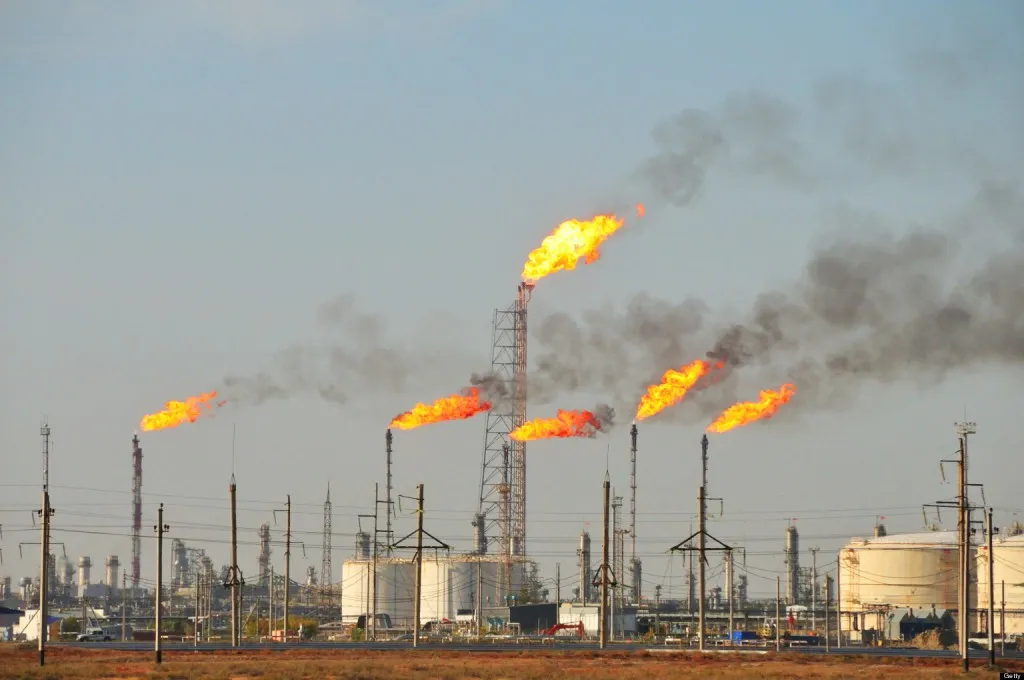
• flared gas worth $54bn
• $100bn in upfront investment required to eliminate flaring
Nigeria, the U.S., Russia and six other countries are the world’s largest gas flaring nations, responsible for 83 percent of global gas flaring in 2025, says the World Bank Global Flaring and Methane Reduction Partnership (GFMRP) in collaboration with the Payne Institute at the Colorado School of Mines.
According to the report, the volume of gas flared in 2025 exceeded the total amount of liquefied natural gas that transited the Persian Gulf in the year under review, and was nearly equal to all of Africa’s annual gas consumption of approximately 185 billion cubic metres (bcm).
In addition, more than 60 percent of the global increase in flaring during 2025 came from just three countries — Russia, Mexico and Iran. These countries together increased flaring by about 6 billion cubic metres (bcm), nearly three times the total reductions achieved by all countries that lowered their flaring during the year. Russia remained the world’s largest flaring country, with flaring increasing by 9 percent year-on-year.
A new report released by the World Bank in June, said the 83 percent gas flared by these nine countries is more than four-fifths of global gas flaring in 2025 while producing only 46 percent of the world’s oil.
The nine largest flaring countries in descending order are Russia, Iran, Iraq, Venezuela, Mexico, Libya, Algeria, Nigeria and the United States. They were responsible for the vast majority of global flare volumes.
The report indicates that global gas flaring increased for the third consecutive year, reaching 167 billion cubic metres (bcm) in 2025, up from 157 bcm the previous year (2024).
Gas flaring happens when natural gas produced alongside crude oil is burned at production sites, instead of being captured, processed and sold or used locally. The practice wastes a valuable energy resource, and contributes largely to the greenhouse gas (GHG) emissions.
According to the 2026 Global Gas Flaring Tracker report, an estimated 429 million tonnes of carbon dioxide equivalent emissions were generated by flaring in 2025, including about 50 million tonnes from unburned methane.
The lost gas was valued at an estimated $54 billion, indicating both the economic and environmental costs of continued flaring.
To eliminate routine gas flaring worldwide, the report says it would require between $70 billion to $100 billion in upfront investment.
The World Bank says the technologies needed to capture and utilise associated gas are already commercially available. However, rather than technological limitations, the main obstacles comprise inadequate pipeline infrastructure, limited gas markets, lack of financing and weak regulatory enforcement.
Benefits of flaring reduction
What does the world gain from eliminating or drastic reduction in flaring? The World Bank says, reducing routine flaring could help countries such as Egypt, India and Iraq cut expensive gas imports, improve electricity generation and expand access to clean cooking fuels. For example, 1bcm of natural gas can generate around four billion (4bn) kilowatt-hours of electricity, enough to make a significant contribution to underserved regions.
Countries such as Nigeria, Angola, and the Republic of Congo, where large quantities of associated gas are flared despite low electricity access, could particularly benefit from improved gas utilisation.
Positive developments
Despite the global increase, some countries demonstrated that substantial reductions are achievable. The United States recorded the largest absolute decline in flaring during 2025, reducing volumes by 7 percent following the commissioning of the Matterhorn Express pipeline in the Permian Basin. Kazakhstan has reduced flaring by 87 percent since 2012 through a combination of stronger regulations, government commitment and targeted infrastructure investments.
The World Bank said these examples show that sustained policy support and investment can significantly reduce gas flaring while improving energy security, creating economic opportunities and lowering greenhouse gas emissions.