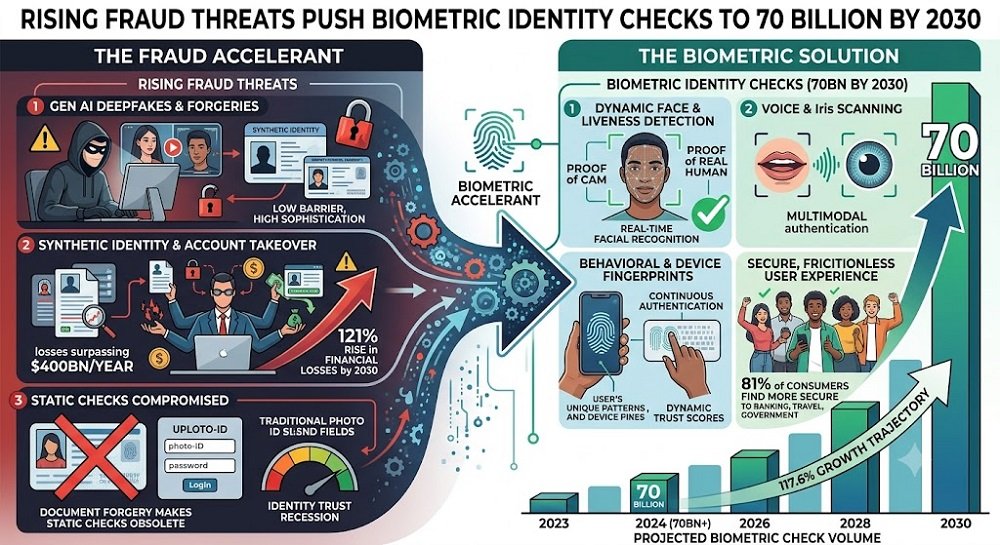
The use of biometric verification for digital identity checks is expected to more than double over the next four years as businesses seek stronger protection against increasingly sophisticated fraud attempts powered by artificial intelligence (AI), a new report by Juniper Research has revealed.
According to the global technology research firm’s latest study, biometric verification checks are projected to rise from 32.2 billion in 2026 to 70.1 billion by 2030, representing a 117.6 per cent growth and making it the fastest-growing method of digital identity verification during the period.
The report noted that while traditional document verification remains the most widely used identity verification method in terms of overall volume, its growth has slowed significantly compared with biometric-based approaches.
Digital identity verification involves the use of technology to confirm that an individual is who they claim to be through digital methods, enabling remote verification for activities such as customer onboarding, financial transactions, access management and other online services.
Juniper Research explained that identity verification has become increasingly important as digital economies expand, with organisations relying on trusted systems to prevent fraud, identity theft and financial crimes.
Regulatory requirements such as Know Your Customer (KYC) and Anti-Money Laundering (AML) rules have also made identity verification a critical requirement for financial institutions and other regulated industries seeking to distinguish legitimate users from fraudulent actors.
The research firm identified the growing sophistication of fraud schemes as a major factor accelerating biometric adoption, particularly as generative AI tools make it easier for criminals to create convincing fake documents and impersonation attempts.
According to the report, document-based checks alone are becoming insufficient in detecting whether a user is genuine, with biometric systems providing additional security through features such as liveness detection, automated identity matching and real-time verification.
“Biometric verification offers a dynamic solution that documents cannot match, delivering liveness detection, automated matching, and a frictionless experience,” Juniper Research stated.
The company added that while document verification would continue to serve as a foundation for regulatory compliance, biometric authentication is increasingly becoming the additional security layer needed to address emerging AI-related vulnerabilities.
Juniper Research said businesses are also shifting away from basic pass-or-fail identity checks towards more adaptive security models that combine biometric information with contextual risk data to determine threat levels more accurately.
The report advised enterprises to adopt biometric solutions that support dynamic identity trust scores, allowing organisations to balance security requirements with smoother user experiences.
Shane O’Sullivan, research analyst at Juniper Research, said businesses are increasingly consolidating spending around unified platforms that can combine document and biometric verification signals.
“Businesses continue to pivot toward biometric solutions, prioritising seamless liveness detection and real-time facial recognition over manual, high-friction document uploads,” O’Sullivan said.
The growing adoption of biometric verification reflects a wider shift in the digital identity market, as organisations attempt to strengthen trust in online interactions while reducing friction for users accessing financial services, digital platforms and government programmes.