David Miliband’s recent article, “The Great New Inequality: Citizenship in a Functioning State”, raises an important question about one of the defining inequalities of our time: whether people live in a state that is capable of functioning.
When conflict destroys institutions, the consequences go far beyond the immediate loss of life. Schools close. Health systems collapse. Markets disappear. Justice becomes inaccessible. Governments lose the capacity to provide basic services, and citizens lose the ability to hold those responsible to account.
The first responsibility, therefore, is clear. Prevent conflict where we can and save lives when conflict occurs.
But what happens next? This is where I think we need to challenge one of the assumptions that has shaped the aid system for far too long: that humanitarian action and development are separate stages of a linear process.
First humanitarian response. Then development.
That distinction may have made institutional sense once. It makes much less sense in a world where crises are increasingly prolonged, displacement can last for decades and the same communities can move repeatedly between conflict, recovery and renewed crisis.
These are not mutually exclusive activities, nor should they be treated as sequential stages. We need to save lives, build state capability, enable citizens to hold service providers accountable and support economies to function, simultaneously. The question is not what comes first, but how these different efforts can reinforce one another.
That requires us to rethink the humanitarian-development divide itself. The divide is largely a product of how we have organised institutions, funding streams and mandates. It is not how crises are experienced by the people living through them.
A functioning state is fundamental. Without institutions capable of providing security, justice, basic services and a predictable operating environment, sustainable development becomes extraordinarily difficult.
But even a functioning state, including one anchored in a legitimate political settlement and a credible social contract, is not enough. People also need functioning economies.
They need jobs. Businesses need access to finance. Farmers need markets. Young people need pathways into productive employment. Entrepreneurs need the ability to grow. Communities need opportunities to generate income rather than remain permanently dependent on external assistance.
State capability and economic capability have to be built together. A government may be restoring basic services while local markets are being rebuilt. Citizens can begin demanding better services while institutions are being strengthened. Humanitarian assistance can protect lives while livelihoods, enterprises and local economies are being supported. In some contexts, investment may be possible even before a crisis has fully ended; in others, stabilisation and risk reduction will need to come first.
The point is that there is no universal sequence. The appropriate mix of humanitarian, political, institutional and economic action will depend on the context.
This is where the conversation about humanitarian action needs to become more uncomfortable, reflective and honest.
I say this as someone who has spent much of my professional life working within the humanitarian system.
Of what use is winning the argument about humanitarian principles if, at the end of it, we have protected people from dying but failed to create pathways for them to live independently?
That is not an argument against humanitarian principles. Those principles matter enormously. Neutrality, impartiality, independence and humanity exist for good reasons, particularly in conflict.
But principles should not become institutional boundaries that prevent us from asking a more fundamental question:
Are we creating the conditions for people to become self-reliant?
If the answer is no, then we need to be honest about what the system is achieving.
The humanitarian system was designed primarily to respond to crises. It was not designed to become a long-term operating model for responding to human needs in communities that may remain displaced or vulnerable for decades, as we have seen in places such as Kakuma and Dadaab.
This is what my friend Phanice Mogaka calls “running an emergency playbook inside emergencies that have become permanent addresses.” Yet that is increasingly the reality.
We provide food, shelter, healthcare, protection and other essential services, often year after year. These interventions save lives and should not be diminished. But if the system remains focused predominantly on sustaining consumption rather than building productive capacity, dependency inadvertently becomes embedded within the very systems designed to alleviate it.
The question, therefore, is not whether humanitarian organisations should suddenly become development banks or investment funds. Of course, they should not.
The question is whether humanitarian actors, governments, development institutions, philanthropies and the private sector can begin working together from a shared objective:
How do we move people from survival towards agency and economic participation as quickly and safely as possible?
That means thinking differently about capital, particularly in fragile, conflict affected and post-emergency contexts.
A grant should not only be assessed by how many people it reaches. We should also ask what it makes possible after the grant ends.
Can it strengthen an institution? Can it help an entrepreneur build a viable business? Can it connect people to markets? Can it de-risk an investment? Can it unlock other forms of capital? Can it create jobs? Ultimately, can it reduce future dependence on aid?
This is the logic behind what I have called investment governance – the discipline of deciding which form of capital should take which risk, at which moment, to create durable outcomes rather than temporary relief. Unlike blended finance, which focuses on structuring transactions, investment governance focuses on aligning grants, public finance, philanthropic capital and investment capital around a shared objective.
It is not about replacing grants with investments. It is about becoming more deliberate about how different forms of capital are used, what risks they are designed to absorb and what longer-term outcomes they are intended to create.
For humanitarian actors, this means using grants not only to meet urgent needs but also to reduce future risk, unlock other forms of capital and strengthen the systems people rely on.
This means institutional donors have a role to play. Philanthropy has a role to play. DFIs have a role. Governments have a role. Businesses have a role. And yes, humanitarian organisations have a role too.
The objective should be to create an architecture in which humanitarian assistance protects life and dignity while, wherever conditions permit, other forms of capital and institutional support work alongside it to build the foundations for recovery, enterprise and investment.
This is not a linear process. It is an ecosystem. A community may receive humanitarian assistance while simultaneously rebuilding local markets. A government may be strengthening its institutions while development actors support private enterprise. Philanthropic capital may absorb risks that commercial investors cannot yet take. A DFI may help turn a government priority into an investable opportunity.
These things can happen together. And perhaps this is where the conversation about Africa needs to change as well.
We continue to describe many African countries primarily through their needs: poverty, unemployment, fragility, funding gaps and humanitarian vulnerability.
Those challenges are real. But Africa is also home to entrepreneurs, businesses, markets, natural resources, technology, institutions and a young population capable of creating enormous economic value. We have seen innovations in fintech, agribusiness, digital logistics and energy transition.
The challenge before us is how we connect these assets to opportunity and capital.
That means moving from vulnerability to agency. From livelihoods to enterprise. From funding gaps to investment opportunities. From projects to institutions. And ultimately from dependency to self reliance.
This is not an argument for abandoning humanitarian action. Quite the opposite. It is an argument for making humanitarian action part of a broader architecture that does not stop at survival.
David Miliband is right to remind us that functioning states are fundamental to equality and human opportunity. But perhaps the next questions are equally important:
What happens once the state begins to function? How do we build economies that work? How do we create the conditions for citizens not only to receive services, but to demand better services, participate in markets, build businesses, attract investment and create opportunities for others?
The humanitarian-development divide was created by our institutions. The people living through crises do not experience their lives in institutional categories. They do not want humanitarian aid for breakfast. Development for lunch, and perhaps, peacebuilding for dinner.
This is not how people experience crises. It is how we have organised the aid system. And that institutional design is increasingly out of step with the reality of prolonged and protracted crises.
Crisis affected people experience insecurity, poverty, displacement, unemployment, poor services and lost opportunity as parts of the same reality. Our systems need to catch up.
The future of development cooperation cannot simply be about mobilising more money to address more needs.
It must also be about using capital, institutions and partnerships to create the capacity for people and countries to generate their own opportunities.
Saving lives must remain our first responsibility. Building functioning states must remain a central priority. But if we want people to move beyond dependence, we must also build functioning economies.
That is not a choice between humanitarian action and development. It is a recognition that, in a world of prolonged crises, we need both.
The question cannot be whether humanitarianism or development comes first. The issue now is how we build systems that allow people to move from survival to agency, from agency to enterprise, and from enterprise to self-reliance.
That is the conversation we should be having now.
And the task before all of us: governments, donors, humanitarian actors, investors and citizens is to turn that conversation into practice and build the systems that make self-reliance possible.
- business a.m. commits to publishing a diversity of views, opinions and comments. It, therefore, welcomes your reaction to this and any of our articles via email: comment@businessamlive.com

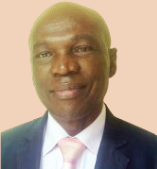
Dr. Wale Osofisan, PhD, is a seasoned governance strategist and policy analyst with over 23 years of experience advancing African-led, evidence-based solutions to political transitions, humanitarian crises and development challenges.