
- But FID expected in 6-9 months
- State owns zero equity
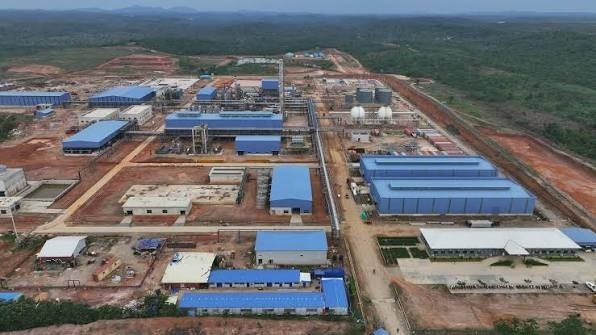
Rivers State government and China’s National Engineering Group Corporation (CNCECC) have signed a deal for building a new methanol and fertiliser facility at Bonny, an industrial hub which is also housing the multi-billion-dollar Nigerian Liquefied National Gas company.
Rivers government through its Investment Promotion Agency (RSIPA) signed a memorandum of understanding (MoU) with CNCECC for the proposed methanol and fertiliser plant in Bonny Local Government Area.
The state signed the MoU with Best Options Chemical Ltd, which will promote the project, and CNCECC, which will provide 80 percent of the facility’s financial outlay. The community stakeholders are also part of the methanol.
The proposed gas-based industrial plant will use natural gas to produce methanol and fertiliser, in what the Rivers government said, could position Bonny as a major industrial investment destination, creating opportunities for employment, local businesses, skills development, and economic growth.
Frank Okafor, chief executive officer of Best Options Chemicals Ltd, said his company would promote the project, while CNCECC is expected to provide 80 percent of the estimated $3.5 billion investment.
“This represents approximately $2.8 billion, based on the projected investment value, leaving about $700 million to be sourced through other funding channels or financial arrangements,” Okafor said.
He also identified the Nigerian National Petroleum Company (NNPC) Limited as a participant in the proposed business arrangement.
Chamberlain Peterside, RSIPA executive director, lauded the investors’ interest in Rivers state’s business environment and abundant natural resources.
“The state government is facilitating the investment. We have no direct equity stake in this project. The government’s role is to provide an enabling environment and guide the investors through the necessary engagement processes,” Peterside said.
However, the project would require further agreements, including financing arrangements, regulatory approvals, and other necessary processes before a final investment decision (FID) could be reached.
Nigeria’s methanol domestic production is near-zero, forcing the country’s industrial concerns to rely heavily on imports, though local production has recently begun. Between 2021 and 2023, the country’s methanol import expenditure rose from $19.72 million to $21.18 million.
Equatorial Guinea accounts for 63% of Nigeria’s direct pure methanol intake amounting to $13.41 million, according to data tracked by the World Bank WITS platform.
Current production status was achieved in Ondo State with the historic opening of first domestic methanol facility—the SuperTech Chemical Industry Limited plant—which produces around 100,000 metric tons of methanol annually.
The project’s operators aim to scale local output toward 500,000 metric tons, though this remains far below the massive commercial volumes required to transition the country from a net importer.
Larger gas-to-methanol initiatives, such as the Brass Fertilizer and Methanol Project and planned developments in Akwa Ibom, have been planned or initiated in partnership with groups like the NNPC, Africa Finance Corporation (AFC), and International Finance Corporation (IFC), designed to produce thousands of metric tons per day, but full-scale commercial self-sufficiency is still under unrealised.
Because Nigeria’s domestic refining and chemical manufacturing capacity has historically been near-zero for commercial methanol, the country depends on foreign imports—an issue that occasionally surfaces when imported petroleum products contain unmonitored or excessive levels of methanol blending.
Peterside the Rivers investment promotion agency said Bonny was chosen after site visits conducted to identify a suitable location for the proposed facility.
He said the investors assessed several locations, including the Orashi region, Omoku, and Onne, before choosing Bonny.
The decision, Peterside said, was influenced by Bonny’s access to natural gas and proximity to the ocean, which he described as important considerations in determining the proposed location.
He said the RSIPA had facilitated engagements between the investors, relevant government ministries, prospective landowners, and host community stakeholders.
Peterside noted that the process had included land-related discussions, survey activities, and consultations with state ministries on environmental assessment requirements.
However, the RSIPA director cautioned against interpreting the MoU as confirmation that construction was imminent, stressing that “an MoU is only an initial step” towards realising the proposed investment.
Providing further details on the investment proposal, Edward Li Guosong, the CNCECC director, said Rivers state’s oil and gas resources were among the factors that attracted the company to the project.







