Amid the world’s largest supply disruption in history, earnings from oil sale by the eight major oil producers have continued to soar, hitting $93 billion between April and June this year, which nearly doubled their combined profit in the same period of 2025, according to a report by OilPrice.com.
The disruption due to the near-halt in tanker traffic through the Strait of Hormuz, the world’s most vital energy chokepoint on Earth, produced what the International Energy Agency (IEA) describes as the biggest supply disruption in the history of the global oil market.
Strait of Hormuz is the critical, narrow waterway connecting the Persian Gulf to the Gulf of Oman and the Arabian Sea, with roughly 20 percent of the world’s petroleum and liquefied natural gas passing through its narrow shipping lanes daily.
The eight major oil companies – Aramco, BP, Shell, Equinor, TotalEnergies, Eni, Chevron, and ExxonMobil – have almost doubled their combined profits ($93 billion in the three months – April to June following the U.S.-Israeli attack on Iran and the subsequent war), from just below $50 billion in the second quarter of 2025.
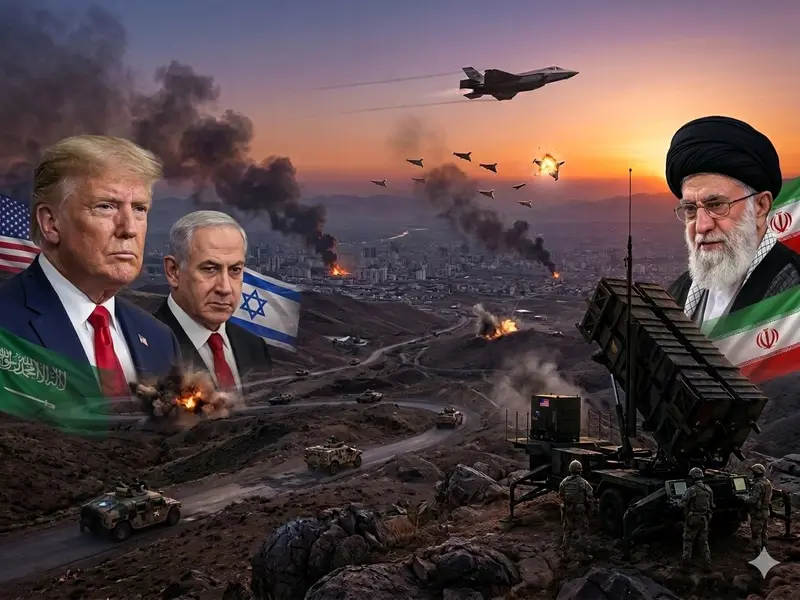
Iran’s decision to close the Strait of Hormuz, the waterway between Oman and Iran that connects the Persian Gulf with the Gulf of Oman and the Arabian Sea, has led to the biggest disruption of fossil fuel supplies in the market’s history. As a few oil majors from the United States, Europe, and the Middle East step in to fill the gap and oil prices are pushed higher, a few companies have come out on top.
While nations of the world continue to face rising oil prices due to weak supply, the international oil companies continue to make extraordinary earnings, intensifying political and environmental pressures on oil companies, including renewed calls for windfall taxation.
Last May, during the World Bank and IMF Spring Meetings in New York, more than 130 civil society organizations demanded global finance ministers to impose windfall taxes on oil and gas companies profiting from energy spikes driven by the conflict in the Middle East. The coalition calls for an immediate end to the war, debt cancellation for Global South nations, and increased investment in renewable energy.
In recent months, oil prices have soared as a result of the almost complete closure of the Strait of Hormuz, a key trade corridor connecting Asia and Europe. High fossil fuel prices have helped to drive up the profits of oil and gas companies around the globe, particularly in the United States and Europe.
As a few companies boost production to fill the gap, some oil majors have seen record earnings in the first half of the year. Industry analysts say the trend is expected to continue for as long as Hormuz trade remains restricted.
Energy analysts say this phenomenon has depicted clearly that the world is overly dependent on fossil fuels, with countries willing to pay a premium to secure their oil and gas supplies in the face of major global shortages.
Meanwhile, environmentalists have expressed concerned about what this fossil-reliance means for climate change, with greenhouse emissions still high. They say lack of energy diversification, and the heavy fossil fuels-dependence indicates a threat to energy security for many countries of the world.
To wit, the increase in oil prices has driven up consumer energy bills worldwide, while oil companies continue to profit. The 130+ CSOs statement, “They Profit, We Pay. Fix it Now”, set out four urgent demands: End the war completely and permanently, civilians are bearing the brunt of ongoing violence, losing lives, homes, and stability, temporary ceasefires are not enough, this illegal war must end. Two, make the profiteers pay, in one month, over $100 billion has been extracted from people through rising energy costs, governments must tax fossil fuel windfall profits and use the revenue to fund public services and support households and workers facing rising living costs. Three, make food and energy secure for all, public investment should prioritise sustainable agriculture and renewable energy, while ending subsidies for fossil fuels and weapons. Four, cancel debt: Many Global South countries are unable to respond to the crisis due to heavy debt burdens.
Discussion has been reignited around windfall tax, as governments call for oil companies to pay higher levies to subsidise energy bills. Environmentalists believe that extra taxes could help pay to address the environmental damage caused by oil operations.
At the end of February this year, the Brent benchmark put oil prices at around $68 a barrel, rising to highs of nearly $100 a barrel in May. Saudi Arabia’s Aramco benefited the most from the price increase over the spring, reporting a 34 percent rise in its quarterly net income, at over $33 billion. Aramco saw high profits, despite the damage to its infrastructure by drone and missile strikes from Iranian and Houthi forces.
Carbon Majors said Aramco’s record oil sales meant that it was responsible for more carbon emissions than any company in history.
For BP, its second-quarter profit of $5.73 billion almost doubled that of the same period in 2025, and higher than forecasts predicted. BP saw its highest quarterly net profit since the third quarter of 2022, and second-quarter profits across all units surpassed expectations.
Chevron, the U.S. oil major’s adjusted earnings of $12 billion, with $8.2 billion from upstream operations, marking a 200 percent increase compared to the previous year,
was the company’s highest quarterly profit in at least six years, surpassing analyst estimates.
Eimear Bonner, Chevron’s chief financial officer, said in an interview, “Amid all the geopolitical uncertainty and market volatility that’s still upon us, we continue to deliver the reliable energy that the world has needed”.
Indeed, oil company CEOs are defending their record profits. But many others yet criticise the earnings that come at a time when consumers are facing rising inflation and other economic challenges. Even U.S. President Donald Trump critiqued oil firms for profiting from high oil prices, which came as a surprise to many due to Trump’s unwavering support for oil and gas.
For instance, on August 3, President Trump criticised ExxonMobil and Chevron, two U.S oil majors, for making “too much money” on high crude prices. “They’re making too much money based on a shortage,” Trump told reporters at the White House. “I don’t like it, and I should be the last one to say because I’m a big free enterprise guy — nobody bigger.”
Amid the soaring profits experienced by oil and gas companies in the wake of the Iran war, energy analysts wonder to what extent environmentalists, consumers, political leaders, and governments worldwide can go with their quest to float the possibility of introducing or increasing windfall taxes on higher-than-normal earnings.