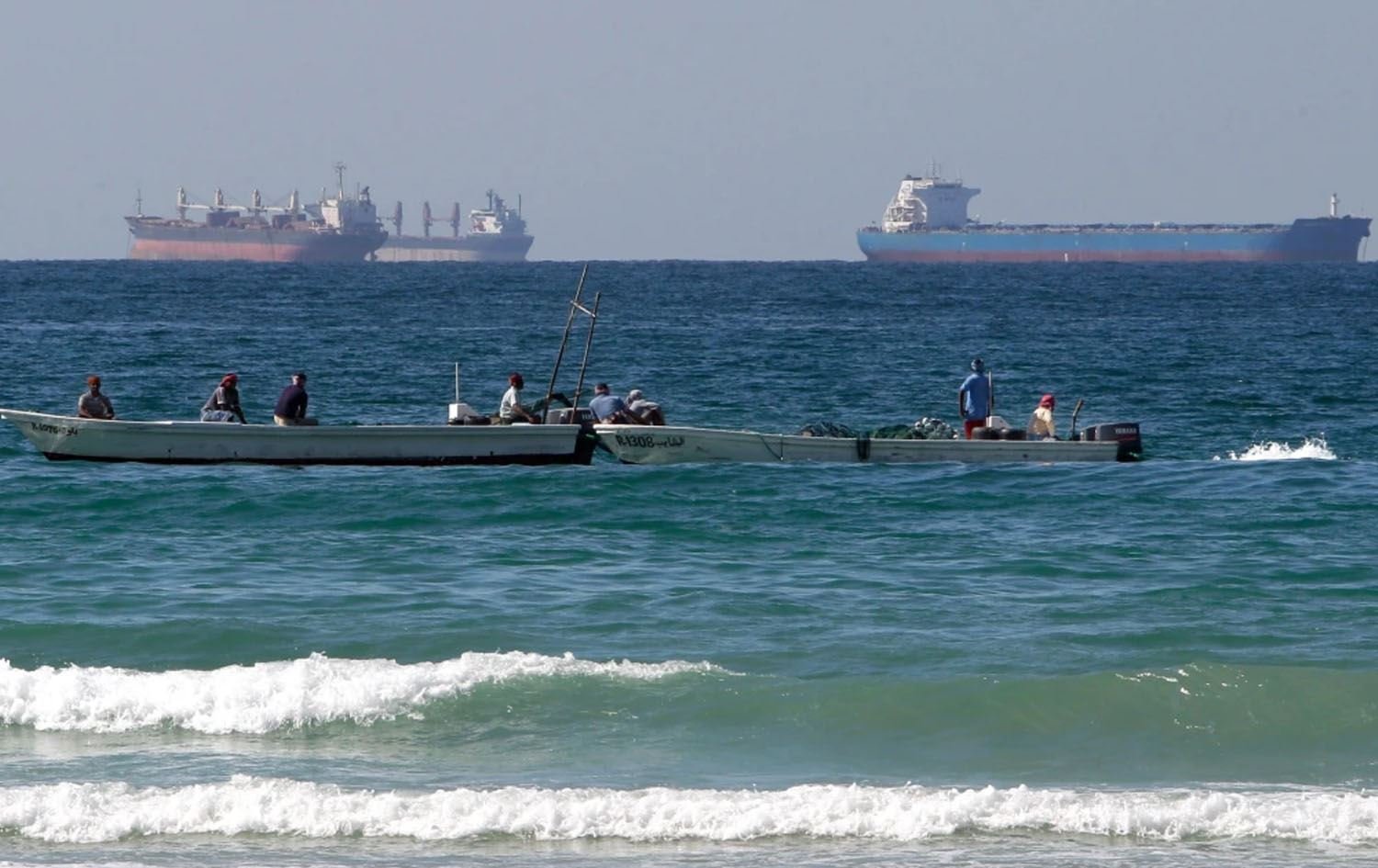
Nigeria could be heading towards yet another oil windfall, with higher crude prices boosting government revenues even as rising fuel costs squeeze the wider economy.
Brent crude has breached $100 a barrel as renewed US-Iran hostilities threaten to prolong restrictions on oil flows through the Strait of Hormuz. The price is substantially above the $64.85 benchmark used in Nigeria’s 2026 budget, potentially lifting oil receipts and foreign-exchange earnings.
On the flip side, petrol prices have risen from about N830 per litre in February to more than N1,350, increasing costs for households, transport operators and businesses and creating a potentially inflationary counterweight to the fiscal gains.
The International Energy Agency (IEA) estimates that about 2.8 billion barrels of oil exports have been lost through the Strait of Hormuz since the US-Iran conflict began, making the disruption one of the most significant shocks to global energy flows in modern history.
So far, however, alternative supply, inventory withdrawals and weaker demand have prevented the full impact of the lost volumes from translating into a sustained oil-price explosion. That resilience is now being tested.
Hormuz disruption reaches critical stage
Oil flows through the Strait of Hormuz averaged only 7.6 million barrels per day (b/d) in August, about 13.1 million b/d below pre-war levels, according to the IEA’s latest Oil Market Report.
Alternative export routes have offset more than 500 million barrels of the cumulative losses, equivalent to an average of about 2.8 million b/d.
Combined exports through Saudi Arabia’s Yanbu and the United Arab Emirates’ Fujairah increased from 4.1 million b/d in February to 7.8 million b/d in June, before Houthi attacks in the Red Sea reduced the flows to 5.5 million b/d in August.
Additional production from outside the Middle East Gulf has provided another important buffer.
The United States, Brazil, Kazakhstan, Venezuela and Nigeria have collectively offset about 420 million barrels of the cumulative supply losses, the IEA said. The rest of the gap has largely been absorbed by falling inventories and weaker oil demand.
Reports show that global observed stocks are now about 507 million barrels below pre-war levels, while cumulative demand reductions since the beginning of the conflict have exceeded one billion barrels.
The IEA said apparent Chinese oil demand over the past six months has been running about 1.7 million b/d below February levels, reflecting lower imports, refinery activity and product deliveries.
The latest escalation has brought the oil market back into the territory that analysts initially feared when the conflict began.
Brent crude climbed to around $101.20 a barrel on Wednesday, gaining more than 3 percent and briefly crossing the $100 threshold for the first time since late July, according to Oilprice.com. West Texas Intermediate traded around $96 a barrel.
The rally followed renewed military exchanges between the United States and Iran, alongside escalating tensions involving Saudi Arabia and Yemen’s Houthi rebels.
The United States Central Command said American forces had destroyed five Iranian crude-oil carriers (Four in the Gulf of Oman and one near Kharg Island), following ballistic missile attacks by Iran’s Islamic Revolutionary Guard Corps on a US Navy warship.
Iran subsequently fired ballistic missiles towards US forces at Jordan’s al-Azraq Air Base. Jordan’s Armed Forces said 18 of the 20 missiles were intercepted, while the remaining two landed in unpopulated areas.
The IRGC also claimed attacks on US vessels and oil tankers, although those claims remain unverified.
The renewed hostilities have complicated expectations of a quick normalisation of oil flows through Hormuz.
The IEA now assumes that shipping through the strategic waterway will remain restricted throughout 2026, with the impasse in negotiations between Washington and Tehran delaying a return to normal flows until next year.
Supply losses deepen
Global oil production fell by 1.6 million b/d month-on-month to 100.1 million b/d in August, with around 10 million b/d of Gulf output still shut in, according to the IEA.
Global supply is expected to decline by 5.7 million b/d year-on-year to 100.7 million b/d in 2026, with the forecast 1.3 million b/d lower than the agency’s previous projection.
The IEA expects production to rebound by about 8 million b/d in 2027.
Global oil demand, meanwhile, is projected to fall by 2.5 million b/d to 102.5 million b/d in 2026, a decline about 940,000 b/d steeper than previously forecast, before recovering by 2.6 million b/d in 2027.
Demand losses are expected to be concentrated in middle distillates and petrochemical feedstocks, particularly in Asia.
The IEA said disruptions to refined-product exports from the Middle East Gulf and Russia had severely constrained diesel and gasoil availability, pushing prices sharply higher.
Global refinery throughput reached a summer peak of 81.4 million b/d in August, up 960,000 b/d from July but still 4.2 million b/d below year-earlier levels.
“Refining margins reached record levels in the Atlantic Basin in August, led by sharply higher diesel cracks, while surging freight rates weighed on Singapore profitability,” the IEA said.
The sheer scale of the disruption is underscored by the volume of crude removed from the market.
More than 500 million barrels of crude and condensate have been knocked out of the global market since the conflict began, according to Kpler data, representing what analysts describe as the largest energy supply disruption in modern history.
At an average crude price of around $100 a barrel, the missing production represents roughly $50 billion in lost revenues, according to Johannes Rauball, senior crude analyst at Kpler.
That figure is equivalent to around one percent of Germany’s annual GDP or roughly the entire economic output of smaller economies such as Latvia or Estonia.
The 500 million barrels removed from the market also represents an extraordinary volume in consumption terms.
Iain Mowat, principal analyst at Wood Mackenzie, said the lost supply is equivalent to curtailing global aviation demand for about 10 weeks, eliminating road travel worldwide for 11 days or removing oil from the global economy for five days.
The volume is also equivalent to nearly a month of US oil demand or more than a month of oil consumption across Europe, according to Reuters estimates.
The impact has extended beyond crude.
Jet-fuel exports from Saudi Arabia, Qatar, the UAE, Kuwait, Bahrain and Oman fell from about 19.6 million barrels in February to only 4.1 million barrels across March and April, according to Kpler data.
Reuters estimates that the lost jet-fuel exports would have been enough for about 20,000 round-trip flights between New York’s JFK airport and London Heathrow.
Analysts fear recovery could take months, even years
Even if the Strait of Hormuz reopens fully, analysts warn that the return of production and energy infrastructure to normal levels will not happen immediately.
Global onshore crude inventories have fallen by about 45 million barrels, according to Kpler, while production outages have reached roughly 12 million b/d since late March.
Rauball said heavier crude fields in Kuwait and Iraq could require four to five months to return to normal operating levels, potentially extending stock drawdowns.
Damage to refining capacity and Qatar’s Ras Laffan LNG complex could take considerably longer to repair, with full restoration of some regional energy infrastructure potentially taking years.
That creates a problem for a market that has already used much of its inventory buffer to absorb the initial shock.
Economist warns against rate response
The return of $100 oil is also reviving concerns over the wider inflation and interest-rate consequences of the crisis.
Holger Schmieding, chief economist at Berenberg, said the bank had previously based its economic forecasts on the assumption that Brent would fall to $75 a barrel by year-end as traffic through Hormuz gradually recovered.
“Until mid-July, oil prices normalised even a bit faster than we had anticipated,” Schmieding said. “At the margin, this may have contributed to the upside surprise in Eurozone and UK growth in Q2. But that luck seems to have run out.”
He added that although active hostilities involving heavy bombardment may have eased temporarily, “the Strait of Hormuz remains virtually closed with no apparent resolution in sight.”
The renewed energy shock raises the prospect of higher headline inflation and, potentially, renewed pressure on central banks to keep interest rates higher for longer. But Schmieding cautioned against an automatic monetary-policy response.
“Central banks cannot do anything about adverse supply shocks. They should not react with rates to the direct effects of such disruptions, which raise prices but hurt growth at the same time,” he said.
He noted that there was still limited evidence of higher energy prices feeding into wages and other parts of the economy; the so-called second-order effects that central banks watch closely.
Markets brace for prolonged disruption
The initial impact of the Hormuz crisis proved less severe for the global economy than the market had feared, as oil prices repeatedly tested the $100-a-barrel mark without sustaining a prolonged breach and fuel shortages remained concentrated in specific markets.
The shock was absorbed through several adjustment mechanisms: increased output from alternative producers, weaker demand, inventory releases and the intermittent nature of the U.S.-Iran confrontation, which periodically opened room for diplomatic de-escalation.
Those adjustment mechanisms, however, are becoming less effective.
The IEA’s expectation that restrictions on Hormuz traffic will persist through 2026 comes as global inventories have already been drawn down and production remains constrained. With the northern hemisphere moving into the higher-demand autumn and winter period, the balance between available supply and consumption could become increasingly fragile, leaving oil prices more sensitive to any additional disruption.
Abbas Araqchi, the Iranian foreign minister, has said the Strait of Hormuz was open following a ceasefire accord agreed in Lebanon, while President Donald Trump said he believed a deal to end the war would come soon. The timing of any lasting settlement, however, remains uncertain.
The longer the Hormuz disruption lasts, the more complicated the oil-price equation becomes for Nigeria. Sustained crude prices above $100 a barrel could generate a significant fiscal windfall, but that benefit would have to compete with the inflationary effects of more expensive petrol, transportation and production.
This changes the nature of the crisis. The central question is no longer simply whether the global economy can absorb a sudden loss of oil supply. It is whether economies can continue to absorb the shock as inventories are depleted, production remains constrained and the spare buffers that initially softened the disruption disappear.
For Nigeria, that tension is particularly pronounced. The country is positioned to benefit from higher export prices while simultaneously facing higher energy costs at home, creating a situation where an external commodity gain can become an internal cost shock.