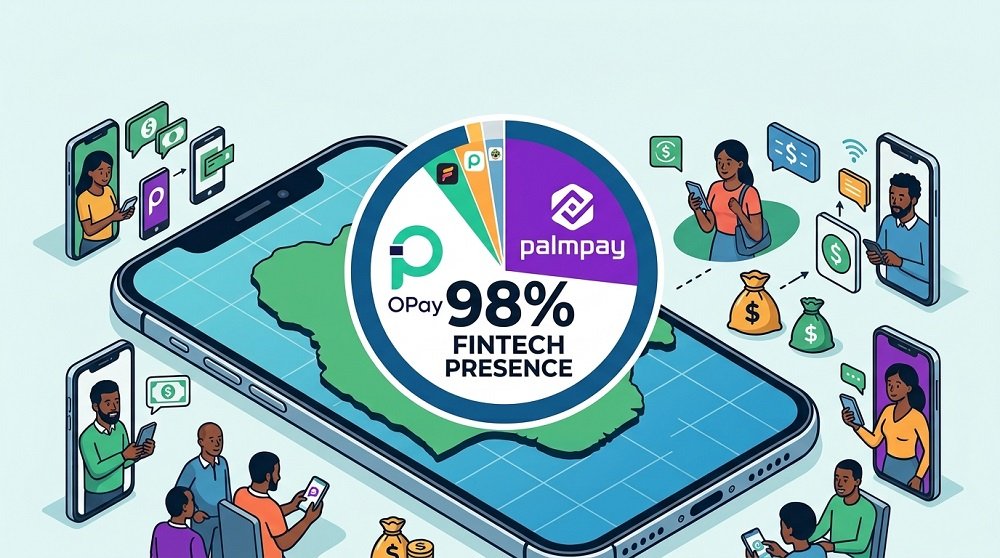
OPay and PalmPay have emerged as the most widely present fintech applications on Nigerian smartphones, with penetration levels of 69 per cent and 29 per cent respectively, giving the two platforms a combined presence of 98 per cent among smartphone users, according to a report by KPMG and Orange Group.
The findings, contained in it’s recent analysis of Nigeria’s smartphone market, highlight the growing importance of mobile applications in the country’s financial services ecosystem, as consumers increasingly rely on their devices to conduct everyday transactions.
OPay ranked first among the banking and fintech applications covered by the study, significantly ahead of PalmPay, which came second. Moniepoint followed with a 16 per cent smartphone penetration rate, while UBA recorded 11 per cent and FirstBank 8 per cent.
The report also showed that OPay’s smartphone presence was more than six times the 11 per cent recorded by Access Bank and UBA, the traditional banking applications with the highest penetration rates among those covered by the study.
PalmPay’s 29 per cent penetration also placed it ahead of every individual traditional banking application included in the analysis, underlining the growing reach of fintech platforms in a market where digital financial services are becoming increasingly central to daily economic activities.
The findings reflect a shift in how Nigerians access financial services, with mobile applications offering alternatives to physical bank branches for transactions such as fund transfers, bill payments, airtime purchases and account management.
Over the past decade, banks and fintech companies have invested in mobile platforms to improve accessibility, simplify transactions and provide faster digital services. These investments have helped reduce the need for customers to visit banking halls for routine financial activities, particularly in urban centres where digital payments are increasingly used across retail, transportation and other service sectors.
According to the report, the growing adoption of fintech applications is being driven by wider smartphone ownership, more affordable internet access, user-friendly mobile platforms, innovations in digital wallets, buy-now-pay-later services and remittances, as well as improving digital financial literacy and trust.
Regulatory support and investment in digital infrastructure have also contributed to the expansion of mobile financial services, making it easier for consumers and businesses to participate in the digital economy.
The report noted that the growing popularity of these platforms is creating opportunities to extend formal financial services to more Nigerians while reducing the costs associated with physical branches and paperwork. It also identified digital payments as a driver of productivity, transparency and innovation.
“Fintech and digital payments are no longer the future, they are the present. With over ₦1.26 trillion transacted digitally in 2024 and sustained double-digit growth, fintech is driving financial inclusion, economic efficiency, and innovation at scale in Nigeria,” the report stated.
However, the growing presence of fintech applications also points to intensifying competition within the financial services sector. Traditional banks are increasingly competing not only with one another but also with technology-driven platforms that prioritise mobile accessibility, transaction speed and integrated digital services.
The report observed that mobile usability, application performance and the range of services available within a single platform are becoming important factors in determining how financial service providers attract and retain users.
As smartphones become a major gateway to digital services, fintech companies are leveraging their mobile-first models to appeal to consumers seeking convenient ways to manage their money without relying entirely on conventional banking channels.
Beyond financial services, the report found that e-commerce remains an emerging but expanding feature of Nigeria’s smartphone market. Jumia led the category, with a 15 per cent smartphone penetration rate among Nigerian users.
Cryptocurrency applications, meanwhile, remained a niche segment of the mobile ecosystem. The report placed Finance, a cryptocurrency-related application category, at just 5 per cent smartphone penetration.
The findings suggest that financial services have established a stronger presence on Nigerian smartphones than other digital service categories, reflecting the growing role of mobile technology in everyday payments and money management.