The Abdul Samad Rabiu Africa Initiative (ASR Africa) has launched a medical innovation programme for 30 final-year medical students at the University of Maiduguri (UNIMAID), targeting gaps in clinical preparedness, professional development and technology adoption among emerging healthcare practitioners.
The Health Innovation Series, launched at the university in Borno State, is designed to equip graduating Bachelor of Medicine, Bachelor of Surgery (MBBS) students with practical knowledge, leadership skills and exposure to medical technologies to support their transition from medical school to professional practice.
According to ASR Africa, the programme represents an expansion of its health-focused development interventions through a university-based platform intended to connect medical education with the practical demands of healthcare delivery.
Nakama Keri, ASR Africa’s Multilateral Coordination Specialist, who represented Ubon Udoh, the organisation’s managing director and chief executive officer, said the initiative was developed through collaboration with the university to help graduating medical students overcome barriers to early professional development.
“This series is engineered to help outgoing medical students leapfrog past limitations hindering health practitioners from reaching their full potential early, and connect them with current medical technological realities,” Keri said.
He added that strengthening healthcare through innovative approaches remained central to ASR Africa’s health initiatives and the vision of its chairman, Abdul Samad Rabiu.
The programme is structured around practical engagements with experienced medical professionals, discussions on career pathways, leadership development and exposure to technological innovations that could improve healthcare practice.
By targeting students approaching graduation, the initiative seeks to address the transition between academic training and professional responsibilities, when young doctors must apply their knowledge in clinical settings while making decisions about specialisation, career development and service delivery.
Mohammed Aboso, the acting chief medical director of the University of Maiduguri Teaching Hospital, described the series as a strategic investment in human capital development, expressing confidence that it could help prepare a better-informed generation of medical professionals.
“I believe that this series will be a catalyst towards raising a new generation of medical professionals, who are better exposed, informed, and prepared,” Aboso said.
UNIMAID’s management described the initiative as an additional opportunity for students to benefit from ASR Africa’s institutional partnership with the university.
Mohammed Mele, the university’s vice-chancellor, represented by Muhammad Dauda, director-general of the ASR Africa Innovation Centre and Entrepreneurship (ASR-ICE), commended Rabiu for donating the ASR-ICE building, which he said had attracted further partnerships and contributed to the centre’s operations and value to the university community.
Mele urged participating students to apply the knowledge and opportunities provided by the programme to their professional development and patient care.
The programme also carries implications for healthcare workforce development in Borno State, where public authorities are seeking to strengthen access to medical services.
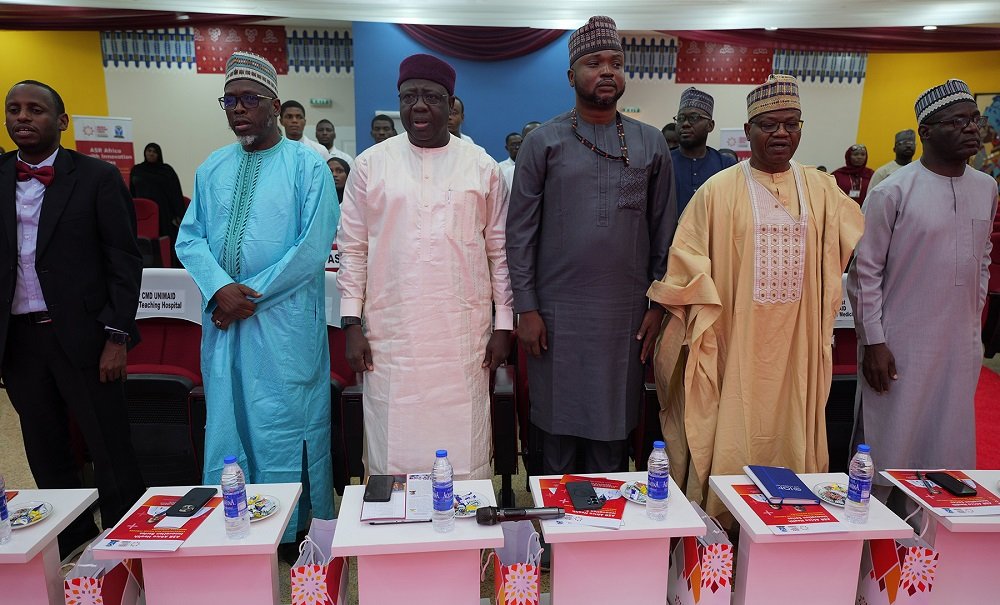
Baba Malla Gana, Borno State commissioner for health and human services, who represented the state governor at the opening ceremony, encouraged the participating students to remain in the state after graduation and contribute to improving local healthcare access.
He described the series as a potential turning point in the professional development of medical students and urged them to consider the role they could play in meeting the state’s healthcare needs.
The keynote address was delivered by Adamu Rabasa, a pioneer medical graduate of UNIMAID’s 1983 class and a professor of paediatrics at the university. Drawing on his professional and entrepreneurial experience, Rabasa urged the students to demonstrate resilience, pursue professional excellence and make effective use of medical technology and innovative approaches in healthcare delivery.
Other dignitaries at the ceremony included Hamman Garandawa, provost of the College of Medicine, and Mohammed Arab Alhaji, executive secretary of the Borno State Primary Healthcare Board, alongside university management and faculty members.
Established in 2021 by Rabiu, chairman of BUA Group, ASR Africa focuses on sustainable, locally driven interventions in health, education and social development across Africa.
The Health Innovation Series adds a professional development component to the organisation’s health-related activities by targeting medical students before they enter full-time practice.