Africa’s energy ambitions have acquired a striking new price tag: more than $17 billion in reported investment commitments.
When African Energy Week (AEW) 2026 concluded in Cape Town on October 16, the African Energy Chamber (AEC), which organised the five-day gathering, had presented a compelling picture of a continent seeking to reposition its energy resources as engines of investment, industrialisation and economic growth.
More than 12,000 delegates, including government officials, national oil companies, private operators, financiers and technology providers, attended the event, according to the organisers. Across the conference, governments marketed exploration acreage, companies announced partnerships, developers outlined project milestones and investors were invited to consider opportunities spanning oil, gas, power generation and infrastructure.
Yet the most consequential question emerging from Cape Town extends beyond the headline figure.
Can Africa convert its renewed pitch for energy investment into projects that are financed, built and operated — and ensure that the resulting economic value reaches the countries and communities supplying the resources?
That is the test against which AEW 2026 will ultimately be judged.
Billions announced, billions still to mobilise
The conference’s reported $17 billion in commitments offers a powerful indication of the scale of commercial interest being presented to Africa’s energy sector. But the figure requires careful interpretation.
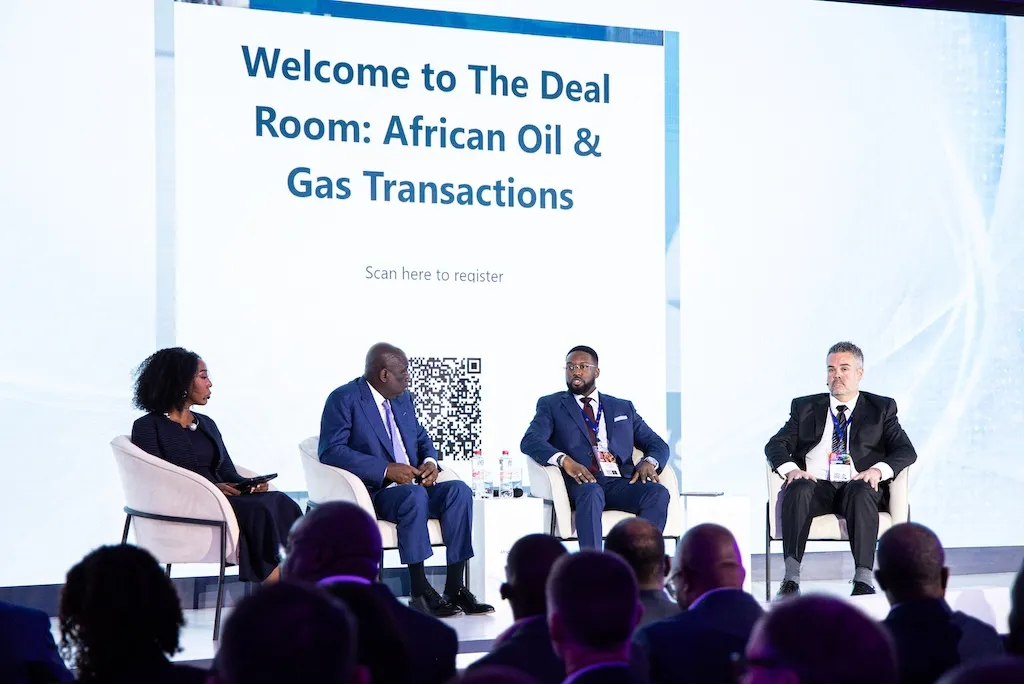
One of the event’s principal investment platforms, the Premier Invest Deal Room, presented 15 oil, gas, infrastructure and power projects seeking more than $16 billion in financing. The proposals ranged from exploration and production to liquefied natural gas infrastructure, downstream development and gas-fired electricity generation.
The distinction matters: a portfolio of projects seeking capital is not the same as capital already secured. Nor does an aggregate conference commitment, without further disclosure, establish how much money has been disbursed, how many projects have reached financial close or how much new production capacity will result.
Reporting by Africa Energy Pulse on the Deal Room noted that Premier Invest had not publicly confirmed whether the session produced financing agreements.
The investment marketplace nevertheless serves an important purpose. Energy projects frequently need several layers of financing, technical assessment, regulatory approval and commercial agreements before construction can begin. Bringing project sponsors into direct contact with lenders, development finance institutions and institutional investors can help advance that process.
The African Farmout Forum added another dimension, presenting 23 investment opportunities across established and frontier petroleum basins. Its focus on equity farm-downs and joint ventures offered companies opportunities to share development costs, distribute risk and seek partners with the technical or financial capacity to advance assets.
The significance of these platforms, therefore, lies not simply in the amounts discussed but in their ability to narrow the distance between an identified resource and an investable project.
The next measure of progress must be more concrete: binding financing agreements, final investment decisions, construction milestones and projects entering commercial operation.
Governments are competing for the same capital
Perhaps the clearest message from Cape Town was the determination of African governments to position their petroleum resources and energy infrastructure as competitive investment propositions.
Côte d’Ivoire presented a $10 billion energy expansion strategy linked to its ambition to become a regional energy hub by 2035. Its promotion of the Calao and Calao South blocks reflected a broader effort to attract exploration and production companies capable of developing offshore resources.
Liberia launched its 2026 Direct Negotiation Petroleum Licensing Round, offering 15 blocks across the Liberia and Harper basins. The government highlighted extensive seismic coverage as part of its effort to give prospective investors a stronger geological basis for evaluating opportunities.
Gabon, meanwhile, outlined proposed petroleum code reforms intended to make exploration more attractive through flexible contractual arrangements, lower entry costs and streamlined approvals.
These initiatives point to a central reality of international energy investment: possessing natural resources is only one part of the equation. Investors must also assess the fiscal regime, regulatory predictability, infrastructure, geological risk and the terms under which capital can be deployed and recovered.
African countries are not competing solely against one another. They are competing for capital in a global market where investors compare opportunities across regions and technologies.
The challenge for governments is to make projects commercially viable without sacrificing public revenue, transparency or long-term national interests.
More flexible terms may encourage exploration, but their value ultimately depends on whether they lead to additional investment and production on terms that deliver a reasonable return to the host country.
Senegal’s presentation of 104 blocks and Algeria’s promotion of seven onshore exploration blocks reinforced the breadth of this competition. Across these markets, the immediate objective is to attract operators and investors. The longer-term objective must be to translate resource development into durable economic capacity.
From exporting resources to building domestic value
The next phase of Africa’s energy development will depend on whether resource-rich countries can capture more value at home.
Uganda reaffirmed its ambition to begin oil production from the Lake Albert developments while advancing plans for a domestic refinery with a targeted capacity of 60,000 barrels per day by 2030.
The combination illustrates a strategic question confronting many producing countries: how much of the economic value generated by extraction can be retained through refining, manufacturing, transport, power generation and other industrial activities?
Exporting crude oil or natural gas can generate foreign exchange and government revenue. But domestic processing and reliable energy infrastructure may also support industrial activity, create demand for skilled labour and strengthen links between the energy sector and the wider economy.
These benefits are not automatic. Refineries, pipelines and gas-processing facilities require substantial capital, dependable feedstock, functioning markets and sustained operational efficiency. Poorly structured projects can absorb public resources without delivering the anticipated economic returns.
The policy challenge is therefore not simply to maximise extraction or processing capacity. It is to identify projects whose commercial performance and wider economic benefits justify the capital committed to them.
Senegal’s Yakaar-Teranga gas development illustrates the importance of this distinction. State-owned Petrosen is targeting a final investment decision by the end of 2027, leaving further work to be completed before the project can move into its next phase.
If developed successfully, the project could expand domestic gas supply and create opportunities for gas-to-power and industrial uses. But the investment decision remains a critical milestone between a resource opportunity and an operating development.
For governments, that interval is where financing arrangements, commercial agreements, infrastructure requirements and domestic-market strategy must converge.
Strategic partnerships must deliver more than signatures
The agreements announced at AEW 2026 also suggest that the contest for investment is increasingly about capabilities, information and technology, not just access to underground resources.
The African Energy Chamber and S&P Global Energy signed a five-year strategic partnership focused on improving energy data transparency and market intelligence. Better data can help investors evaluate geological prospects, understand market conditions and compare opportunities with greater confidence.
In Angola, Etu Energias, Chariot and BW Energy announced a tripartite agreement intended to combine local operating capabilities with international technical expertise in offshore development.
South Africa’s national petroleum company, SANPC, and SLB agreed to collaborate on digital transformation, including cloud-based data systems and advanced subsurface technologies.
These arrangements address different constraints, but share a common premise: developing an energy sector requires capabilities that extend beyond the ownership of natural resources.
Reliable geological information can reduce uncertainty. Technology can improve operational decision-making. Partnerships can spread risk and bring specialist expertise into projects that might otherwise struggle to advance.
However, the commercial value of these agreements will depend on their implementation. The important questions are whether they produce functioning systems, improve project performance, transfer skills and strengthen the capacity of African institutions and businesses.
The same principle applies to Sasol and White Desert’s sustainable aviation fuel offtake agreement. Its significance will ultimately depend on the commercial arrangements being implemented and the development of a dependable supply chain.
Across these partnerships, the distinction between an announcement and a measurable outcome remains decisive.
Mozambique, Nigeria and Senegal: the project execution test
Several project updates announced during the conference brought that challenge into sharper focus.
In Mozambique, Eni confirmed plans to begin drilling for its Coral North floating liquefied natural gas project in November 2026. The planned campaign represents a further step in the development of the country’s offshore gas resources.
In Nigeria, TotalEnergies announced that it had secured a deepwater drillship for an upcoming exploration and appraisal campaign. The work is expected to advance evaluation of prospects in the country’s deepwater acreage.
Senegal’s Yakaar-Teranga development, meanwhile, is targeting a final investment decision by the end of 2027.
These announcements represent different stages of the project lifecycle. A drilling campaign can generate information needed to assess a prospect, but it does not by itself establish a commercial discovery. A project approaching a final investment decision has progressed further, but still requires the necessary approvals, financing and commercial conditions to proceed.
Recognising these differences is essential to assessing Africa’s energy investment pipeline accurately.
The continent does not lack ambitious project proposals. The harder task is moving projects through the sequence of exploration, appraisal, financing, construction and production while managing technical, commercial and regulatory risks.
That is why implementation milestones are more informative than conference announcements alone.
The energy transition cannot be separated from the investment debate
Africa’s energy investment ambitions also sit within a wider debate about climate change, energy security and the future composition of the global energy system.
Oil and gas developments can offer governments export earnings, fiscal revenue and feedstock for industrial activity. Natural gas can also contribute to electricity generation and industrial supply where infrastructure and market conditions support its use.
At the same time, new fossil-fuel projects raise questions about long-term emissions, environmental protection, the risk of stranded assets and the compatibility of infrastructure investments with evolving climate policies.
Those tensions were visible around AEW 2026, where environmental campaigners protested against further oil and gas exploration. A wire report by Associated Press shows that protesters argued that expanded fossil-fuel development could prolong dependence on high-emission energy sources, while South African officials defended gas as a potential complement to renewable power.
For African policymakers, the issue cannot be reduced to a simple choice between developing resources and pursuing a transition to cleaner energy.
Countries must consider the immediate need for dependable and affordable electricity alongside the long-term costs, emissions and financial risks associated with different technologies. They must also assess where renewable energy, storage, transmission networks, gas infrastructure and other investments can most effectively meet national needs.
The relevant question is not whether every announced project is automatically desirable. It is whether each investment is economically sound, environmentally responsible and consistent with a credible long-term energy strategy.
AEW’s investment figures alone cannot answer that question. Project-level financial, environmental and development assessments will be needed.
The missing link: people, skills and electricity
The conference’s workforce initiatives offered a reminder that the value of energy investment cannot be measured exclusively through barrels produced, gas exported or capital raised.
The AEW Future Leaders Student Challenge recognised university teams developing engineering solutions and financial models for energy-sector challenges. The ExxonMobil Foundation STEM Africa Challenge showcased student-led concepts addressing clean energy, decentralised solar power and off-grid applications.
These programmes address a fundamental question: who will possess the skills to design, build, operate and maintain the infrastructure that new investment creates?
Local employment, technical training, domestic supplier participation and knowledge transfer can help turn large projects into broader economic opportunities. But these outcomes require deliberate policies, credible training programmes and links between investors, educational institutions and local enterprises.
Electricity access is equally important. An increase in oil production or LNG exports does not automatically mean that households receive more reliable power or that local businesses can afford to operate.
The development impact depends on how investment connects with electricity generation, transmission and distribution, domestic fuel markets and the ability of consumers to pay for energy.
For a continent where energy access remains a major development concern, the measure of success must extend beyond the volume of resources extracted.
It must include the availability, reliability and affordability of the energy services that households and businesses need.
After Cape Town, accountability becomes the real measure
AEW 2026 has brought together a wide range of investment opportunities, licensing initiatives, commercial agreements and project developments. The reported $17 billion in commitments provides a headline around which that activity can be understood.
But the real assessment begins after the delegates leave Cape Town.
Governments will need to demonstrate that licensing opportunities attract credible operators and result in productive investment. Companies will need to move agreements towards implementation. Project sponsors will need to secure financing and meet development milestones. Industry partnerships will need to produce tangible technical and commercial benefits.
Investors, for their part, will continue to assess whether African projects offer the combination of returns, risk management, infrastructure and regulatory certainty required to justify their capital.
And citizens will have reason to ask a more direct question: what will these investments change in their daily lives?
The answer will be found not in the number of meetings held or the value of announcements made, but in projects delivered, electricity supplied, businesses supported, skills developed and public revenues responsibly managed.
Cape Town has provided a marketplace for Africa’s energy ambitions. Whether those ambitions become a durable foundation for economic transformation will depend on the decisions, financing and execution that follow.
The $17 billion headline may capture the attention. The projects that reach completion — and the value they create for Africans — will determine the legacy.