
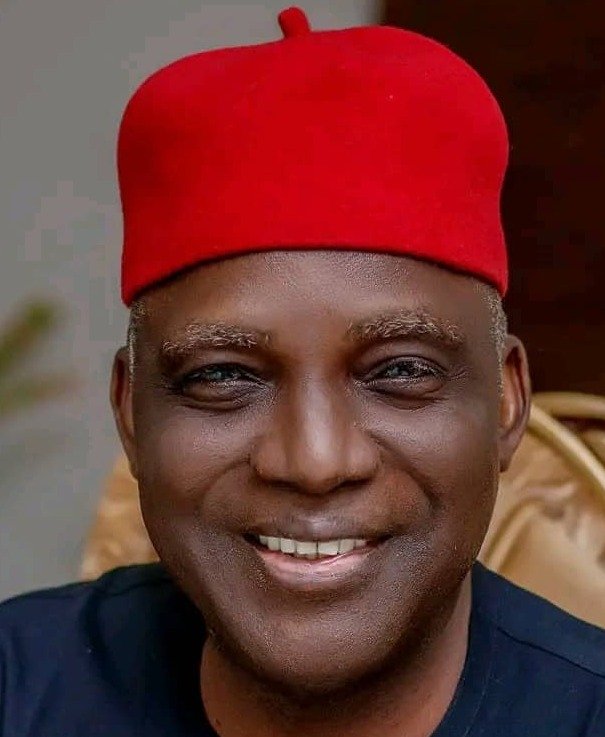
The Great Zik of Africa was a man ahead of his time. The vision that resulted in the establishment of the University of Nigeria at Nsukka in 1960 is still important in contemporary Nigeria. We need our higher institutions primarily devoted to Nigeria’s problems and Africa’s aspirations.
Lessons from successful Global South nations
Nigeria is a country of over 240 million people, growing at the annual rate of 2.7 percent. About 60 percent of the population is 18 years or below, making Nigeria a prime example of a nation with a youth bulge. We should, therefore, be deeply concerned with the future of the youth. We should be concerned with questions of economic and business opportunities available to them. However, we are not. Therefore, millions of them flee abroad for survival in a phenomenon known as japa. They include some of the best doctors, engineers, pharmacists, accountants, technology experts, communication practitioners and other professionals in our nation.
There are important lessons to learn from nations and territories, particularly in the Global South, which only a few years ago were at the same economic level as Nigeria, if not in a worse situation. One of the major lessons is how these nations and territories placed education on the priority list, especially Science, Technology, Engineering, and Mathematics (STEM) subjects. The Indian leadership recognised early enough the centrality of science and technology in societal transformation. That’s why three years after independence in 1948, it built the first Indian Institute of Technology (IIT) at Kharagpur and later established others at Bombay, Kanpur, Madras, Delhi, etc. When I went to India to give a keynote address at the Indo-USA Engineering Conference at IIT Delhi in 1989, there were only five IITs. Today there are 23 with an approximate total budget of $1.2 billion. IIT graduates are world class. A number of them worked as my post-graduate students and research assistants at both the University of Massachusetts and the University of Pittsburgh; I used to admit only those with first class from the IITs or first class with distinction. I testify to their competence. I am not surprised that some IIT alumni are heading global organisations like Microsoft, IBM, Google, Sun Microsystems, Infosys and Palo Alto Networks, among others.
Buoyed by the Indian success story in science and technology, the Nigerian government established various Universities of Technology in different parts of the country in the early 1980s. However, they have not lived up to the expectations of the founding fathers and the Nigerian people.
We must prioritise STEM in everything we do to enable our dear nation to leapfrog. The Chinese, Indians, Koreans, Japanese, Vietnamese and other Asians are prominent in Silicon Valley because of the far-reaching attention their home governments and people pay to STEM. It is not fortuitous that the person widely regarded as the greatest mathematician in the world today, Terence Tao, is an ethnic Asian from Australia.
Vietnam is the latest Southeast Asian nation to stun the world with its development miracle. Just 20 years ago, we Nigerians used to look down on Vietnam. They went through decades of a terrible war in which America, the Soviet Union and China were involved. But today it has become a global industrial hub. During a visit in 2023, Jensen Huang, the chairman of Nvidia, today the world’s most valuable company, described Vietnam as his “second home” because of its tremendous strides in advanced manufacturing and other fields. Vietnam produces 92,000 STEM talents yearly from its 400 tertiary institutions, including 200 universities. Still, the number has shown that the STEM talent pool is inadequate for the country’s fast-growing economy. We should note that Vietnam just 12 years ago had a GDP of $171 billion while Nigeria had $811 billion. In 2026, Vietnam with a population of 95.5 million people has a GDP of $527 billion while Nigeria, with a population of over 240 million, now has a GDP of $377 billion. Vietnam’s GDP per capita is therefore over $6000 while that of Nigeria is less than $1360.
China, which was a poor Third World nation in the 1970s and early 1980s, is today in a supremacy fight with the United States. Among its numerous feats is lifting 700 million out of poverty within a mere generation, enabling it to have the world’s second largest economy by gross domestic product (GDP). This most important development reveals a lot about the quality of the Chinese leadership.
China’s current president, Xi Jinping, is a chemical engineer with advanced degrees in law, with a focus on the economic philosophy of Marxism. His predecessor, Hu Jintao, studied mechanical engineering, specializing in hydraulics. Hu’s predecessor, President Jiang Zemin, read electrical and electronics engineering. Engineers and natural scientists are prominent in the Chinese Communist Party, holding critical positions. They are also conspicuous in the civil service, where the meritocratic system makes the country use key performance indicators (KPIs) as a critical performance assessment strategy. As you may know, 72 percent of Chinese students, from the undergraduate level to the doctoral level, are engineering and science candidates.
Nigeria has a lot to learn from China, India, Vietnam, and other fast-developing nations. Indeed, all competitive nations across the globe pay acute attention to STEM, right from primary school. Still, it is important to clarify that paying priority attention to STEM does not mean rejection of the humanities and business studies. After all, the few months that Steve Jobs, the Apple CEO and co-founder, studied calligraphy at Reeds College at Portland, Oregon, proved immensely beneficial to him and Apple. One of the features that made Apple stand out at the launch in the early 1970s was the uncommon design and aesthetics of its keyboard, thanks to Steve Jobs. His love of music, especially that of Thomas Dylan, made him create iTunes. In other words, the arts and technology should on no account be seen as mutually exclusive but rather mutually reinforcing. Technological and scientific power must be humanised, otherwise Armageddon will be our fate. Yet, priority attention must be given to STEM, as all competitive nations do. It is not an accident that the world’s leading firms like Nvidia, Apple, DeepSeek, Microsoft, and Google are led by engineers.
I share the view of Philip Kotler, the economist and world’s foremost marketing management researcher, that any nation that wants to compete effectively in the 21st century must pay particular attention to not just STEM but also economics and management studies as separate academic disciplines. A basic knowledge of the global economy is vital for success in the private and public sectors. In the same vein, management education and skills are, of course, imperative to run any organisation successfully, including scientific organisations like NASA and laboratories and even hospitals and their theatres.
How can the University drive fast development in Nigeria?
Universities must deliver high quality education driven by STEM to achieve the standard of education found in the emerging or emerged nations such as India, China, Vietnam, Brazil, Singapore, Malaysia, etc.
The country should make productive education a priority by investing a significant proportion of its annual budget in education targeting innovation in all sectors of the economy. In 2022/23, Nigeria ranked 176 out of 177 countries measured. Our investment in education as a percentage of our GDP was 0.35 percent. We beat out Armenia that had 0.25 percent of its GDP. Most African countries did far better than Nigeria. Namibia was sixth in the world with 9.04 percent, Botswana was eight with 8.29 percent, Sierra Leone was 16th with 6.79 percent, Tunisia was 17th with 6.73 percent, Lesotho was 18th with 6.69 percent, Mozambique was 26th with 6.16 percent, and even South Africa was 17th with 6.15 percent.
Universities should respond by becoming entrepreneurial in their approach to research and teaching. Universities should make a direct connection within the commercial and economic society to make the required impact. Examples from the US of what the government does and what universities do continue to innovate for the economy:
(a.) Govt: US National Science Foundation ($9 billion),NIH($48 billion) supporting over 6000 scientists in its laboratories. Nearly 82 percent of NIH’s funding is awarded for extramural research, largely through almost 50,000 competitive grants to more than 300,000 researchers at more than 2,500 universities, medical schools, and other research institutions in every state., 17 national labs, JPL at CalTech, NASA, Environmental Protection Agency Office of Research and Development, Intelligence Advanced Research Projects Activity (IARPA), Smithsonian Institution research centers and programmes.
(b.) Universities: Silicon Valley (Stanford University, UC Berkeley, University of California System); Route 128 in Boston, home of Raytheon, Mitre, etc (MIT, Harvard, Boston University, University of Massachusetts, etc); Research Triangle Park (University of North Carolina, NC State University, Duke, etc).
(c.) Centers of Excellence sponsored by the government and industry: Center for e-Design, through strategic university-industry partnerships, the US NSF ERCs pursue high-risk, high-payoff research across almost the entire spectrum of technology fields, including advanced manufacturing, biotechnology, clean energy and sustainability, microelectronics and information technology.
Since 1985, the NSF has funded a total of 83 ERCs across the United States that have led to more than: 250 spinoff companies; 920 patents; 1,400 invention licenses; 14,900 total bachelor’s, master’s and doctoral degrees to ERC students.
Inspirational initiatives in Nigeria: (a) Defense Industries Corporation; (b) Terra Industries Limited; (c.) Nigeria Prize for Science and Innovation; (d) Geometric Power’s Aba Integrated Power Project.
The dignity of the African and the Black man will be fully restored only when Nigeria rises because, as the nation with the largest concentration of Black people in the world, Nigeria holds a preeminent position in the global scheme of things. Higher education is a critical strategy to Nigeria’s emergence on the global stage, just as China’s emergence on the international scene has helped restore confidence in most Asians. I am confident that fundamental reform of how universities deliver support for the country’s development will change our nation’s fortunes.
*Excerpts of the Founder’s Day Lecture delivered by Prof Bart Nnaji, CON, NNOM, FAS, FAEng, on “Grappling with the Challenges of the 21st Century through Higher Education in Nigeria”, delivered at the University of Nigeria, Nsukka, on October 7, 2026.
- business a.m. commits to publishing a diversity of views, opinions and comments. It, therefore, welcomes your reaction to this and any of our articles via email: comment@businessamlive.com







Rethinking higher education in Nigeria for the 21st Century