Business A.M
No Result
View All Result
Sunday, March 15, 2026
  • Login
  • Home
  • Technology
  • Finance
  • Comments
  • Companies
  • Commodities
  • About Us
  • Contact Us
Subscribe
Business A.M
  • Home
  • Technology
  • Finance
  • Comments
  • Companies
  • Commodities
  • About Us
  • Contact Us
No Result
View All Result
Business A.M
No Result
View All Result
Home Oil and Gas

Saudis may raise domestic gasoline by 80% to equal international prices

by Admin
September 18, 2017
in Oil and Gas

Saudi Arabia is considering a plan to phase out subsidies for gasoline and jet fuel in November at the latest, as the world’s biggest oil exporter pushes a program to curtail spending after a global slump in prices, according to Bloomberg report.

The government would boost gasoline to parity with varying international prices under the plan, according to a person with knowledge of the matter. At current levels, this could result in a hike of about 80 percent for octane-91 grade gasoline to about 1.35 riyals per liter (0.36 cents), the person said on condition of anonymity. The government plans to delay increases in other energy prices until early 2018, the person said.
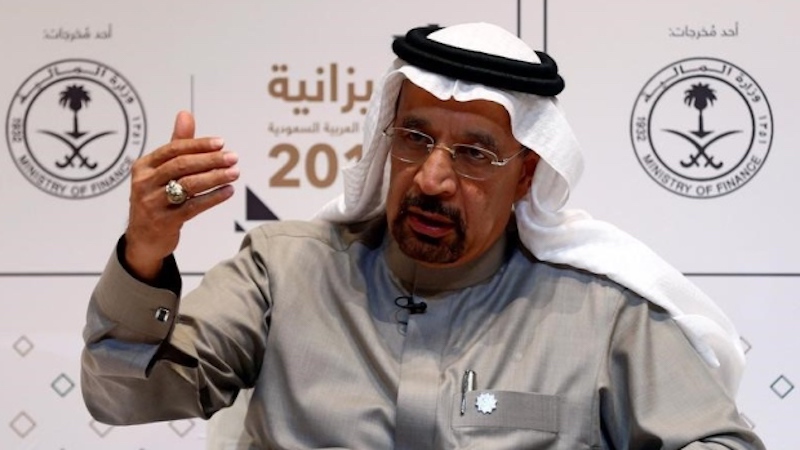
Khalid al-Falih, Saudi Energy Minister #Businesamlive
Khalid al-Falih, Saudi Energy Minister

Authorities are expected to make a final decision on the plan in September or October, the person said. The Saudi finance, economy and energy ministries didn’t immediately respond to requests for comment.

Energy-subsidy reform is a key part of Saudi Arabia’s plan to overhaul the economy, along with the sale of stakes in state-owned entities, including the world’s biggest crude exporter known as Saudi Aramco. The kingdom raised fuel prices in December 2015 and announced plans for further increases. Authorities have also announced plans for a cash transfer program that would start before further subsidy cuts to help Saudis cope with the impact as the economy struggles with the worst slowdown since the global financial crisis.

“It is important for the Saudi government to cut subsidies in order to ease pressures on budget deficit,” Tariq Qaqish, managing director of the asset management division at Mena Corp. Financial Services LLC in Dubai, said by email. “Not only the transportation and logistics sectors will be affected significantly, any company that is involved in the production and needs to transfer their end products to consumers will be affected.”

The kingdom’s benchmark Tadawul All Share Index climbed 0.3 percent at 12:57 a.m. in Riyadh on Monday. The transportation index fell 0.7 percent, the most in a month.

See also: Oil prices up $56 on rising refinery demand, falling U.S. rig count

Removing energy subsidies is politically sensitive in the six-nation Gulf Cooperation Council, where many nationals have grown accustomed to generous state benefits and handouts. The slump in revenue from oil exports have left governments with few options as they grapple with rising budget deficits.

Saudi Arabia’s budget gap soared to more than 15 percent of economic output in 2015 before authorities unveiled a plan to transform the economy and balance the budget by 2020.

The neighboring United Arab Emirates became the first country in the oil-rich region to remove subsidies on transport fuel when it began linking gasoline and diesel prices to global oil markets in August 2015.

Gasoline and jet fuel would undergo immediate, one-time increases under the Saudi plan, while the government would raise prices of other fuels gradually between 2018 and 2021, the person said.

The government may put a ceiling on increases in diesel and heavy fuel oil to limit any negative impact on the economy, as both fuels are used for power generation and industrial activities, the person said. Electricity rates would rise gradually as power providers passed on at least some of the increase in fuel prices, the person said.

Benchmark Brent crude has lost about 2 percent this year and was trading at $55.63 a barrel on Monday at 11:22 a.m. in London.

“The government is taking its first step in removing subsidies for some fuel,” said John Sfakianakis, director of economics research at Gulf Research Center. “And over the long term, the economy will become a more efficient user of energy in general and gasoline in particular.”


Admin
Admin
Previous Post

South Africa’s Pravin Gordhan slams auditing firm, KPMG over tax report

Next Post

What makes a number one hit

Next Post

What makes a number one hit

  • Trending
  • Comments
  • Latest
Igbobi alumni raise over N1bn in one week as private capital fills education gap

Igbobi alumni raise over N1bn in one week as private capital fills education gap

February 11, 2026

CBN to issue N1.5bn loan for youth led agric expansion in Plateau

July 29, 2025

How UNESCO got it wrong in Africa

May 30, 2017

Glo, Dangote, Airtel, 7 others prequalified to bid for 9Mobile acquisition

November 20, 2017

6 MLB teams that could use upgrades at the trade deadline

Top NFL Draft picks react to their Madden NFL 16 ratings

Paul Pierce said there was ‘no way’ he could play for Lakers

Arian Foster agrees to buy books for a fan after he asked on Twitter

FAAC allocation jumps 9.6% to N1.818trn in June

FAAC February allocation dips to N1.9trn amid VAT, tax inflow decline

March 14, 2026
War risk surcharge by MSC raises concerns over rising cargo costs to Nigeria

War risk surcharge by MSC raises concerns over rising cargo costs to Nigeria

March 14, 2026
Public pressure mounts for rate cuts ahead of CBN policy decision

CBN caps new mobile banking transactions at N20,000 to curb fraud

March 14, 2026
Nigeria gains investor favour as oil windfall supports Naira

Naira rebounds to N1,363/$ as improved FX supply eases early-week pressure

March 14, 2026

Popular News

  • Igbobi alumni raise over N1bn in one week as private capital fills education gap

    Igbobi alumni raise over N1bn in one week as private capital fills education gap

    0 shares
    Share 0 Tweet 0
  • CBN to issue N1.5bn loan for youth led agric expansion in Plateau

    0 shares
    Share 0 Tweet 0
  • How UNESCO got it wrong in Africa

    0 shares
    Share 0 Tweet 0
  • Glo, Dangote, Airtel, 7 others prequalified to bid for 9Mobile acquisition

    0 shares
    Share 0 Tweet 0
  • Insurance-fuelled rally pushes NGX to record high

    0 shares
    Share 0 Tweet 0
Currently Playing

CNN on Nigeria Aviation

CNN on Nigeria Aviation

Business AM TV

Edeme Kelikume Interview With Business AM TV

Business AM TV

Business A M 2021 Mutual Funds Outlook And Award Promo Video

Business AM TV

Recent News

FAAC allocation jumps 9.6% to N1.818trn in June

FAAC February allocation dips to N1.9trn amid VAT, tax inflow decline

March 14, 2026
War risk surcharge by MSC raises concerns over rising cargo costs to Nigeria

War risk surcharge by MSC raises concerns over rising cargo costs to Nigeria

March 14, 2026

Categories

  • Frontpage
  • Analyst Insight
  • Business AM TV
  • Comments
  • Commodities
  • Finance
  • Markets
  • Technology
  • The Business Traveller & Hospitality
  • World Business & Economy

Site Navigation

  • Home
  • About Us
  • Contact Us
  • Privacy & Policy
Business A.M

BusinessAMLive (businessamlive.com) is a leading online business news and information platform focused on providing timely, insightful and comprehensive coverage of economic, financial, and business developments in Nigeria, Africa and around the world.

© 2026 Business A.M

Welcome Back!

Login to your account below

Forgotten Password?

Retrieve your password

Please enter your username or email address to reset your password.

Log In
No Result
View All Result
  • Home
  • Technology
  • Finance
  • Comments
  • Companies
  • Commodities
  • About Us
  • Contact Us

© 2026 Business A.M