Recently, the Central Bank of Nigeria published a circular, which introduced measures that serve both as a prerequisite and also dictates how residue owners of both deposit money banks and discount houses should be rewarded. KAYODE OGUNWALE looks at the implications for the banks and their shareholders.
Prior to the 2008 recession, many banks were pressured to set out an expansive dividend
payout whether in cash or scrip. is was occasioned by the boom in the market and the rise of share- holders’ associations.
Most of the banks were also constrained to match peers even though they had poor asset quality, high loan to deposit ratio, dented balance-sheet, an astronomical rise in margin loans and thin capital adequacy ratio.
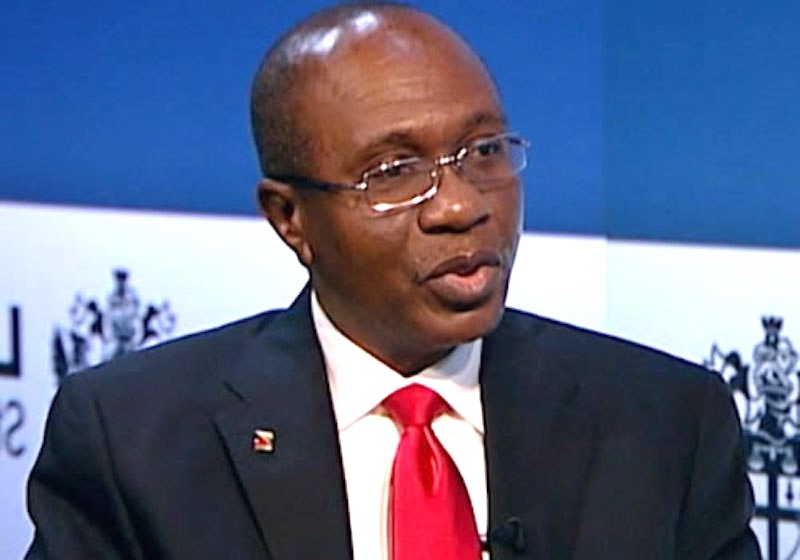
The development forced the Central Bank of Nigeria (CBN) to initially come out in 2014 with a policy on such cash payment to mitigate capital adequacy levels, a policy it revised lately, which has received varying reviews.
The policy which essentially sets out to facilitate sufficient and adequate capital build up for banks in tandem with their risk appetite, expressly states that any deposit money bank or discount house that does not meet the Central Bank of Nigeria minimum capital adequacy ratio shall not be allowed to pay the dividend.
It went further to state that those that have a composite risk rating (CRR) of “High” or a non-perform- ing loan (NPL) ratio of above 10 percent shall not be allowed to pay the dividend.
e policy also made clarifications on certain categories/levels of capital ratios and NPLs, stating that banks and discount houses that meet the minimum capital adequacy ratio but have a CRR of “above average” or an NPL ratio of more than 5 percent but less than 10 percent shall have dividend payout ratio of not more than 30 percent.
e graduation of payout sees DMBs and DHs that have capital adequacy ratios of at least 3 percent above the minimum requirement, CRR of “Low” and NPL ratio of more than 5 percent but less than 10 percent, not more than 75 percent of pro t after tax.
“There shall be no regulatory restriction on dividend pay-out for DMBs and DHs that meet the minimum capital adequacy ratio, have a CRR of “low” or “moderate” and an NPL ratio of not more than 5 percent.
“However, it is expected that the Board of such institutions will recommend payouts based on effective risk assessment and economic realities,” the CBN further clarifies, adding that no DMB or DH shall be allowed to pay the dividend out of reserves and that banks shall submit their Board approved dividend payout.
The circular and its perceived implications have been the issue of debate, with many seeing it as timely and welcoming. Others query the stance of the regulator on the non-performing loans clause, saying that if banks make adequate provisions of up to 100 percent, such banks could be allowed to reward their shareholders.
e argument of those against the CBN move is etched on the fact that Nigerian banks have shown resilience in the face of strong shocks and that the CBN coming out with the policy has inadvertently failed in its monitoring job since it has allowed banks breach minimum levels.
Those in support say many banks boards have overtly shown appreciation to owners at the expense of the depositor, that expending cash outflows to residue owners’ triggers appreciation in equity due to investor’s positive reaction to the dividend. They go further to say favouring equity owners in such a way deny the banks the ability to fully repair their balance sheet and replenish their bu ers; thus leaving depositors with a thin cover.
The regulator’s move is therefore seen to put in place an administrative measure to force banks to preserve their reserve while at the same time improve their capital buffers and repair their balance-sheet.
Have shareholders been given more power to control their boards?
Most analysts think the development may see shareholders seize control of the boards since most of the non-performing loans are insider related. ey would demand explanations from the management of their respective boards of the NPLs. Often, the average Nigerian shareholders are shortchanged with pittance as dividend while management and boards grant loans to themselves, which are written o
Depositors as winners
From the policy, the depositors seem to be winners as the policy is seeing to it that banks build capital bu ers that will see them withstand headwinds without going under. at is the continuous operation of the banks will stave off losses that would ultimately protect the depositor.
Which banks have clean bill of health
Zenith, GTB, UBA, Access, and Wema are obviously unscathed by this new policy measures as their macro-prudential ratio such as CRR and non-performing loans (NPLs) are robust. It is, therefore, expected that their shareholders would lose no sleep during this earning season as their dividend policies remained untainted.
In the same vein, Union Bank with relatively low non-performing loans and consistent shoring up in capital base also put the deposit money bank in a position to have its dividend policy not affected by regulatory measures.
On the other hand, FBN Holdings (FBNH), which has a bank as a subsidiary, finds itself in a blurring position as its subsidiary’s high non-performing loan threatens its dividend position. However, as a holding company, it could pay dividend from the earnings of its other subsidiaries, which may be very small given the fact the banking arm gives it more than 85 percent of its earnings.
Those barred from paying
Certainly, deposit money banks such as Unity and Skye Bank who have their non-performing loans far above the regulatory ratio cannot pay the dividend.
What shareholders say
Reacting to the policy, Boniface Okezie, national chairman, progressive shareholders association of Nigeria described the policy as an unpopular policy and unacceptable to investors.
He said CBN as regulator has failed in its duty, and he advised CBN to reverse the policy.
“The policy is a reflection of CBN failure in regulating banks, if your capital adequacy ratio is low you don’t have to pay the dividend because you don’t borrow money to pay dividend, you can only pay dividend from the profit you made,” he noted.
He suggested that CBN should give a marching order to the management and the board of affected banks to see how they can recover those loans.
“The customers who borrow those loans are not ghosted, they are human beings, they are customers of the banks.
“You don’t expect Skye Bank to pay dividend because they don’t have required capital, they are living on the CBN backup, which is obvious; but those banks who have been recovering over the years should be allowed to pay dividend, if they can. Because if they do not pay, they are sending a wrong signal which means investors should not invest in banking stocks any- more,” he said.
He cited the case of First Bank, which has made provision in the past from the pro t, saying that the bank paid dividend last year and it never affected them in any way.
“How can you now say such a bank should not pay dividend,” he queried.
“CBN should not fool us, they have failed, they should tell us they have failed in regulating the industry. ey should not pass their shortcoming to the investors.”
Shehu Milail, national president, Constance Shareholders’ Association of Nigeria see the policy as a welcome idea that would place banks directors in the better position.
According to him, the huge chunk of the loans we are talking about goes to directors and most of them don’t have the capacity to repay the loan.
He believes that the policy would streamline criteria, which banks use in given loan to customers.
“If a particular bank does not declare dividend for the shareholders at the end of the year, the shareholders will question the directors’ ability to handle the bank.”
He said the policy would give financial institution in Nigeria good corporate governance. When share- holders do not get return on their investment they will task directors responsible, he said.
“No doubt, some banks will still pay dividend no matter how tough CBN’s policy is. We are expecting dividend from banks like GTB, Zenith Bank, UBA and Access Bank, even better than that of 2016,” he said.
Way forward
One must highlight that banks affected are being given the op- portunity of building their reserves and ne-tuning their dividend poli- cies to re ect the new regulation and their nancial realities. ey should therefore see the policy as welcoming.