- Second and concluding part on Ebola
MANY FACTORS favour insidious spread of communicable diseases in Africa.
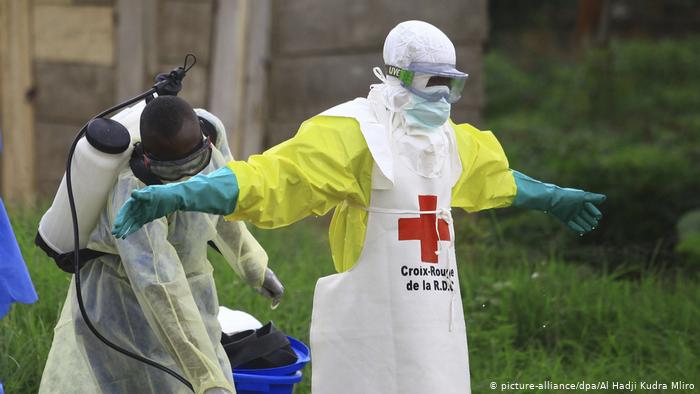
Among them are porosity and inefficient management of national borders, made worse by insecurity. Second, and very worrisome, is the presumptive or dismissive attitude of many Africans, particularly the influential. The third is linked to beliefs, cultures and superstitions that tend to minimise the gravity of scientific proofs. The fourth has to do with mis-information, mis-communication and politicisation of emergencies. And, quite encompassing among them all is the pervasive corruption in private, public and social sectors within the continent. All of these, together or independently, have made a mockery of any serious effort toward protecting the continent from epidemics of all sorts.
It is generally acknowledged that trans-border movement of people in almost all of Africa is not well monitored or documented. This is due to so many factors, among which are language and kinship associations across borders, insufficient, incompetent and inadequately equipped immigration, customs and border patrol personnel, use of archaic and inefficient surveillance tools that cannot cope with the greater sophistication of people who embark on trans-border movements. Other factors are paucity of data arising from near-zero information exchange and experience sharing between and among countries. The problems of information exchange makes emergency preparedness and early warning signals very weak and hardly reckoned with.
While Africa faces existential dangers of exposure to rapidly-spreading epidemics, the policy responses at the various national levels appear to be lagging far behind. The efforts of the international community, multilateral development banks, international NGOs, relief organisations, religious interventionists and humanitarian medical services appear insignificant compared to the enormity of challenges faced at the continental level, particularly when viewed against the backdrop of the paltry budgetary allocation to health matters at the various national levels. The unspoken realities revolve around the attitudes, actions and inactions of political leaders in response to epidemics. These exacerbate existing crises, enable recurrence of those earlier curbed and prolong the prevalence of existing cases.
In case of Ebola in the DR Congo’s eastern border, for instance, the human traffic across the border with Uganda has been put in perspective. The insecurity in DR Congo has raised the spectre. According to a statement from the United Nations High Commission for Refugees (UNHCR) in June, “thousands of people displaced by violence had arrived in Uganda this month, with an average of 311 people crossing the border daily, double the number for May.” This was just part of the Ebola big picture and the enormity of social and economic strain it must have placed on Uganda. It also provides insight into the nature of other epidemics such as HIV/AIDS, measles, Zika virus and Lassa fever infections. Experience with Ebola could therefore provide a basis for extrapolating into broader arrays of diseases of epidemic proportions in Africa and the portents of great perils ahead. These perils may increase in scope and depth if necessary interventions fail to come at the right time to the right places, and may thus further imperil the continent.
Health Policy Watch, a think tank, noted recently that “Thursday, 1 August, marked the one-year anniversary of the Ebola outbreak in the Democratic Republic of the Congo (DRC), as daily reports of new infections, including 3 more cases in Goma along DRC’s border with Rwanda, fueled new concerns about regional spread of the deadly disease. Meanwhile, the World Health Organization called on international donors to close a huge gap in the estimated US$ 350 million required to fund just the health activities related to the response for the next 6 months.” With extreme poverty, insecurity and poor communications within a population where health workers are feared and distrusted, the situation in DR Congo can be better imagined. The threats to neighbouring countries and to the world become clearer as well.
While the global community expresses worries about Ebola and its potential spread, some within DR Congo deny the disease exists, “believing it to be a poison invented by the international community to traffic body parts. Others do not trust trained medical staff to look after the sick,” according to a BBC report. “Then there are those who simply do not want their loved ones snatched from them, sealed up in a plastic body bag and buried anonymously by someone else,” the report added. The fears and superstitions give vent to other forms of resistance to health interventions or preventive measures as not everyone agrees to be vaccinated or provide information about their wider contact groups. Findings from a study published by Lancet, a scientific and medical journal of renown, disclosed that more than a quarter of people surveyed in Ebola-hit areas of the Democratic Republic of Congo said they do not believe the disease exists. Over a third of the respondents reportedly expressed belief that the disease had been fabricated to destabilise the country.
Lancet’s report, based on 961 adults surveyed between September 1 and 16, 2018, revealed that the findings, which pinpointed mistrust as a factor in prolonging the epidemic, underscore the practical implications of mistrust and misinformation for outbreak control. “These factors are associated with low compliance with messages of social and behavioural change and refusal to seek formal medical care or accept vaccines, which in turn increases the risk of spread of EVD. Our data indicate that low institutional trust and belief in misinformation about Ebola are inversely associated with preventive behaviours on an individual level. This study more precisely defines the socioanthropological factors that are important for outbreak control, which provides evidence to guide prioritisation of response activities. The Overall trust in how administrative authorities represent the interests of the population was low and decreased from local, to city, to provincial, to national levels.”
The DR Congo may not be alone in this quandary. There may be a need to search on a wider scope across Africa to establish what various countries have in common in this sense. It may well be that the mis-information and dismissive attitudes of people, including political leaders and those in authorities, contribute in large measure to the sustenance and spread of various epidemics in Africa. A case in point in HIV/AIDS-ridden South Africa occurred when Jacob Zuma confessed, in 2006, to having consensual sex with a known HIV/AIDS patient and said publicly that he showered afterwards, thinking this would reduce his risk of being infected. This open confession, rather than diminishing his prospects of becoming the President, did not seem to have dented his reputation as he retained his considerable popularity while his supporters construed the rape charge against him then as a political conspiracy and looked away from the HIV/AIDS aspect of the accusation. He later became president of the country, with more than five million South Africans having HIV, considered the highest number in the world history then.
Pathogen and Global Health journal, in one publication based on a study on the northern Nigeria, declared that “uptake of polio vaccination in high-risk communities in this region has been considerably low despite routine and supplemental vaccination activities. In the study, it was found out that large numbers of children were left unvaccinated because of community misconceptions and distrust regarding the cause of the disease and the safety of the polio vaccine. The consistent failure of Nigeria to completely interrupt wild polio virus (WPV) transmission “is largely attributed to children (especially in the north) not sufficiently vaccinated through routine and repeated supplemental vaccination activities. In some areas in the north, the routine Expanded Program in Immunization is simply non-existent. Where it exists, community acceptance is hampered by mistrust, suspicion, and rejection of the program, due to inadequate social mobilization, improper channels of communication, and lack of program commitment and ownership at the local government level. Lack of strong communication strategies that connect at the grassroots level produced a major setback in Nigeria’s program for polio eradication in 2003 following rumours of the inclusion into the vaccine of an anti-fertility agent or HIV virus as an indirect method of checking population growth in the predominantly Muslim states of the north. A similar experience was enacted earlier in 2019 in Pakistan, where health workers were directly attacked.
The two examples from South Africa and Nigeria, though uninspiring, offer some powerful messages. In particular, they give some ideas of how worse it could get in poorer and less endowed countries of Africa. As the world becomes more interconnected, issues of disease epidemics need to be taken more seriously, considering the public health, diplomatic, trade and social implications. Talks of Zika virus spread were in the news sometimes ago. More recently, the reality of global measles pandemic began to dawn as cases were reported in the Philippines and the United States, among others. When not checked, communicable diseases could lead to social isolation as well as economic deprivation as countries that thrive on trade, tourism and aviation could be among the worst hit. The threat posed by Ebola is not to the DR Congo alone. In the same way that measles now spreads to places where they would now have found unlikely, so can Ebola and any other communicable disease. A time has come to rein in all of them and keep Africa free of epidemics. To do this, however, will require all the countries within the continent to draw up a robust action plan and back it up with political will and practical action. Only then can Africa be seen to be on the way to winning the war against epidemics. Only then can the world be assured of being nearer to achieving the Sustainable Development Goal 3 relating to health and well-being.