The United Nations Sustainable Development Goals (SDGs) call for universal access to affordable electricity by 2030. While Morocco and South Africa approach this goal, in Nigeria, home to nearly 20 percent of Africans, households and businesses spend around $21.8 billion on generator fuel to bridge daily power cuts according to a study by German development agency GIZ.
Electricity in Nigeria’s largest cities is unaffordable and intermittent. Although the country has 12.5 gigawatts of installed generation capacity, only 3500 megawatts are available because of challenge ranging from poor transmission infrastructure and the unavailability of gas supply. Africa’s second largest economy has one of the lowest per capita electricity consumption of the continent. 55 percent of Nigerians do not even have access to electricity. For the minority that does, access to energy doesn’t come easy. The problem grows just as fast as the population. Fifty years ago, Lagos, Africa’s largest metropolis, was home to just 300,000 people. Current estimates indicate a population of 21 Million in 2016. And nearly 2,000 more people arrive each day.
As Lagos prepares to double in size over the next thirty years, most of its residents have, in the words of the Nigerian writer Chimamanda Ngozi Adichie, become “reluctant libertarians” reconciled to the noisy, expensive diesel generators that are a fixture of Lagos life. Each morning, the sprawling megacity’s population breathes in noxious fumes from the millions of generators that are needed to propel West Africa’s economic engine.
The stopgap attempts to resolve urban energy poverty by relying on fossil fuels create serious public health problems. 49 percent of Nigerians are exposed to air pollution levels that exceed WHO guidelines. The problem affects rich and poor alike. In Lagos’ wealthy enclaves such as Lekki and Victoria Island, the hum of generators powering luxury mansions and high-rises contributes to the city’s prevailing smog. Not far away, in the slums of Makoko, Lagos’ poorer residents are forced to work by kerosene lamps. According to the World Bank , breathing in fumes from kerosene is the toxic equivalent of smoking two packets of cigarettes a day.
Power cuts threaten the nation’s emerging and valuable startup ecosystem with their potential to ground the entire economy to a halt. In 2015, a fuel shortage caused major companies to suspend their services, unable to supply fuel for their diesel generators. Nigeria’s biggest Bank had to close some of its branches earl y; radio stations went silent . This episode is an ominous sign of what lies ahead if we fail to expand reliable power access while tackling dependence on fuel. How can the country’s thriving tech industry continue to grow if broadband can’t function or servers are down due to unreliable and intermittent power supply? Without enough power to go around, Nigeria’s attempt to grow rapidly and diversify its economy will fail.
To address the needs of its ballooning population without exacerbating the struggle of environmental degradation, Nigeria needs affordable and adequate infrastructure. In providing cost-effective, renewable solutions to the country’s largest cities, we provide a boost to Nigeria’s burgeoning reputation for entrepreneurship. It’s time to invest in solar, and to provide solar solutions for citizens, businesses and social services using innovative financial models.
The Nigerian government promised to increase its renewable energy supply to 25 percent of total electricity output by 2025, but these targets are ambitious considering that solar represents only 13 percent of the country’s current energy mix. Additionally, for millions who might benefit, solar panels remain out of reach because of the up-front cost. If we want to accelerate the expansion of solar as a way to address reliable energy access, we have to change perceptions about its cost and potential.
Across the globe – and now in Lagos and Abuja – innovative business models show it is possible to solve urban energy poverty in an entrepreneurial way. Solar distribution firms offering power-as-a-service retain ownership of the solar infrastructure, providing energy to consumers in a subscription-based scheme that is ultimately more affordable and easier accessed by the urban and peri-urban masses.
If consumers are able to start considering solar energy systems as a service they can use when needed instead of an asset they must save up to buy we can more rapidly tackle the challenges of urban energy poverty.
In Nigeria, replacing generators with solar technology would eliminate over 29 million tons of carbon dioxide annually — equivalent to 6.2 million cars.
Supplying less expensive, more reliable solar power can save consumers money and protect the environment and public health while making a fair return for local distributors. By refashioning solar technology as a service, we can bring renewable solutions to the people who need it most.
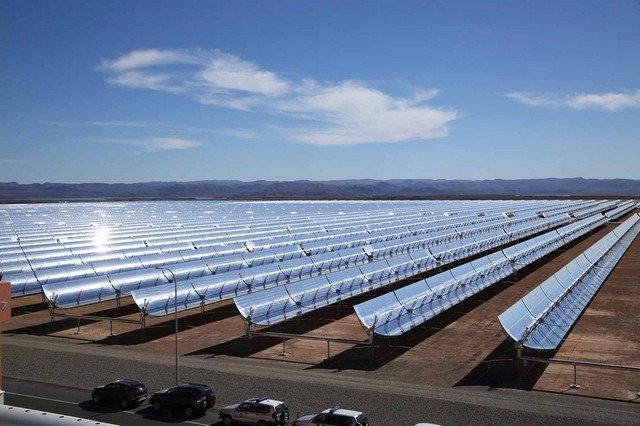
Courtesy IWIN