BY ANTHONY KILA
“We have to know what we want to do. If we want to harvest in the short term, we need to plant carrots and salads; and if we have the ambition to plant oak trees, we must be wise enough to say: my grandnephews will owe me this shading.” These words were written in a letter to a friend at the end of the 19th century. The author of the words is our economic thinker of interest today, and his name is Léon Walras. He was a mathematical economist bent on developing a pure economic theory and conscious of the slow fate of truth and the destiny of complex thinking and thinkers; he hoped that his efforts would be recognised and appreciated in the very long run. It is safe today to say he was right.
Léon Walras was born in December 1834 in Evreux, a commune in and the capital of the department of Eure, in the French region of Normandy, as Marie-Esprit-Leon Léon Walras, to Antoine Auguste Walras, a school administrator and an aficionado economist and Louise Aline de Sainte Beuve, the daughter of an Evreux notary linked to French nobility from whom Léon Walras will later inherit close to 100,000 francs. Though not a professional economist, Antoine Auguste Walras was the major teacher of his son Léon and the father’s passion for economics is perhaps one of the most influencing factors that converted the son into becoming an economist.
Though one of the very few members of our Unforgettable Pantheon remembered simply as an economist, Léon Walras started his restless life far away from economics. He studied engineering, went into banking, worked as a journalist, he also tried his hands on writing romantic novels before eventually turning to economics. Unlike most scholars, Léon Walras came into the study of economics from practice to theory. Part of the many things he did before becoming an economist was to manage a cooperative bank in the mid 19th century. His idea of finding a compromise between socio economic classes rather than lead a confrontation as socialists insisted or assimilation as classical economists advocated was the core motif of his first public lectures around 1866 to 1868.
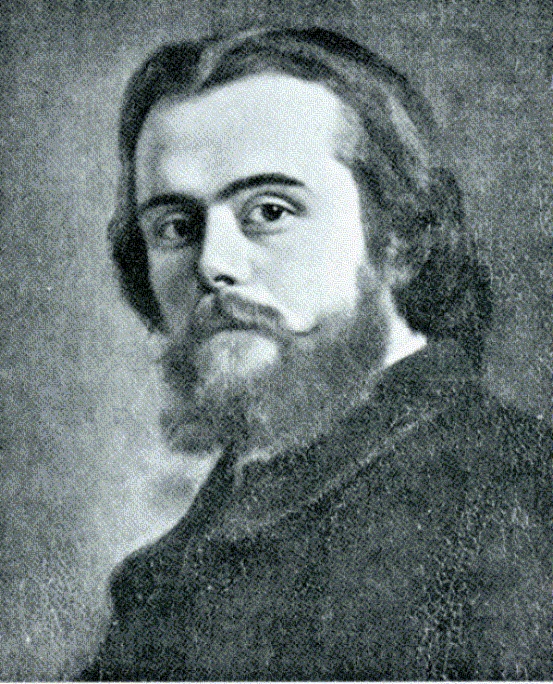
With no formal training as an economist and with very unorthodox views and methods perceived as esoteric at his time and place, Léon Walras struggled to be admitted into the community of economic scholars as a peer let alone an authority. One of my own unforgettable teachers, the ever witty and always unsettling Prof Carlo Del Monte, a mathematical economist, once remarked to us in his own class of a group of selected doctoral students of economics that the “position of Léon Walras then was like mine today as I try to show you in this room the other side of economics.”
Things changed for Léon Walras in 1860 when during an international congress on taxation he caught the attention of Louis Ruchonnet, a rich Swiss public figure. Louis Ruchonnet intervened to ensure that an untenured professorship of economics was awarded to Léon Walras at the Academy of Lausanne in Switzerland. That Academy will later turn into the University of Lausanne, the chair given to Léon Walras will later be the professorship of Vilfredo Pareto, another of our Unforgettables and a disciple of Léon Walras. It was in that physical environment and socio economical and intellectual milieu that the School of Lausanne was established.
Léon Walras is generally known as the father of the Theory of General Equilibrium, a concept not immediately appreciated but later reviewed and highly revalued. To get a feel of how important the initially underappreciated “Theory of General Equilibrium” later became to economists, it suffices to say that in a moment many still wonder about, Joseph Schumpeter felt the urge to declare Léon Walras as “the greatest of all economists.” It was in his Theory of General Equilibrium that Léon Walras mathematically showed us the interrelation of the economy as a whole instead of as a collection of single market events and processes. The prevailing view then was the partial equilibrium theory proposed by Alfred Marshall. Unlike the Walrasian equilibrium that focused on the whole, the Marshallian equilibrium analyses merely specific markets or sectors of the economy. It was thanks to the general equilibrium of Léon Walras that we see how supply and demand interact and move towards a balance in a system of multiple markets working concurrently. His holistic theory, also known as Walras’s Law, allows us to note that the competing levels of supply and demand in different markets end up creating a price equilibrium. It must be noted here that this “price equilibrium” is a tendency; in Léon Walras’s own words, “The market is like a lake agitated by the wind, where the water is incessantly seeking its level without ever reaching it.”
Beyond the Theory of General Equilibrium though, general education tends to forget that separately and with no contact but simultaneously, with William Stanley Jevons and Carl Menger, Léon Walras developed the concept of marginal utility, which makes him a founder of the “marginal revolution”. Amazingly, Léon Walras himself thought that his marginal utility theory was his biggest contribution to economics. Unlike the works of the celebrated duo, rightly considered as co-founders of the marginal revolution, Léon Walras’s development had the added value of being clearly more detailed, more elegant and more rigorous; plus, it established the correct relation between utility and demand.
Like the Oak tree, he defined himself and his efforts. Léon Walras has grown to create a shade for the grandchildren of his grandchildren; his theories are today still the basis of most of our analysis. He continues to gradually and quietly grow since many students go through our classrooms without discovering the most controversial and fascinating radical sides of his takes; like his ideas on totally abolishing taxes which he believed was unjust and confiscatory. Luckily, Léon Walras did not plant carrots, he knew the Oak tree grows and will shade many to come, beyond those shaded today.
Join me on twitter @anthonykila to continue these conversations.
Anthony Kila is a Jean Monnet professor of Strategy and Development. He is currently Centre Director at CIAPS; the Centre for International Advanced and Professional Studies, Lagos, Nigeria. He is a regular commentator on the BBC and he works with various organisations on International Development projects across Europe, Africa and the USA. He tweets @anthonykila, and can be reached at anthonykila@ciaps.org
business a.m. commits to publishing a diversity of views, opinions and comments. It, therefore, welcomes your reaction to this and any of our articles via email: comment@businessamlive.com