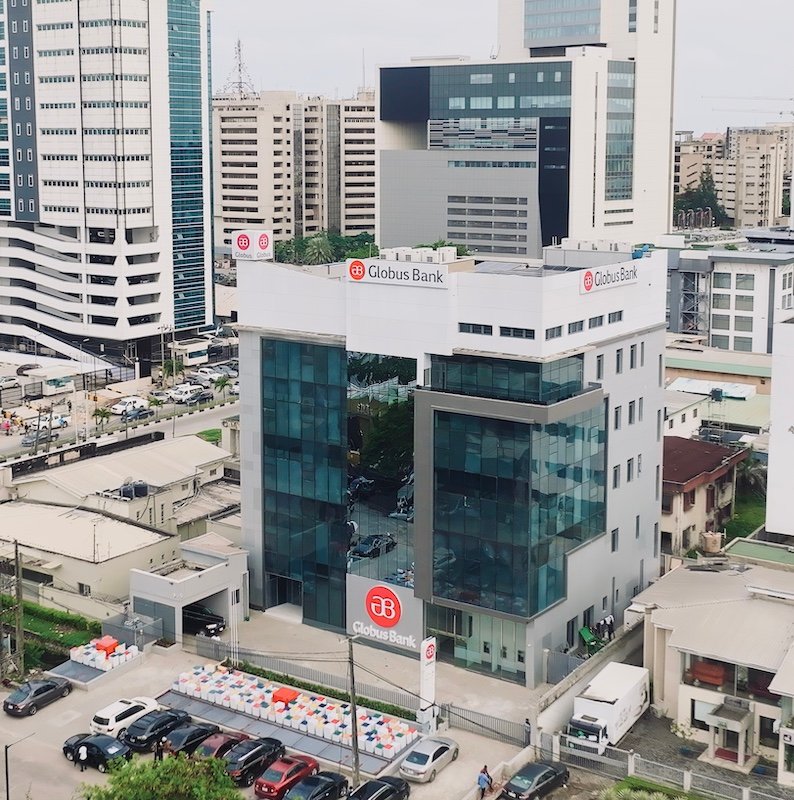
Globus Bank Limited has strengthened its credentials as one of Nigeria’s fastest-growing financial institutions after securing its maiden international credit ratings from Fitch Ratings, a development analysts say could accelerate its quest for market share as the country’s banking industry enters a new era of consolidation and capital expansion.
The global rating agency assigned the lender a Long-Term Issuer Default Rating (IDR) of ‘B-‘, a Viability Rating of ‘b-‘ and a National Long-Term Rating of ‘BBB (nga)’, all with Stable Outlooks, providing independent validation of the bank’s financial resilience at a time when investors are paying closer attention to asset quality, capital strength and earnings sustainability.
The ratings also arrive as Nigerian banks reposition under the Central Bank of Nigeria’s (CBN) ongoing recapitalisation programme, with stronger balance sheets increasingly becoming a competitive advantage in attracting investors, corporate clients and international funding.
The timing of the Fitch rating is particularly significant. Nigeria’s banking sector is undergoing one of its biggest structural transformations in nearly two decades as lenders race to comply with higher minimum capital requirements introduced by the CBN while simultaneously navigating inflationary pressures, foreign exchange volatility and slowing credit demand.
Against that backdrop, independent international ratings have become increasingly important indicators of institutional strength.
Fitch’s assessment concluded that Globus Bank possesses strong financial fundamentals despite operating within what it described as an improving but still challenging operating environment.
The agency cited the bank’s sound profitability, healthy capitalisation, robust liquidity profile and exceptional asset quality as the primary drivers behind the ratings.
One of the most striking aspects of Fitch’s assessment was its recognition of the bank’s loan quality.
According to the agency, Globus Bank recorded zero impaired loans during the 2025 financial year, while Stage 2 loans accounted for only three percent of gross loans, indicating limited credit deterioration despite prevailing macroeconomic challenges.
The performance stands out within a banking environment where high inflation, high interest rates and exchange-rate adjustments have increased pressure on borrowers across several sectors of the economy.
Strong asset quality has become an increasingly important performance indicator as investors focus less on loan growth and more on the sustainability of banks’ earnings.
Fitch attributed the performance partly to prudent risk management and disciplined lending practices.
The international rating coincided with the release of the bank’s audited financial statements for the 2025 financial year, revealing another year of rapid expansion.
Profit Before Tax climbed to N107.7 billion, while Profit After Tax reached N82.6 billion. Total assets increased by 64 percent, rising from N1.57 trillion in 2024 to N2.58 trillion in 2025.
Fitch noted that the bank generated an operating profit-to-risk-weighted assets ratio of 10 percent, supported by strong net interest income, diversified non-interest revenue streams and disciplined cost management.
Another factor supporting the bank’s rating is the strength of its funding structure.
According to Fitch, customer deposits accounted for 93 percent of total funding at the end of 2025, reducing dependence on more volatile wholesale funding sources.
Corporate customers contributed 80 percent of the deposit base, highlighting the bank’s growing acceptance within Nigeria’s corporate banking segment.
The rating agency also described the lender’s liquidity position as strong in both local and foreign currencies, providing additional flexibility to support lending activities and meet customer obligations.
Strong liquidity has become particularly important as banks adapt to changing monetary conditions and tighter regulatory oversight.
Fitch also acknowledged the bank’s strengthened capital position following its successful recapitalisation exercise earlier this year.
According to the agency, Globus Bank maintained a Fitch Core Capital ratio of 23.7 percent at the end of 2025.
The bank subsequently raised more than N200 billion in paid-up capital in early 2026, enabling it to satisfy the CBN’s revised capital requirements for nationally licensed commercial banks.
The successful capital raise places the lender among institutions that have already crossed a major regulatory hurdle as the industry’s recapitalisation programme gathers pace.
Stronger capitalisation also provides greater capacity for loan expansion, technology investments and branch network development.
Elias Igbinakenzua, the bank’s managing director and chief executive officer,described the Fitch rating as recognition of the institution’s strategic direction.
“This rating is a validation of our unwavering commitment to excellence. It is proof that ‘Lead the Change’ is more than a chant; it is our identity and our charge, reflected in the fact that we are leading, not following, and setting the pace, not chasing it,” he said.
Fitch assigned Stable Outlooks across all major ratings, signalling expectations that the bank will maintain its current financial profile over the foreseeable future.
The agency also outlined the pathway to future upgrades.
According to Fitch, higher ratings could follow if Globus Bank expands its domestic market position while sustaining strong profitability, preserving capital adequacy and maintaining excellent asset quality.
The Fitch assessment adds international credibility to the bank’s growing ratings profile.
Earlier in 2025, both Agusto & Co. and GCR Ratings upgraded the institution, making Globus Bank one of the relatively few Nigerian banks to hold investment-grade assessments from three recognised rating agencies.