By Atalay Atasu
If the nascent energy transformation is to take off, business and government must work together to promote circular systems.
In the last two years, the adoption of renewable energy has increased dramatically. Wind capacity additions nearly doubled in 2020. Sales of electric vehicles reached a record-high of 6.6 million in 2021. Solar power capacity, which broke records in 2020, is projected to quadruple by 2030.
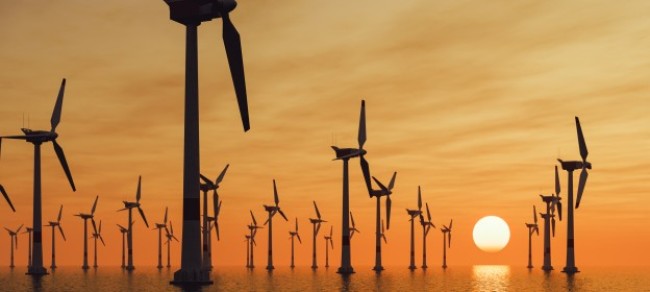
The energy transition is moving in the right direction. The question is, how do we accelerate this work and expand the renewable energy portfolio?
Perspectives from public and private leaders
Last month, I had the pleasure of moderating a panel in the SDG Tent at Davos, in partnership with the INSEAD Hoffmann Global Institute for Business and Society and InTent. The panel, Renewable Energy, Scarcity and Circularity: A Path to Net Zero, brought together experts who are approaching the energy transition from different angles: Michele Crisostomo, chair of energy utility Enel, is leading the shift to clean energy at the multinational; Fabienne Fischer, State Councillor in charge of economy and employment is directing policy as a member of the Green Party in Geneva; Georgina Grenon, a Paris 2024 director, is overseeing sustainability for the organizing committee of the next summer Olympic and Paralympic Games; and Guillaume Pitron, a journalist, who researches raw materials and is the author of The Rare Metals War.
The panellists discussed what they see as key enablers and obstacles of the renewable energy transition, as well as the direction the transformation should take.
Crisostomo stressed that sustainable material value chains have to be part of the energy transition. He noted that for many of the materials needed to build clean energy technologies — such as solar panels, windmills and electric batteries — value chains have to be further developed. “We need to set up safe supply chains and clean and clear corridors so we can mitigate the exposition to geopolitical instability on the international stage,” he said.
Fischer spoke about the importance and role of policy in reducing energy consumption and accelerating the energy transition. Geneva, for instance, has set new regulations that will require approximately 30,000 buildings to reduce their electrical consumption in the next few years. Fischer also emphasised the importance of gaining citizen buy-in on the investment and objectives of the energy transition. “We need to ask ourselves, ‘How will we get everyone on deck?’” she said.
Grenon reflected on how the next Olympic and Paralympic Games is already demonstrating that a radical transformation is possible. She is overseeing the Games’ shift to a much more circular system, with Paris 2024 using 100 percent renewable power and 100 percent of venues connected to the grid, thus drastically reducing the need for temporary electricity generation. The transformation took – and is still taking – tremendous planning and goodwill from all stakeholders, she said, but it was important for us to prove that this can be done. The renewable energy transformation is not isolated to energy policy or industry, but also can impact massive events like the Olympics.”
Finally, Pitron spoke about the rebound effect and how renewables alone cannot solve the energy crisis. Countries with ambitious renewable energy transition agendas may need to consider mining for materials on their own soil, he said, even though it carries environmental risks.
According to a 2021 report from the International Energy Agency, global demand for select minerals used in clean energy technologies will increase exponentially between 2020 and 2040, multiplying 42 times for lithium, 20+ times for cobalt and graphite, and seven times for rare earth elements. In other words, to increase green technologies, we will also need to increase our supply of the materials that make those technologies.
“That brings a new challenge,” said Pitron. “Where are we going to get these metals from? Today, we dig in countries far away. Do we [in the West] also need to mine ourselves?”
Implications for policymakers, industry leaders and academics
The panellists’ comments support a larger point: The renewable energy transition is still in its infancy and, as a result, may lack stability, security and maturity. Although investments in renewables are increasing, governments and industrial organisations are not necessarily prepared for the challenges that threaten the execution of the transition, such as resource constraints and social, economic and geopolitical risks.
This leaves policymakers, industry leaders and academics with important work to do. First and foremost, we need business and government to work together towards shared energy goals, and establish public-private partnerships that enable cross-sector collaboration and cooperation. Neither the public nor the private sector can tackle the challenges of the energy transformation alone.
Through these partnerships, we need government and business to promote circular systems, both by investing in the right technology and infrastructure, and by advocating for policies that enforce it. As I recently wrote in Harvard Business Review, the solar power industry may not have the recycling capabilities to manage an influx of discarded solar panels, and the same can be true for wind turbines and electric-vehicle batteries. The consumption of renewables will continue to increase as the efficiency of renewable energy technologies increases, leaving our world with both too much waste and too few materials for producing more renewables. Let us not forget the lessons of the early 2000s, when rapid advancements in computer technology led to unmanageable levels of electronic waste.
Academics can support this work by delving deeper into scarcity issues in renewable energy and studying how circularity can address scarcity problems. In doing so, they can provide insights that help guide policy and decision making as governments and organisations navigate uncharted territories.
Above all, our global society needs to treat the energy transition with the urgency it demands. Climate change is imminent, but circularity can put us on a better path. The time to act is now.
Atalay Atasu is the INSEAD Professor of Technology and Operations Management and the Bianca and James Pitt Chair in Environmental Sustainability.