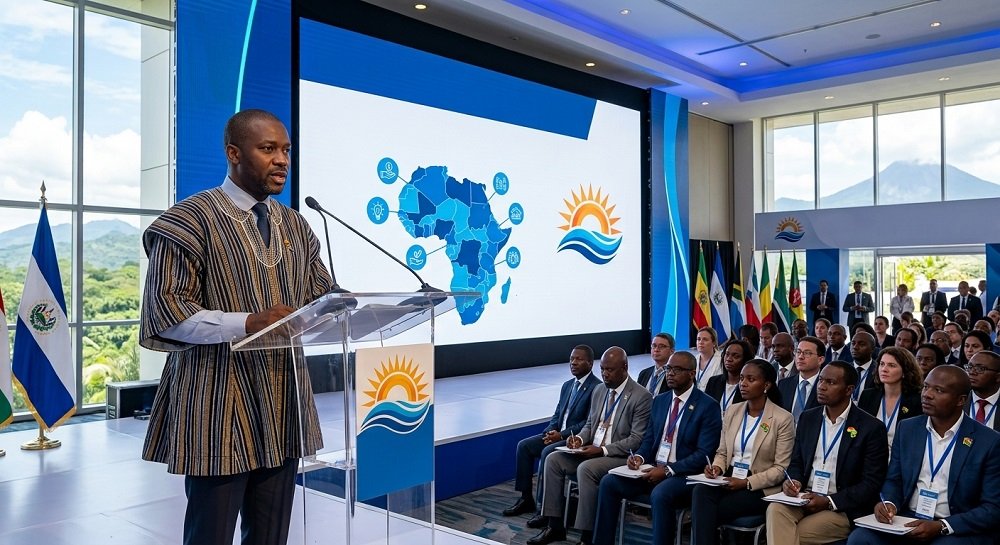
The Africa Blue Economy Roundtable (ABER) says Africa must move from extractive tourism that destroys biodiversity to immersive tourism that funds its protection, noting that digital is the bridge. The group said this as the world celebrates World Tourism Day 2026 under the theme, “Digital Agenda and Artificial Intelligence to Redesign Tourism”.
In addition, ABER also called on African nations to invest in national digital tourism systems, AI-enabled marine monitoring, and youth-led blue tech innovation hubs.
According to the Roundtable, smart apps that enable tourists to report illegal fishing or log wildlife sightings, turning every visitor into a conservation partner, will go a long way in the fight against climate change, biodiversity loss and plastic pollution on the waterways
Medina Dauda Nadabo ABER’s director of communication & public affairs, in a statement issued in Abuja, Nigeria, said ABER joins the UN Tourism and the government of El Salvador, global host of World Tourism Day 2026, in commemorating the Day.
ABER noted that for Africa, the three planetary crises, climate change, biodiversity loss, and plastic pollution – are not separate from this year’s theme. “For Africa’s Blue Tourism, they are the very reason we need AI and digital redesign in the first place. This aligns with ABER’s official position: Smart Blue Tourism – Where Code Meets Coast,” Piriye Kiyaramo, convener and founder of ABER, said.
He regrets that rising sea levels, coastal erosion, ocean warming, and extreme weather are destroying Africa’s prime tourism assets, from the beaches of Mombasa and Cape Town to the mangroves of the Niger Delta, and the islands of Zanzibar.
Kiyaramo explains that AI models can forecast coastal erosion, flooding, and coral bleaching, enabling stakeholders to reroute tourists, warn communities, and design climate-resilient resorts.
“African governments need to invest in digital tools to monitor and reduce the carbon footprint of hotels, boats, and flights, promoting low-carbon blue tourism. Without AI, we cannot climate-proof Africa’s blue tourism. With AI, we can sell resilience as an experience,” he said.
He added that with overfishing, destruction of coral reefs, and loss of marine turtles, dolphins, and mangroves, Africa is losing the very wildlife tourists pay to see.
“Over 60% of Africa’s coastal biodiversity is under threat, yet AI tools can help monitor, conserve, and showcase this natural tourism potential,” he said.
“AI-powered drones and underwater cameras can track turtle nesting in Bayelsa, whale migration in South Africa, and coral health in Kenya without disturbing ecosystems. Immersive AR/VR experiences of fragile ecosystems will reduce physical pressure while still generating income. A tourist can ‘dive’ into a coral reef digitally.
“We must move from extractive tourism that destroys biodiversity to immersive tourism that funds its protection – and digital is the bridge,” Kiyaramo stressed.
Meanwhile, Africa experiences severe plastic pollution. For instance, reports say Africa’s oceans receive over 17 million tons of plastic annually. Plastic-choked beaches in Lagos, Accra, and Port Harcourt repel tourists and kill marine life. No tourist wants to swim in plastic laden beaches.
To address this menace, ABER has proposed three practical digital solutions: satellite imagery and AI to map plastic hotspots along the Gulf of Guinea in real-time; digital platforms connecting beach hotels, fishermen, and recycling startups to turn plastic waste into tourism products, crafts, and lodges; and mobile apps that reward tourists with points for participating in beach clean-ups or choosing plastic-free resorts.
“A clean ocean is Africa’s best tourism brochure. Digital tools make cleanliness measurable, marketable, and monetizable,” Kiyaramo ABER’s convener and founder said.
The continental group warns that Africa’s blue tourism faces a triple crisis of climate, biodiversity, and plastic. The digital agenda and AI are not just about booking trips faster; they are Africa’s survival toolkit to redesign tourism that heals the ocean while hosting the world, the group advocates.
It describes this as “Smart Blue Tourism: where code meets coast”. This positions Africa not as a victim celebrating tourism, but as a continent offering solutions – which is exactly what UN Tourism, the African Union, and the International Maritime Organization (IMO) want to hear from Africa.
The Africa Blue Economy Roundtable was established in response to the African Union’s 2050 Africa’s Integrated Maritime Strategy (AIM Strategy) and Agenda 2063. It is a flagship initiative of the BRACED Tourism Promotion & Development Initiative, to promote the sustainable harnessing of Africa’s ocean, coastal, and inland water resources for economic prosperity, social inclusion, and environmental stewardship. Since 2018, the group has evolved into a voluntary, individual-membership continental networking platform, with regional coordinators across the African Union’s six recognized regions: West, North, Central, East, Southern Africa, and the African Diaspora as the sixth region.