SHAMBOLIC ELECTIONS have become an epidemic in Africa, for their frequency, ferocity and the scales involved. It has come to define the way the continent’s political leaders emerge. If this was just the end of the story, it would have remained scary. But what used to be taken for granted during such elections are now becoming ineffectual. This offers some hope for a better way of emergence of true political leaders in the future. Old habits die hard. For the African politicians, especially the old guard and a few in the contemporary generation, it still remains a struggle to let go of the old playbook of electoral malpractices and oppressive leadership as they ignore the changing dynamics.
Events in the past month of October in five countries are direct pointers to the crisis orchestrated or sustained by political leaders in Africa. What began as anger over shortages of basic necessities in Madagascar rapidly escalated into one of the most serious leadership challenges facing a president. The protests, triggered by frequent water and power outages in the city, quickly spiraled into what led to the toppling of his government. Andry Rajoelina was removed from office following widespread military and youth-led anti-government protests and was replaced by Colonel Michael Randrianirina who was sworn in as the new president on October 17, 2025. Before his removal, the soldiers refused orders to fire on civilian protesters and instead sided with them, leading to the military takeover. An interesting thing about the deposed President Rajoelina was that he held dual nationality as a sitting president, an act of betrayal and divided loyalty. Following his removal from office, his citizenship was revoked by the new government for having previously acquired French nationality.
In Tanzania, general elections were held on 29 October 29, 2025, to elect the president, members of the national assembly and wards. It was gathered within the week that a top military officer refused to obey the president’s order to shoot at the protesters who trooped into the street in disagreement with her style of conducting election. President Samia Suluhu Hassan, who took office in 2021 after the death of John Magufuli, her predecessor, is contesting for her first presidential election. However, there was an allegation of a climate of fear in the months leading up to election day. Tanzania’s first female leader, who has served as president since 2021 and is seeking five more years as president, has sparked widespread anger for running virtually unopposed after her two main opponents have been barred, blocked or prevented from contesting. She thus effectively ran against 16 candidates from smaller parties in what critics call a coronation, not a contest. She therefore ‘swept’ the polls, scoring 97.66 percent of the vote.
Her purported victory could only best be gauged by the people’s reaction upon declaration. This was challenged on the streets through widespread protests as electoral authorities counted the votes in a disputed presidential election. Disputes over the final declaration have left dozens dead in the crackdown to quell riots in major cities. Why should the winner of a free and fair election by landslide be resisted by the people who voted for her? This comes as a case where ‘single-party rule’ is now being challenged. Suluhu Hassan appears to have ignored the very foundations upon which all her predecessors built Tanzania.
Cameroon’s election took place on October 12, 2025, and the official results were announced on October 27, 2025. Paul Biya was declared the winner by the Constitutional Council, with 53.66 percent of the votes, thus securing an eighth consecutive seven-year term. Paul Biya is now 92 years old. His main challenger, Issa Tchiroma Bakary, received 35.19 percent of the vote, with ten others sharing the remaining percentage of less than 11 percent among themselves. Violent crackdown followed in the aftermath of the post-election demonstrations that trailed the result declaration, with calls for Biya to step down, election be cancelled or Tchiroma be declared winner. Tchiroma Bakary himself has insisted that he won the election, a claim that was dismissed by Biya’s ruling party, the Cameroon People’s Democratic Movement (CPDM). The brazen manipulation and violence associated with the election drew international attention and responses. In particular, the UN rejected Cameroon’s election outcomes, Biya’s victory and deplored the violence that kept spreading all over the country. Although the UN response seems like an isolated one, it was clear that the world was taking note.
In Côte d’Ivoire, President Alassane Ouattara, 83, has secured a fourth term with more than 89 percent of the vote on October 27, following an election in which two of his biggest challengers were barred from contesting. The election was reportedly marred by a low turnout amidst accusations of clampdown on dissent. France 24, a French media channel, wrote that “Ivory Coast’s economic champion Ouattara consolidates power with fourth presidential term.”
A dangerous political game is currently being played in Nigeria, one that could set the country back into civilian dictatorship or military takeover as has been happening in some African countries in the past couple of years and even in the past few weeks. The judiciary is being used to truncate democracy in the largest black-populated country of the world. Last week, a Federal High Court judge, in Abuja, ruled to stop the — Peoples Democratic Party (PDP) — main opposition party’s National Convention on the accusations that the party has failed to comply with the amended provisions of the 1999 Constitution guidelines of the Independent National Electoral Commission, (INEC) and its own party’s Constitution in preparing for its national convention scheduled for November 15 and 16 in Ibadan.
Olabode George, a former deputy national chairman of the party, has described last Friday’s judgement as “the joke of the century, [an] open recipe for anarchy and a display of judicial brigandage.” This is not the first time such a political meddling happened in Nigeria with a negative far-reaching outcome, however. The defunct Western Region crisis starting in 1962, that led to the collapse of the First Republic — the first democratic dispensation — began like this, resulting in the civil war that lasted from 1967 to 1970. In a fractious situation, any judgement capable of leading to a breakdown of law and order needs to be avoided.
Sadly, power, control and manipulation are the instruments being used to silence the will of the people as they mistakenly assume that fear, loyalty, sycophancy and silence mean peace. Nigerian political leader is treading a path familiar with Madagascar’s exiled leader, Samia Suluhu Hassan and Paul Biya
According to Chadrin Nseemani, Zambian commentator, when citizens rise in unity against oppression and demand democracy, no army or police force can stand against the force of truth.
For years, many African leaders have used the unholy practice of detaining opposition figures, manipulating constitutions, buying off institutions, and thinking that these tactics will help them secure their political future. This is both dangerous and unsustainable. Thus, Tanzania’s unrest has reminded us all that leadership built on oppression is leadership standing on sand. It cannot last.
To face massive protests after being declared winner in an election is an ominous sign that something is amiss. Although this happened in Cameroon and in Tanzania, it is an African problem, an epidemic of bad leadership where presidents overstay in power, silence critics, and manipulate democracy while avoiding accountability.
The era of hiding behind security forces, presidential fortresses and fake peace is ending. When the people’s patience runs out, no title, palace, or army can save the dictator. Africans don’t need rulers. They need servant leaders. The people are now awake, educated and connected. They know their rights and are no longer afraid to speak. No leader can imprison an entire nation’s conscience any longer.
True leadership is not about staying in power forever. It’s about serving faithfully, building enduring institutions, and leaving behind a legacy that generations will celebrate. Dictatorships end in disgrace, but democratic humility earns eternal honour.

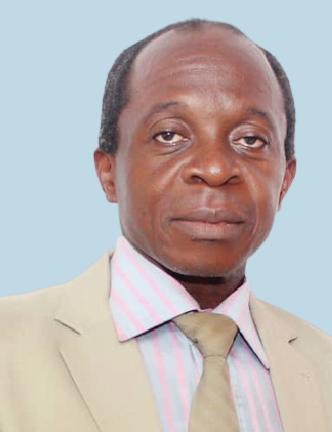
Dr. Olukayode Oyeleye, Business a.m.’s Editorial Advisor, who graduated in veterinary medicine from the University of Ibadan, Nigeria, before establishing himself in science and public policy journalism and communication, also has a postgraduate diploma in public administration, and is a former special adviser to two former Nigerian ministers of agriculture. He specialises in development and policy issues in the areas of food, trade and competition, security, governance, environment and innovation, politics and emerging economies.