In the past couple of months since the lid on electioneering towards the 2027 elections in Nigeria was lifted, the programmes, actions, activities and pronouncements of most top government officials or bureaucrats have ranged from the sublime to the ludicrous. It is as if the government of the day has unleashed all in its arsenal for crisis management—to keep giving Nigerians an impression of some economic management and governance.
Commencing with the shifting of the capital component of the 2025 Appropriation Act, for the umpteenth time, to lapse at end-December 2026, fiscal activities of the government have got further shrouded in uncertainty and lack of transparency. As of today, it is no longer clear to watchers and stakeholders of the Nigerian economy, and the general public, how many years’ budgets are still running even as 2026 is about to end.
It has assumed a crisis dimension that some aspects of the 2024 and 2025 budgets are still running — all in a manner that Nigerians are left in the dark. Approvals and release of funds for capital projects in the previous years’ budgets seem to be going on clandestinely. Almost nothing is in the public domain as to any level of implementation of the current 2026 budget. In place of dutiful implementation of these budgets, apparently, the federal government has resorted to cobbling a 90-day ‘action plan’ to keep the wobbling economy going.
According to the authors of the makeshift ‘blueprint’, it will focus on “reducing high cost of living, improving food affordability, attracting investment, and accelerating the delivery of projects with direct benefits to Nigerians.” Specifically, the three-month ‘action plan’ identifies five priority areas, namely: food affordability, tax harmonisation, completion of high-impact projects, resolution of investment bottleneck and regulated household support.
However, this unprecedented 90-day emergency action plan rather than having the capacity or potential to stimulate the economy, portrays the government of the day as being at its wits’ end. Its key top functionaries now speak and act as if they are suddenly realising the enormity or magnitude of the pains and impoverishment that three years of reforms have unleashed on Nigerians.
Speaking the other day at Chatham House in London, Finance Minister Taiwo Oyedele had to admit that “Nigerian households spend as much as 120 percent of their income on food amid soaring prices.” Oyedele said “monthly incomes could no longer sustain many Nigerians, forcing them to borrow money or rely on relatives to survive.”
But the pertinent question is: “How will the 90-day ‘action plan’ be funded — both at the federal level and at the sub-nationals?” After all, the ‘good intentions’ enshrined in the stopgap ‘blueprint’ have no budgetary allocations in the various Appropriation Acts. It seems, however, in the face of this reality that the government at the centre has once again resorted to dishing out palliatives.
For instance, the federal government has quickly come up with a transfer payment arrangement it calls National Emergency Relief and Stabilisation Intervention (NERSI). Under this ‘emergency relief’ intervention, ‘eligible’ beneficiaries are to receive a fifty thousand naira grant from the federal government. Unfortunately, Nigeria lacks any reliable identity data — even with the existence of the National Identity Number (NIN) and Bank Verification Number (BVN) initiatives.
This puts a huge question mark over the timing and real intention of the federal government’s doles to ‘selected’ Nigerians. Analysts tend to believe that the cash ‘handout’ is nothing but a voter-inducement gambit. In the absence of any credible social data, the distribution of the dole certainly tends to serve as political patronage: political allegiance at wards and polling units’ levels would most likely determine the ultimate beneficiaries.
In tune with this ‘strategy’, the First Lady of Nigeria is also reportedly sharing cash to some women in certain states. She is said to have most recently distributed ‘cash support’ and gift items to 500 market women in Cross River State “as part of efforts to boost small businesses and strengthen grassroots mobilisation ahead of the 2027 general elections,’ according to one national newspaper. The cash distribution was under the auspices of the Directorate for Women Mobilisation of the (ruling) APC Presidential Campaign Council. Similar events have also taken place in a few other states.
About the same time, the federal government has also hammered out a deal with the Nigeria Labour Congress (NLC) to pay civil servants a 70,000 naira monthly ‘transport allowance’ for the next six months. Effective this November, the allowance would be coming in place of the failed “fuel discount” initiative that was to have crashed transportation costs for all commuters as of October 1, 2026.
While all these are ongoing, the federal government has continued on its borrowing binge — especially from foreign sources. The other day, the president presented a request to the national legislature to borrow a whopping $21.05 billion. Apparently, as the electioneering began to gather momentum, the government (reportedly) cut the amount to $7.7 billion. This is notwithstanding the fact that Nigeria’s external debt as of end-June 2026 was a staggering $55 billion.
Yet to be seen as running the economy, the federal government at the recent Nigerian Economic Summit Group (NESG) confab in Abuja, came up with another stopgap economic framework, and called for consultations with stakeholders. Specifically, the finance minister and coordinating minister of the economy, Oyedele, presented the ‘proposed’ Nigeria Economic Policy Framework for public consultation. According to the minister, the framework remains an exposure draft, for which he requested businesses, professionals, academics, civil society to “critique it rigorously and help turn it into an enduring national accord.”
Surprisingly, this omnibus document is coming in the heat of an ongoing presidential campaign, and obvious confusion about how to move the Nigerian economy from ‘stability’ to real development. So, if anything, the new ‘framework’ just presented by the finance minister is in tune with “motion without movement” in the management of the economy. Whither the much-vaunted Renewed Hope Agenda, which, all this while was being paraded as a ‘Complete Package?’ It is high time the government jettisons the ‘trial and error’ mode of running the Nigerian economy. Truly!
- business a.m. commits to publishing a diversity of views, opinions and comments. It, therefore, welcomes your reaction to this and any of our articles via email: comment@businessamlive.com

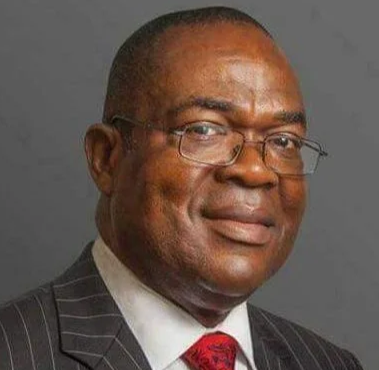
Marcel Okeke, a practising economist and consultant in Business Strategy & Sustainability based in Lagos, is a former Chief Economist at Zenith Bank Plc. He can be reached at: obioraokeke2000@yahoo.com; +2348033075697
(text only)