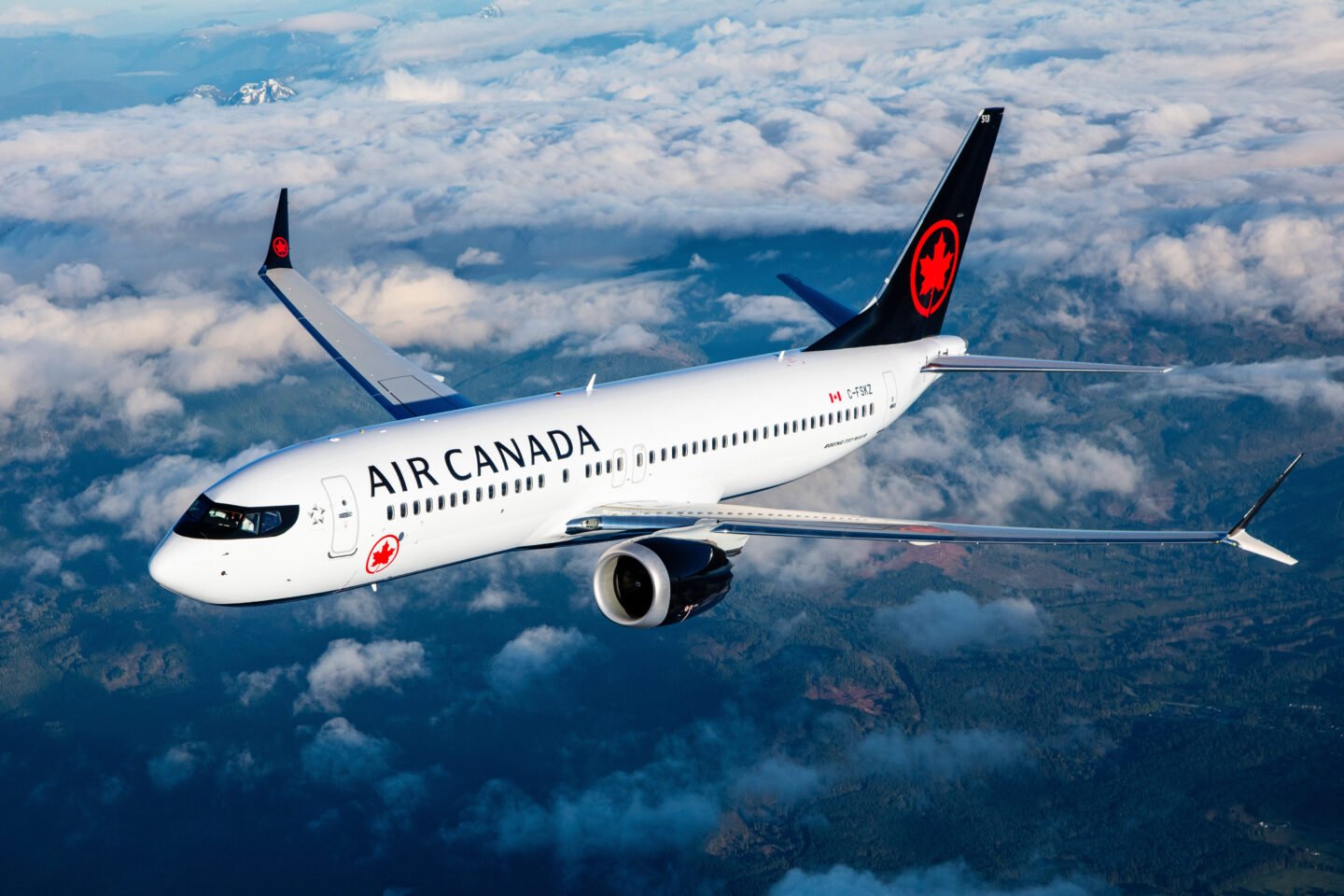
Air Canada is positioning to enter Nigeria’s aviation market after Canada and Nigeria signed an expanded bilateral air transport agreement that clears the way for scheduled direct flights between both countries.
The proposed entry by Canada’s flag carrier is expected to reshape air travel between Nigeria and Canada, ending years of dependence on indirect connections through Europe, the Middle East and North Africa while opening fresh commercial opportunities for airlines, exporters, logistics operators and tourism businesses.
Air Canada confirmed that it plans to commence scheduled Lagos services in 2027 and has already initiated the regulatory approval process required before launching commercial operations.
The announcement follows the conclusion of a revised air services agreement between both governments that significantly expands market access by permitting multiple designated airlines from each country to operate scheduled passenger and cargo services.
For decades, passengers travelling between Nigeria and Canada have relied almost exclusively on connecting flights through cities such as London, Paris, Amsterdam, Frankfurt, Addis Ababa and Doha because no airline currently operates a direct scheduled service between both countries.
The new agreement is expected to change that dynamic by creating a regulatory framework that encourages greater airline participation, improves competition and expands travel options for one of Africa’s largest international travel markets.
The revised agreement authorises up to 14 weekly passenger flights and 10 weekly cargo flights between both countries, providing significantly greater operating flexibility than previous arrangements.
Beyond passenger transport, the cargo provisions are expected to strengthen air freight connectivity, creating faster logistics channels for high-value exports, perishables, pharmaceuticals, technology products and other time-sensitive goods moving between both economies.
The agreement also aligns with efforts by both countries to deepen commercial engagement and improve transport infrastructure supporting bilateral trade.
Air Canada said preparations for the new route have commenced, although commercial operations remain subject to regulatory approvals and completion of operational requirements.
Mary-Jane Lorette, Air Canada’s vice-president for revenue management, partnerships and international affairs, said the airline was working towards launching the Lagos service and would announce flight schedules, frequencies and aircraft deployment closer to the commencement of operations.
The airline’s planned expansion underscores its growing interest in Africa as international carriers increasingly position themselves to capture rising passenger demand across the continent.
Nigeria represents one of Africa’s largest aviation markets, driven by a sizeable diaspora population, expanding business travel, growing student mobility and increasing commercial activity.
One of the biggest beneficiaries of direct air services is expected to be the large Nigerian community in Canada, alongside thousands of Nigerian students enrolled in Canadian universities and colleges.
Nigeria has consistently ranked among the leading African sources of international students in Canada, with frequent travel between the two countries generating sustained demand for passenger services throughout the year.
Business executives, investors and government officials are also expected to benefit from shorter travel times and more convenient flight options once direct services commence.
Steven MacKinnon, Canada’s minister of transport, described the expanded agreement as an important milestone that would create new opportunities for airlines while providing travellers with greater choice.
Similarly, Maninder Sidhu, Canada’s minister of international trade, said the agreement would improve access to one of Africa’s largest economies while facilitating stronger commercial and people-to-people connections between both countries.
The revised aviation framework comes at a time when international airlines are increasingly reassessing African route networks as economic activity, regional trade integration and passenger demand continue to expand.
For Nigeria, attracting additional long-haul carriers forms part of broader efforts to strengthen international connectivity, improve competition and position the country’s aviation sector as a gateway for regional commerce.
The addition of scheduled cargo capacity is also expected to complement Nigeria’s ongoing drive to diversify export earnings beyond crude oil by providing more efficient access to overseas markets for agricultural products and manufactured goods.
For Air Canada, the proposed Lagos service would further expand its international network while providing access to one of Africa’s most commercially important cities.
Although the airline has yet to disclose operational details, industry observers expect Lagos to serve as the natural gateway because of its status as Nigeria’s commercial capital and busiest international aviation hub.
The planned route is also expected to intensify competition among international carriers currently transporting passengers between Nigeria and Canada through connecting hubs, potentially improving fares, travel times and service quality.
While regulatory approvals and operational preparations remain outstanding, the agreement represents one of the most significant developments in Nigeria-Canada aviation relations in recent years.
If implemented as planned in 2027, direct scheduled flights between Lagos and Canada would mark a new chapter in bilateral connectivity, supporting increased mobility for passengers, stronger cargo logistics, deeper commercial engagement and closer economic ties between two markets linked by growing trade and one of Africa’s largest diaspora communities.