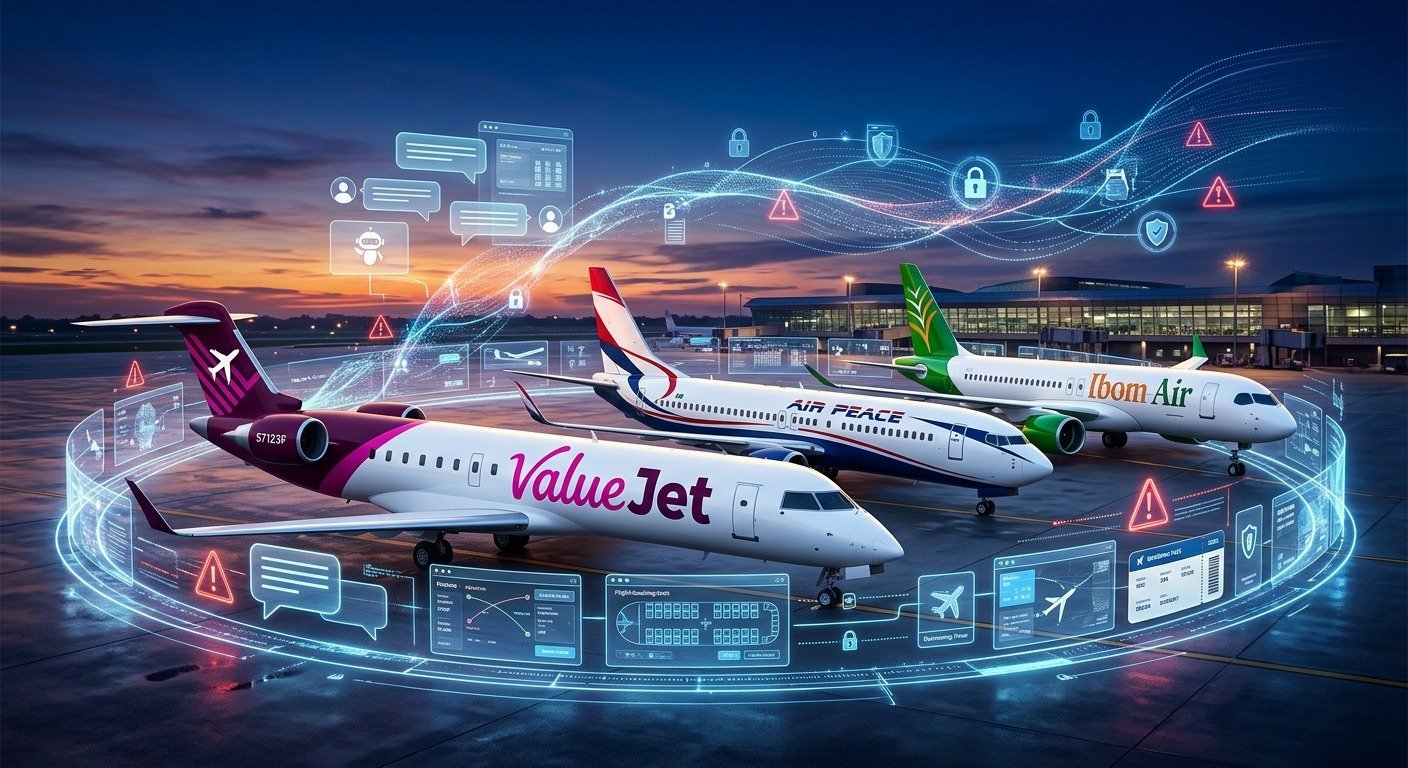
Nigerian airlines introducing artificial intelligence into passenger services may have to contend with a new layer of operational costs and regulatory responsibilities as automated systems move beyond answering travel enquiries to handling bookings, payments and customer accounts.
While the technology offers airlines opportunities to reduce pressure on customer service operations, improve passenger engagement and facilitate ticket sales, its integration into booking platforms also exposes operators to risks involving inaccurate information, unauthorised transactions, data breaches and disputes over responsibility when automated services fail.
The commercial implications are becoming more apparent as airlines begin deploying AI assistants to interact directly with passengers, creating a distinction between systems designed to provide information and those capable of accessing airline platforms and executing transactions.
ValueJet’s introduction of its AI-powered passenger assistant, VIKI, in January 2026 provides an indication of how the technology is entering Nigeria’s aviation market.
Developed through a partnership with KIU System Solutions, an aviation technology provider, VIKI was introduced with an FAQ agent to respond to passenger enquiries and a ticket-sales agent allowing customers to search for, select and purchase flights through conversational interactions.
Reports on the deployment also identified reservation management, online check-in and travel updates through messaging platforms, including WhatsApp and Telegram, among its functions. The system was designed to support text and voice interactions.
Beyond passenger services, ValueJet also introduced an internal AI assistant known as Trusted Operations Policy Support, indicating the airline’s reported application of the technology to both customer-facing and operational activities.
However, neither the airline nor its technology partner has publicly disclosed passenger usage figures, booking volumes or the cost of deploying VIKI, leaving the commercial returns of the investment difficult to assess.
For airlines considering similar investments, the financial commitment extends beyond acquiring an AI platform. Integration with existing reservation systems, passenger databases and payment infrastructure requires technical resources, cybersecurity safeguards, staff training and continuing maintenance.
The level of integration also determines the potential exposure. An assistant providing responses from approved information may require relatively limited access to airline systems, whereas one capable of retrieving passenger records, issuing tickets or modifying reservations requires more extensive permissions and transaction controls.
This distinction has gained international attention following United Airlines’ November 2026 decision to restrict unauthorised third-party AI assistants from accessing its digital platforms to book flights or manage customer accounts.
The airline cited concerns about passenger information, unintended purchases and changes to reservations. It also highlighted safety-related procedures, including baggage declarations that require passengers to personally confirm that their luggage does not contain prohibited items.
For airlines, the issue is not simply whether AI can complete a booking but whether the system has been authorised to perform the transaction, whether the passenger has consented to the action and who bears responsibility if the booking is incorrect or the customer’s account is compromised.
The potential financial consequences of inaccurate automated information have already emerged in international aviation.
In February 2024, a Canadian tribunal ordered Air Canada to compensate a passenger after its website chatbot supplied incorrect information about the airline’s bereavement-fare policy.
The passenger relied on the chatbot’s explanation when purchasing tickets but was subsequently denied the discount. Air Canada argued that the chatbot was a separate source of information, but the tribunal held the airline responsible for information supplied through its website.
The airline was ordered to pay C$812.02 in damages, interest and fees.
Although the decision was reached under Canadian law and does not determine how a similar dispute would be resolved in Nigeria, it shows that outsourcing or automating customer communication does not necessarily remove an airline’s responsibility for information provided to passengers.
In Nigeria, Part 19 of the Nigeria Civil Aviation Regulations 2023 provides consumer-protection requirements governing airlines’ dealings with passengers, including the provision of clear information about conditions of carriage, ticket conditions and procedures for receiving and resolving complaints.
Although the regulations do not specifically establish a framework for AI chatbots, airlines deploying the technology remain subject to existing consumer-protection obligations.
This means automated responses on fares, baggage allowances, cancellations, refunds and flight conditions must accurately reflect the airline’s actual policies. Where an AI assistant supplies misleading information, passengers must also have access to effective complaint and redress channels.
Data protection presents another area of potential exposure, particularly as AI assistants become connected to passenger accounts and reservation systems.
Depending on their functions, these platforms may process passenger names, telephone numbers, booking references, travel histories, payment-related information and other personal details.
The Nigeria Data Protection Act 2023 establishes obligations governing the lawful processing of personal information, transparency, security, data retention and individual rights.
The Nigeria Data Protection Commission’s General Application and Implementation Directive 2025 also contains provisions relevant to emerging technologies, including data protection impact assessments and software that enables communication with data subjects.
For airlines using external technology providers, compliance will depend partly on how responsibilities for accessing, processing, storing and securing passenger information are allocated.
ValueJet’s partnership with KIU System Solutions therefore raises questions about the technical and contractual arrangements supporting VIKI, including data access, storage locations and the respective responsibilities of the airline and its technology provider. Public information accompanying the launch has not disclosed where passenger data
The NCAA’s aviation cybersecurity framework also provides a relevant security context for airlines operating digital platforms and information systems within the aviation industry.
As AI services become more closely integrated with reservation and operational infrastructure, airlines will need to ensure that access controls, cybersecurity arrangements and incident-response procedures adequately protect their systems and passenger information.
The scale of investment required to achieve this integration could be significant for operators with varying levels of digital infrastructure.
SITA’s 2025 Air Transport IT Insights report estimated that global airline information technology spending reached $36 billion in 2025, representing 3.6 percent of airline revenue.
The report also identified data integration and consistency as a major obstacle to expanding AI adoption, with 49 percent of surveyed airlines citing the challenge.
The finding highlights a fundamental requirement for automated passenger services, noting that the accuracy of an AI assistant depends heavily on the quality, consistency and timeliness of the information available to it.
Where flight schedules, fare conditions, passenger records and booking information are fragmented across different systems, automated services may struggle to provide reliable responses or execute transactions correctly.
For Nigerian airlines, the investment decision will therefore involve assessing the condition of existing digital infrastructure, the reliability of passenger records and the cost of maintaining connections between different platforms.
There is also the question of human oversight.
Although AI assistants can handle routine enquiries, ticket searches and other repetitive customer-service functions, disputed payments, complex complaints, unusual travel circumstances and booking errors may still require intervention by airline employees.
The Nigeria Data Protection Act provides safeguards in certain circumstances involving decisions made solely through automated processing where such decisions produce legal or similarly significant effects. These include provisions concerning human intervention and the right to challenge certain decisions.
Maintaining accessible human support will consequently remain important as airlines expand automated customer interactions.
For the industry, the commercial test of AI adoption will ultimately extend beyond the number of enquiries an assistant can answer or the volume of tickets it can sell.
Airlines will have to confirm that the technology can improve service delivery without introducing costs and risks that undermine the expected efficiency gains.
ValueJet’s VIKI deployment offers an early Nigerian example of this transition, but the absence of publicly available usage and financial performance figures means its contribution to revenue growth or operating-cost reduction remains unquantified.
As more airlines explore similar applications, the balance between automation, passenger protection and operational accountability is likely to become an increasingly important consideration in aviation technology investment.