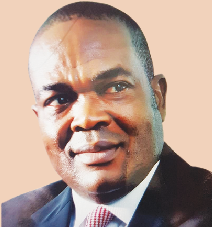
This year’s World Mental Health Day and Week offered more than reflection — it gave me a lived reminder that thriving begins when the brain and body move in harmony. While sharing insights from my latest book Accidentally Disabled – The Journey to Thriving Against All Odds and unpacking the THRIVE Model, I met two remarkable innovators: Riaan and Alicia Greyling, founders of MMR (Master Mental Resilience) and creators of N9 NeuroVIZR, a neuro-technology tool that strengthens mental balance through rhythmic light and sound.
During the World Health Expo 2025, the Greylings generously donated the NeuroVIZR to the African Institute of Mind, the organisation I founded. Although I am cautious about endorsing wellness devices, curiosity and fatigue nudged me to try it after several weeks of back-to-back travel, conferences, and coaching sessions. What followed was a surprising reset that deepened my understanding of what scientists call functional coupling — how different systems in the body coordinate to keep us healthy.
The Gamma session
One evening, after returning from a long trip, I felt tension in my lower back and mental fog from nonstop work. I opened the NeuroVIZR App and chose the Gamma session — a sequence designed to align brain waves associated with focus and clarity. Within minutes, I sensed calm settling in. My breathing deepened, my thoughts slowed, and my body seemed to exhale.
The session felt like pressing a gentle “reset” button:
Restoring calm, sharpening focus, easing the tension I carried.
It reminded me that our inner systems constantly talk to one another. When one part — like the brain — finds rhythm, the rest of the body listens and responds. That synchronized conversation is functional coupling at work.
Reflection 1
The brain and body are dance partners
Explaining this to a child, I’d say: imagine your brain is a drummer and your body is a dancer. When the drummer changes tempo, the dancer moves differently to stay in step. They are connected; they listen and respond to each other’s rhythm.
During the Gamma session, I could almost feel that invisible dance. The light patterns became beats; my heartbeat and breathing moved in time. It was a live demonstration that our biological systems perform best when they cooperate rather than compete.
Reflection 2
Healing feels like a garden after the storm
I often picture recovery as a garden after heavy rain. The soil is messy, plants are bent, and flowers droop. Yet, once sunlight and gentle water return, everything begins to stand tall again.
The NeuroVIZR session felt exactly like that. My mental “garden” had endured a storm of deadlines and travel. The rhythmic light became sunlight; the steady pulses felt like nourishing rain. In scientific terms, this is the restoration of synchronized neural rhythms. In everyday language, it’s the feeling of your mind and body remembering how to grow strong together.
Reflection 3
Calm isn’t stillness — It’s balance
Many people think calm means doing nothing. In truth, calm means moving in balance. During the session, I was fully alert but not tense. My energy felt centered, not scattered.
That state mirrors how functional coupling works in the nervous system: heart rate, breath, and brain activity align in a single flow. It’s like swinging on a playground swing — too hard a push and the rhythm breaks; too soft and it stops. The right rhythm keeps everything gliding smoothly.
For children, calm is like flying a kite: you don’t hold the string too tight or too loose; you find the sweet spot where the wind carries it gracefully.
Reflection 4
Gratitude is the glue
When the session ended, I sat quietly and whispered, “Thank you.” Gratitude is the glue that keeps the brain and body connected. Science shows that appreciation releases chemicals that nurture wellbeing, but gratitude is also deeply human — it brings humility and connection.
I wasn’t just thankful for relief from discomfort; I was grateful for awareness — the realisation that my body had been speaking all along, asking for rest and rhythm. Functional coupling teaches that communication keeps every system alive, and gratitude strengthens that communication.
The gift of connection
As we move through World Mental Health Month and approach year-end, many organisations look for gifts to honour their teams. Beyond hampers or gadgets, perhaps the most valuable gift is reconnection — tools that remind us to care for our inner world as much as our outer achievements.
The NeuroVIZR is more than a device; it’s a metaphor for how we can all tune our internal symphony. By aligning light, sound, and rhythm, it encourages the brain and body to cooperate, to dance again after long seasons of strain. It offers the same gentle nudge back toward balance and strength that I felt that day.
Closing thoughts
World Mental Health Day invites us to look inward, not just outward. The THRIVE Model I teach emphasizes Tools for Resilience, Invigoration, Vitality, and Empowerment — principles perfectly illustrated by my experience with NeuroVIZR.
Through this encounter, I rediscovered a truth both scientific and spiritual: we flourish when our inner systems are friends, not strangers. Functional coupling isn’t limited to neurons; it describes the essence of human flourishing — connection, cooperation, and compassion working together.

Dr. Joshua Awesome is a Coaching Psychologist/Executive and Business Performance Coach who has supported over 100,000 professionals across Africa and the globe. He can be reached via: joshua@africainmind.org