Since the privatisation of Nigeria’s power sector in 2013, perhaps no phrase has generated more controversy than “cost-reflective tariff.”
To consumers, it sounds like a euphemism for higher electricity bills. To distribution companies (DisCos), it represents the pathway to financial viability. To investors, it signals predictable returns. To regulators, it is presented as the bedrock of a viable market.
Yet after more than a decade of tariff reviews, orders, subsidy interventions, and regulatory adjustments, Nigeria’s electricity sector remains trapped in a cycle of liquidity crises, consumer dissatisfaction, under investment, and poor service delivery.
This raises a fundamental question: What if the problem is not the tariff itself?
What if the real problem is that we are attempting to implement cost-reflective tariffs in a market where the underlying costs, losses, collections, and service levels are neither independently nor transparently measured? This is the illusion at the heart of Nigeria’s electricity regulation.
The promise of cost-reflective tariffs
In principle, cost-reflective tariffs are fundamental to utility sustainability. A utility must recover:
-
The efficient cost of purchasing power.
- The efficient cost of operating and maintaining its network.
- The efficient cost of expanding infrastructure.
- A reasonable return on invested capital.
Without cost recovery, utilities become financially distressed, infrastructure deteriorates, and service declines. No serious electricity market operates indefinitely below its cost of service.
The critical word, however, is efficient. Cost-reflective tariffs only work when regulators can distinguish between efficient operations and wasteful inefficiency. That is where the Nigerian challenge begins.
Can a tariff be cost-reflective if costs are unknown?
When a utility requests a tariff increase, it typically cites high technical losses, poor collection efficiency, decaying infrastructure, and insufficient revenue.
While these claims may be true, critical questions immediately arise:
- How much energy actually entered the network versus what reached customers?
- How much energy was billed versus what was collected?
- How much energy was lost through technical limits, theft, or poor operational practices?
- Which costs are unavoidable, and which are preventable?
If a regulator cannot independently answer these questions, the resulting tariff is not cost-reflective—it is merely revenue-reflective.
Consumers should not be forced to fund energy theft, poor maintenance, avoidable technical losses, or weak revenue collection. A tariff can only be ethically defended when the underlying costs have been independently verified as reasonably efficient.
The trust deficit
The lack of independent measurement erodes trust across the entire value chain:
Consumers resist tariff increases because service rarely improves.
DisCos argue that inadequate tariffs prevent the capital investments needed to improve service.
Governments struggle to bridge the resulting financial deficit through unsustainable subsidies.
Investors remain cautious due to unreliable sector data.
Without credible data, tariff reviews become political battles rather than technical assessments. Debates centre on opinions instead of evidence, narratives replace measurements, and assumptions replace accountability. Every tariff increase becomes a point of conflict, regardless of its economic merit.
The regulatory blind spot
The greatest challenge facing Nigerian electricity regulation is not a lack of complex tariff methodologies; it is the absence of independently verifiable market data.
Regulators often deal in broad, sector-wide averages. While a regulator may know a DisCo’s aggregate losses, it rarely knows:
- The specific losses on each feeder.
- The collection efficiency of each feeder.
- The actual hours of supply delivered to each feeder.
- The revenue performance of each feeder.
Electricity is delivered through specific feeders, transformers, and local networks. Regulating through aggregate averages means regulating a market you cannot fully see. And what cannot be observed cannot be effectively regulated.
The opportunity before state regulators
The emergence of state electricity markets under the Electricity Act 2023 presents a historic opportunity. Unburdened by decades of institutional inertia, new state regulators can build a framework based on data integrity:
-
Where measurement precedes pricing.
- Where transparency precedes regulation.
- Where consumers, utilities, investors, and governments operate from a shared set of facts.
This will not eliminate commercial disagreements, but it will ensure that discussions are grounded in evidence rather than speculation.
A new starting point
The first question a regulator asks must shift from “What should the tariff be?” to “What do we know with certainty?”
- How much energy entered the system?
- How much energy was delivered, billed, and collected?
- What exact level of service was provided?
Until these questions are answered with verifiable data, every tariff discussion remains vulnerable to dispute.
The future of electricity regulation in Nigeria will not be defined by increasingly sophisticated tariff formulas, but by the integrity of the data beneath them. Before a tariff can be cost-reflective, the underlying market data must be cost-reflective.
Before a regulator can regulate prices, it must first establish the truth. Because in electricity governance, a fundamental principle remains unbroken: You cannot regulate what you cannot measure.
Next Week: Part 2: Consumers Cannot Be Protected from What Regulators Cannot Measure
- business a.m. commits to publishing a diversity of views, opinions and comments. It, therefore, welcomes your reaction to this and any of our articles via email: comment@businessamlive.com
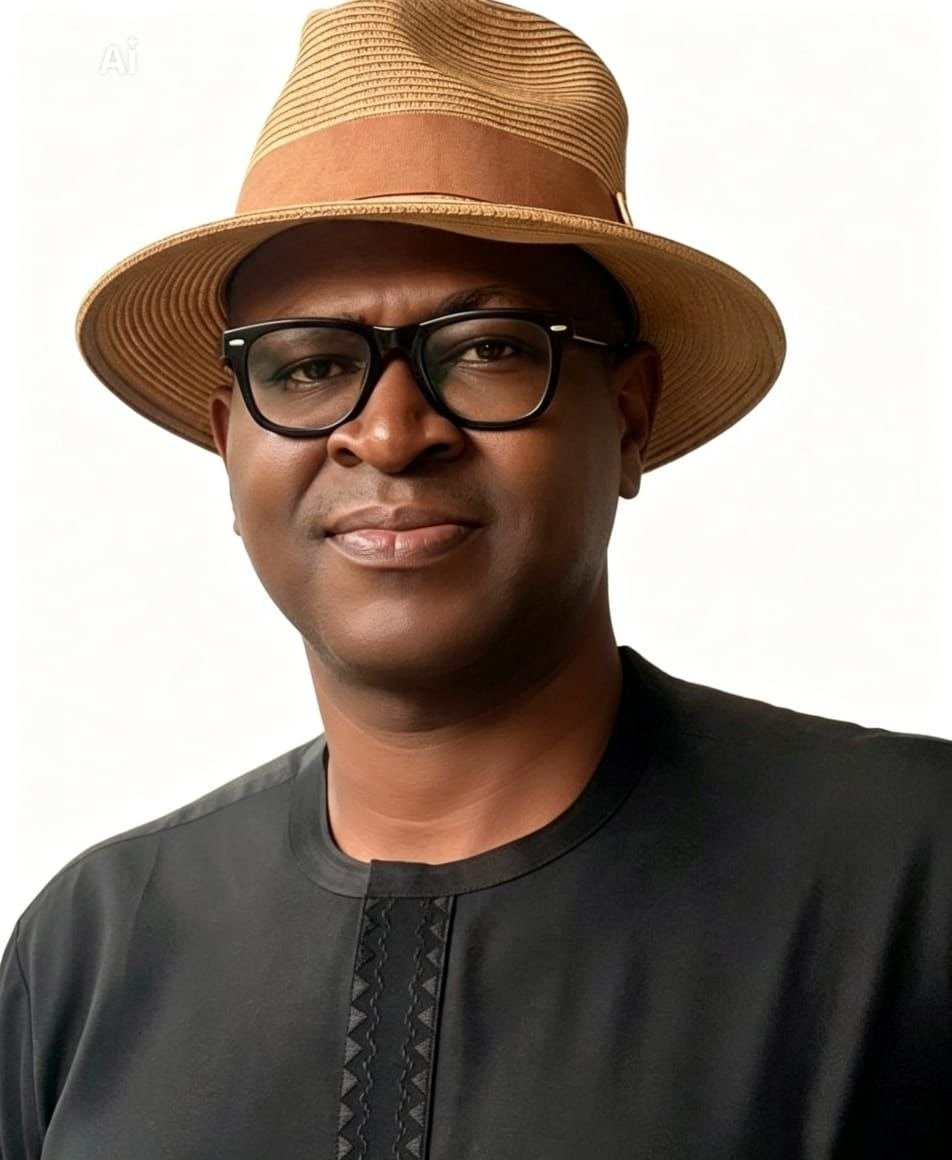
Masah Emmanuel Ikus is a Power and Energy Infrastructure Strategist and the Principal Consulting Partner at EMI Resources Limited. A University of Lagos-trained Electrical Engineer with an EMBA from Lagos Business School, he possesses over 27 years of experience managing complex infrastructure projects across the ICT, Oil & Gas, and Power sectors, specialising in the design of decentralised power systems and solar integration. He currently advises investors, project sponsors, and public institutions on leveraging Nigeria’s energy deficit into bankable commercial opportunities. He can be contacted via masahikus@gmail.com