Throughout this series, we have challenged a fundamental assumption in Nigeria’s power sector: that a regulator’s primary duty is determining tariffs. Instead, a regulator’s first responsibility is to establish the truth. Costs, service levels, losses, and utility performance must all be measured before tariffs can be justified or revenues guaranteed.
This leads to the ultimate conclusion of this series: The regulator of the future must become a data institution before it becomes a tariff institution.
The limits of manual regulation
No regulatory agency can physically inspect every feeder daily, manually verify every customer complaint, or continuously monitor thousands of distribution transformers. Mature electricity markets overcome these physical limits by combining regulation with transparency and market competition.
When performance becomes visible, inefficient operators are exposed. When competition becomes possible, inefficiency becomes commercially unsustainable. The ultimate goal for state regulators is not merely enforcing rules, but creating market architecture that continuously reveals performance.
Franchising as a regulatory and bench-marking tool
Feeder and area franchising are frequently viewed solely as investment mechanisms. In reality, franchising is a formidable regulatory instrument because it establishes a live, competitive benchmark.
Consider a feeder operated directly by a utility versus one concessioned to a franchise operator under strict contractual obligations. If the franchise operator transforms that feeder from 50 percent losses to 15 percent, increases collections from 60 percent to 95 percent, and expands supply from eight to 20 hours daily, the regulator gains empirical proof of what is achievable.
The regulatory dialogue shifts from theoretical debate to demonstrated performance. However, as established in Part 3 of this series, franchising requires granular feeder data. Without feeder-level data, franchising is mere speculation; with data, it becomes financeable commercial reality.
The digital regulator and the state data platform
Historically, regulation has been document-driven — utilities submit backward-looking reports, and regulators review them months after events occur. This model is obsolete.
Modern state regulators must operate with near real-time market intelligence through a centralised State Electricity Data Platform. This public dashboard should simultaneously display:
- Network performance: Feeder-level energy flows, delivered power, and technical loss rates.
- Commercial metrics: Billing efficiency, collection realisation, and revenue performance.
- Consumer indicators: Actual hours of supply, outage frequencies, and complaint resolution timelines.
- Investment opportunities: Feeder P&Ls, capital deployment tracking, and franchise tender pipelines.
When performance is broadcast transparently, trust is restored across the value chain.
Funding digital regulatory infrastructure
Building a digital-first regulatory institution is significantly less expensive than absorbing the continuous financial bleed of sector inefficiency. States can fund this transition through four pragmatic pathways:
Regulatory development levies: A dedicated micro-charge allocated strictly to regulatory data systems.
Development finance: Multilateral grants for smart metering, digital platforms, and market modernisation.
Public-Private Partnerships (PPP): Technology vendors deploying monitoring platforms under performance-linked software contracts.
Franchise obligations: Structuring franchise agreements to require operators to fund upstream feeder metering and telemetry infrastructure.
Unlocking shared value across stakeholders
A data-driven, transparent regulatory regime delivers direct benefits to every market participant:
Consumers gain fair, verifiable tariffs, reduced estimated billing, and transparent service levels.
Utilities gain operational visibility, improved revenue collection, and credible tariff justification.
Investors gain reduced information asymmetry, clear project bankability, and predictable rules.
Governments reduce subsidy burdens, attract private capital, and spur sustainable regional economic growth.
A historic opportunity for Nigerian states
Nigeria’s emerging state power markets possess a unique leapfrogging advantage. Free from decades of legacy institutional inertia, state regulators can build modern, digital institutions from inception.
They can choose transparency over opacity, data measurement over guesswork, performance incentives over expenditure recovery, and competitive market dynamics over legacy monopolies.
Final thoughts
For years, Nigeria’s power sector conversations have fixated on a single question: “What should the tariff be?”
The far more vital question is: “How do we know the tariff is justified?”
The states that master electricity data will attract the most private capital. The states that embrace radical transparency will earn the deepest public trust. And the states that combine accurate measurement with performance accountability will build the most bankable and sustainable power markets.
The central thesis of this blueprint remains absolute: Before you regulate tariffs, regulate data. Because before prices can genuinely reflect costs, regulators must first establish the truth.
You cannot regulate what you cannot measure!
This brings us to the end of the Series. Thank you for staying along.
- business a.m. commits to publishing a diversity of views, opinions and comments. It, therefore, welcomes your reaction to this and any of our articles via email: comment@businessamlive.com
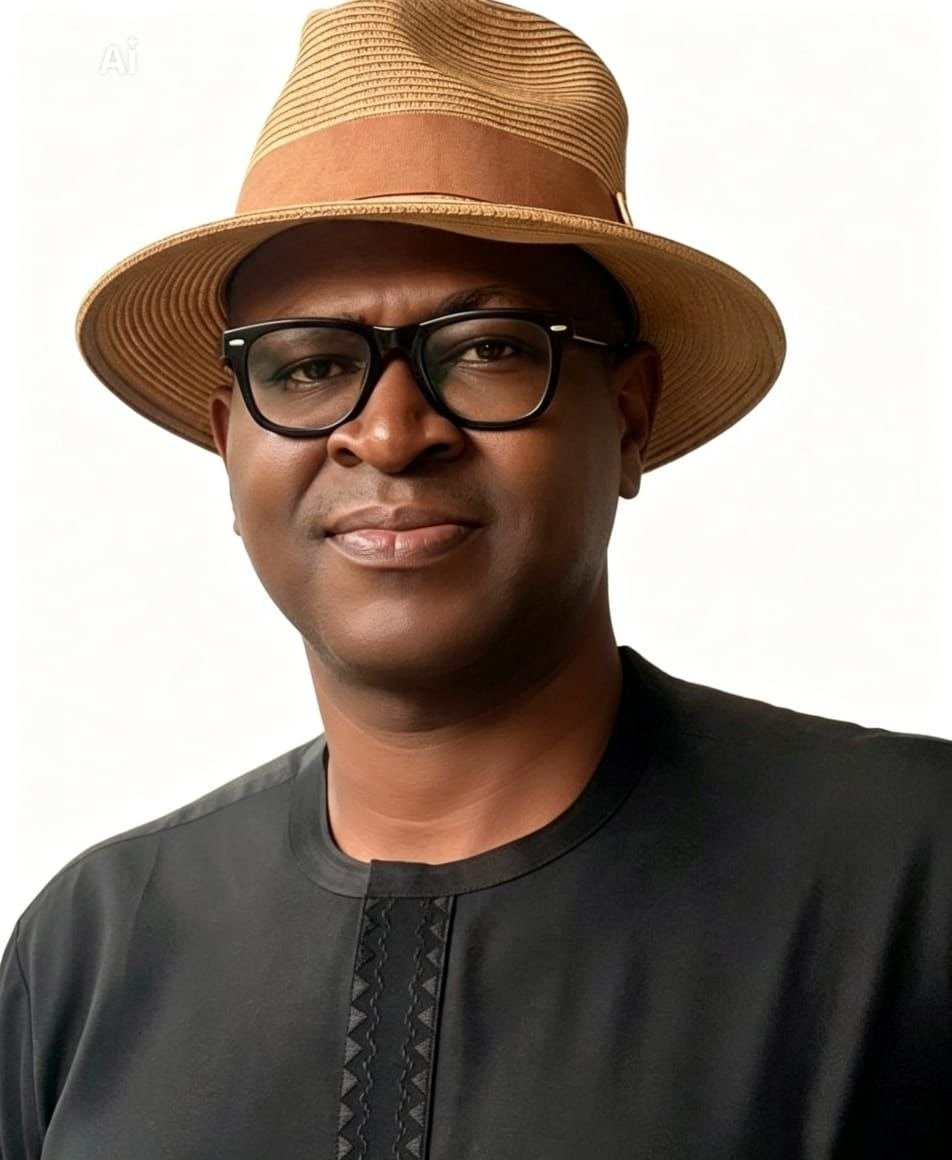
Masah Emmanuel Ikus is a Power and Energy Infrastructure Strategist and the Principal Consulting Partner at EMI Resources Limited. A University of Lagos-trained Electrical Engineer with an EMBA from Lagos Business School, he possesses over 27 years of experience managing complex infrastructure projects across the ICT, Oil & Gas, and Power sectors, specialising in the design of decentralised power systems and solar integration. He currently advises investors, project sponsors, and public institutions on leveraging Nigeria’s energy deficit into bankable commercial opportunities. He can be contacted via masahikus@gmail.com