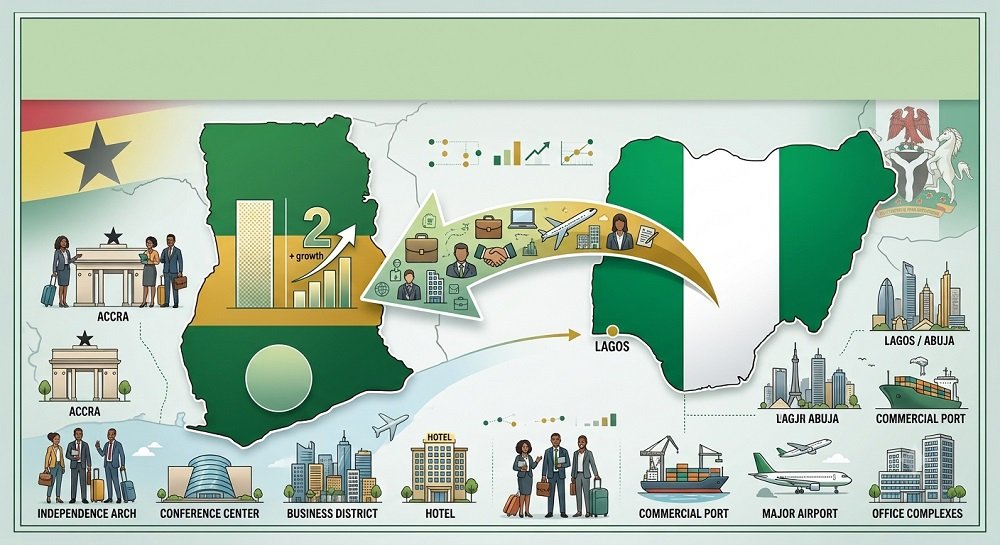
Nigeria has become Ghana’s second-largest source of international visitors, according to figures released by the Ghana Tourism Authority, as business activities, family visits and air connections led to an increase in travel between both countries.
The authority said Nigeria ranked behind only the United States in the number of visitors recorded in 2025, highlighting the growing movement of travellers within West Africa.
The report showed that Ghana received more than 1.3 million international visitors during the year, while total tourism receipts stood at $4.34bn.
Business travel accounted for the largest share of arrivals, representing 31 percent of all visits. Visits to friends and relatives made up 23 per cent, while holiday, leisure and entertainment travel accounted for 20 per cent.
The United States remained Ghana’s biggest source market, with 155,289 visitors. Nigeria followed closely, while South Africa also ranked among the leading African markets.
The strong performance of the Nigeria-Ghana has been linked to increased business activities, regional trade, cultural ties and easier access to flights between the two countries.
The route between Lagos and Accra remained one of the busiest in West Africa, with airlines frequencies to meet growing demand.
Air Peace and Africa World Airlines were among the carriers that handled a large share of the traffic between the two countries. Ibom Air, ValueJet and other operators also expanded their presence on the route.
The report also indicated that Ghana’s tourism earnings declined despite the increase in visitor arrivals. Average spending per visitor fell from $3,742.98 in 2024 to $3,319.90 in 2025.
Many visitors stayed in private residences or short-term rental apartments instead of hotels, reducing spending within the formal hospitality sector.
According to the Ghana Tourism Authority, accommodation providers have also been affected by rising operating costs and multiple taxes and levies imposed on the sector.
In response, the Ghanaian government has unveiled a medium-term development plan covering the period from 2026 to 2029, with the aim of increasing tourism revenue to $8.3bn.
The plan includes investments in tourism infrastructure, digital platforms, cultural events and regional destinations as the country seeks to encourage visitors to spend more and stay longer.